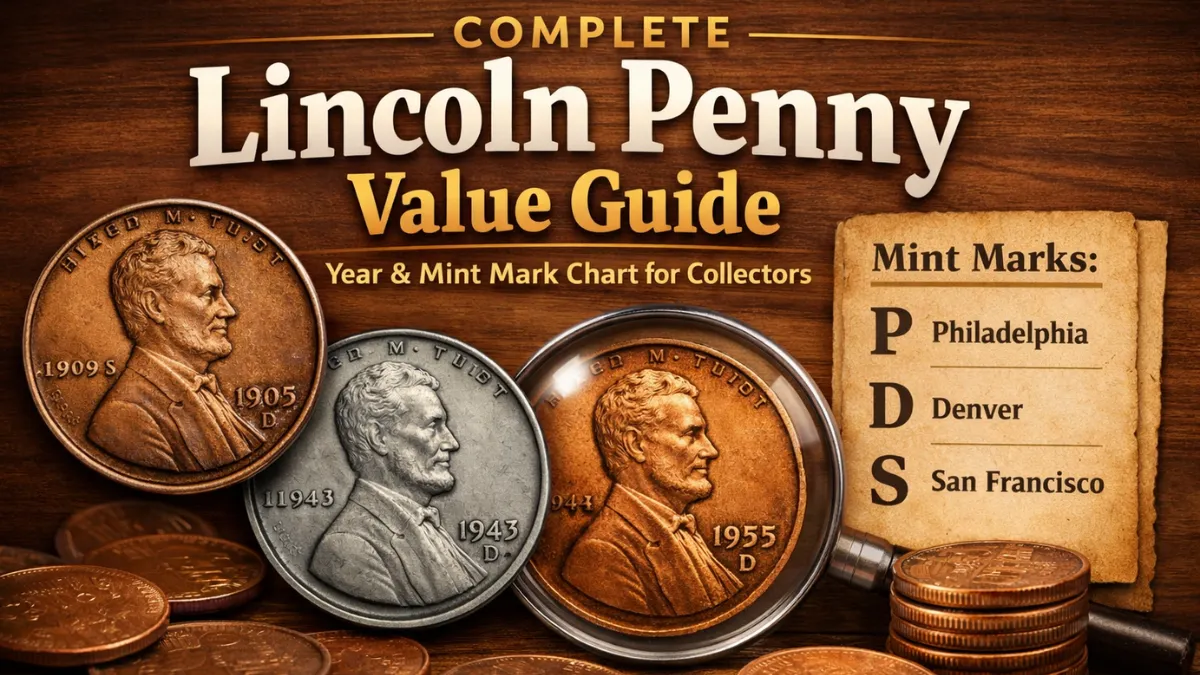
Lincoln pennies are among the most popular coins collected around the world. They are easy to find, inexpensive to start with, and closely connected to American history. First released in 1909, the Lincoln penny was created to honor the 100th birthday of President Abraham Lincoln. It was also historic because it became the first U.S. circulating coin to feature a real person instead of a symbolic image.
History and Design Changes of Lincoln Pennies
Over more than a century, the Lincoln penny has gone through several design changes. From 1909 to 1958, the coin featured the Wheat Ear design on the back, which is why these coins are often called Wheat Pennies. From 1959 to 2008, the Lincoln Memorial appeared on the reverse side. In 2009, four special designs were released to celebrate different stages of Lincoln’s life. Since 2010, the Union Shield design has been used, representing national unity. Each design era has its own collectible coins and value levels.
Importance of Year and Mint Mark
Not all Lincoln pennies from the same year are worth the same amount. The year and the mint mark play a major role in determining value. Pennies were made at different mints, including Philadelphia, Denver, and San Francisco. Philadelphia coins usually have no mint mark, while Denver uses “D” and San Francisco uses “S.” Coins produced in lower numbers, especially from San Francisco or Denver, are often more valuable than those from Philadelphia.

Rare and Valuable Lincoln Pennies
Some Lincoln pennies are famous because they are hard to find. The 1909-S VDB penny is highly valuable due to its limited production and the controversy over the designer’s initials. Another key date is the 1914-D penny, which is scarce in all conditions. Error coins like the 1922 penny without a mint mark or the 1955 doubled die penny are also valuable because of visible minting mistakes.
Metal Content and Wartime Coins
The metal used to make pennies also affects value. Pennies made before 1982 contain mostly copper, while newer ones are mainly zinc. During World War II, steel pennies were made in 1943 due to copper shortages. A few copper pennies from that year were struck by mistake, making them extremely rare and valuable.
Condition and Collecting Tips
Condition greatly affects a penny’s value. Coins with little wear and clear details are worth much more than heavily worn ones. Cleaning coins should always be avoided because it can lower value. Beginners can enjoy collecting by sorting old change, learning key dates, and storing coins safely.

Why Lincoln Pennies Remain Popular
Lincoln penny collecting is rewarding because it combines history, learning, and potential value. While most pennies are only worth face value, some can be worth much more. With patience and knowledge, even simple coins can become meaningful collectibles.
Disclaimer:
This article is for informational and educational purposes only. Coin values depend on market conditions, rarity, and condition. Readers should consult professional coin dealers or certified grading services before buying or selling collectible coins.