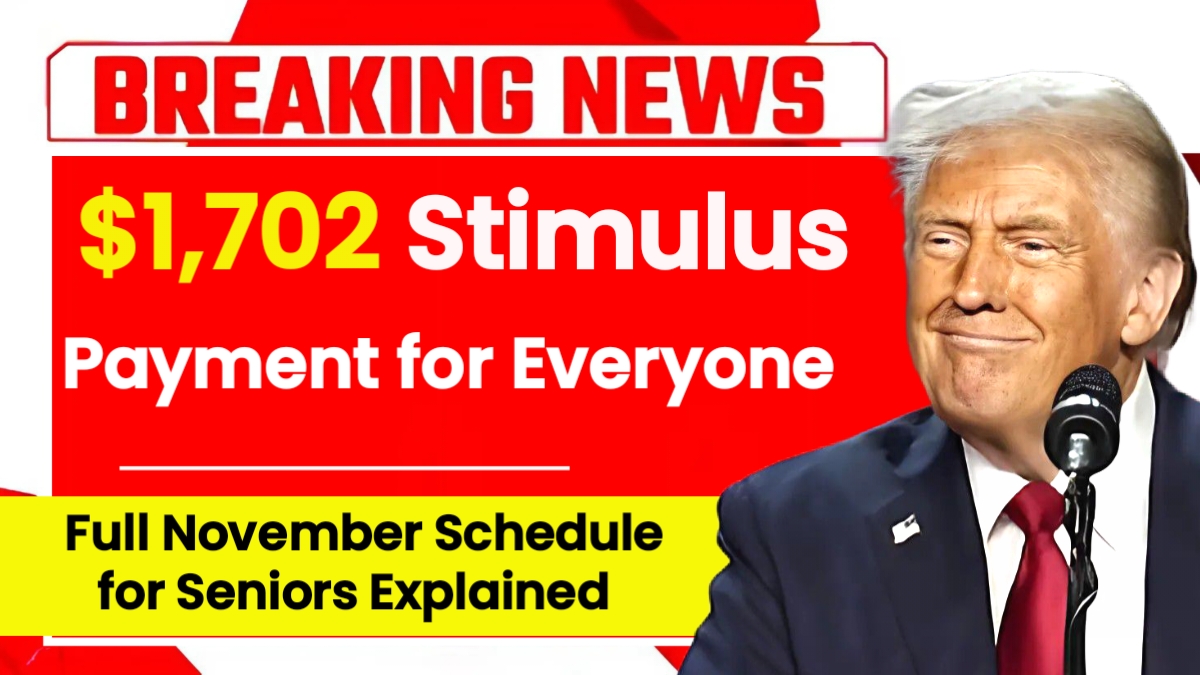
$1,702 Stimulus Payment for Everyone: As winter approaches and living expenses continue rising, many older Americans are finding it harder to manage their monthly budgets. Medical bills, food prices, and heating costs have increased sharply in 2025, putting extra pressure on people who rely on fixed incomes. To help ease this burden, lawmakers are considering a one-time $1,702 stimulus payment for seniors. As of November 21, 2025, the Social Security Administration and the IRS have begun early preparations to deliver the payment quickly if Congress gives final approval. While the payment is not fully guaranteed yet, signals from Washington suggest that it could be released soon, bringing hope to millions of retirees and disabled adults.
Why the $1,702 Payment Matters Right Now
For seniors living on Social Security or disability benefits, any unexpected increase in expenses can create financial strain. Healthcare costs alone have risen significantly this year, and food prices remain higher than in previous years. The proposed $1,702 stimulus payment is designed as a safety net to help older adults manage urgent expenses during the winter and holiday season. This payment is separate from regular monthly benefits and does not replace cost-of-living increases. Instead, it acts as an additional layer of financial relief to help seniors handle inflation’s lingering effects.
Understanding the Purpose Behind This One-Time Stimulus
The goal of the stimulus is to provide immediate support to those most affected by rising living costs. Seniors often have limited opportunities to increase their income, and many depend entirely on Social Security, SSDI, SSI, or veterans’ benefits. This extra payment would help them catch up on important needs such as prescription medicines, food supplies, heating costs, or unexpected medical appointments. The SSA and IRS have already started coordinating their systems to ensure that if the payment is approved, it can be delivered automatically with minimal delay for most eligible recipients.
यह भी पढ़े:
 IRS Just Confirmed: $2,000 Direct Deposit Payments Coming November 2025 – Are YOU Getting One?
Who Qualifies for the $1,702 Senior Stimulus Payment
Eligibility for the payment is expected to be simple and largely automatic. Seniors who already receive monthly retirement benefits, disability payments, or Supplemental Security Income will likely qualify without needing to fill out new forms. The IRS will use information from 2024 tax filings to verify eligibility and confirm that individuals have a valid Social Security number and are not claimed as dependents on someone else’s tax return. Most people who have consistently received Social Security payments should qualify. Those who recently applied for benefits may still qualify if their records are updated in time.
Seniors Receiving Disability or Extra Assistance
People who receive SSDI or SSI will also be included if the payment is approved. SSDI supports individuals who are unable to work due to health conditions, while SSI provides additional help to low-income seniors or disabled adults with limited resources. Veterans who receive disability compensation or pensions are expected to qualify as well. If someone began receiving benefits after their most recent tax filing, they may need to confirm their banking information or complete an identity check before the payment can be sent.
How the Government Will Determine Eligibility
The IRS and Social Security Administration will base their decisions on existing records rather than requiring new applications. This method helps speed up the process and ensures that seniors get their payments as soon as possible. Anyone who did not file 2024 taxes may still become eligible by submitting a simple return using free online tools. This allows the IRS to confirm their identity and income details. The government aims to avoid confusion and delays by using familiar systems that seniors already rely on.

Expected Timeline for the $1,702 Payment
If Congress approves the bill by late November, the payment could begin rolling out within weeks. The payout schedule will follow the same pattern as regular Social Security payments, meaning deposits will be split across different weeks based on birth dates. This staggered system helps prevent overload in banking systems and ensures an orderly distribution. Seniors who receive Supplemental Security Income may receive their payment earlier than others if the schedule aligns with the start of the month. For individuals who still receive paper checks, the delivery time may extend into December depending on mail delays and holiday schedules.
How Payments Will Be Delivered
The $1,702 stimulus payment will be sent using the same method that seniors already use for their regular benefits. Direct deposit is the fastest option and delivers funds immediately on the scheduled date. Payments may also be added to Direct Express cards for those who do not use bank accounts. Paper checks will still be available, but they may take longer to arrive and are more likely to be delayed during busy holiday periods. Seniors who want faster delivery can switch to direct deposit through the Social Security website or by contacting their local SSA office.
What Seniors Should Do to Prepare
Although the payment has not been fully approved, seniors can take simple steps now to avoid delays later. Updating bank information, mailing addresses, and contact details ensures that the money will reach the right place. Checking online SSA or IRS accounts can confirm whether any identity verification is needed. Filing any missing tax returns is also important, especially for people who do not normally file due to low income. Early preparation helps prevent last-minute problems that could delay the payment for weeks or even months.

Avoiding Scams During the Payment Period
Any stimulus announcement often attracts scam attempts targeting older adults. Fraudsters may send fake messages pretending to be from the IRS or SSA, asking for fees, Social Security numbers, or bank information. It is important to remember that government agencies never call, text, or email asking for personal details to release a payment. Seniors should rely only on verified websites such as SSA.gov or IRS.gov for updates. Ignoring suspicious calls and emails is the best way to stay protected during the payment rollout.
The proposed $1,702 stimulus payment offers hope to millions of seniors facing financial strain during a difficult economic year. Although the payment is not guaranteed until Congress gives final approval, the IRS and Social Security Administration are already preparing for a smooth rollout. Seniors who stay informed, keep their information updated, and avoid scams will be ready to receive the payment quickly if it becomes official. As the holiday season approaches, this extra support could provide meaningful relief and greater security for older adults across the country.
Disclaimer
This article is for informational purposes only and does not provide financial, legal, or official government advice. Eligibility rules and payment dates may change based on final decisions by Congress and federal agencies. For accurate updates, always check the official IRS and Social Security Administration websites.