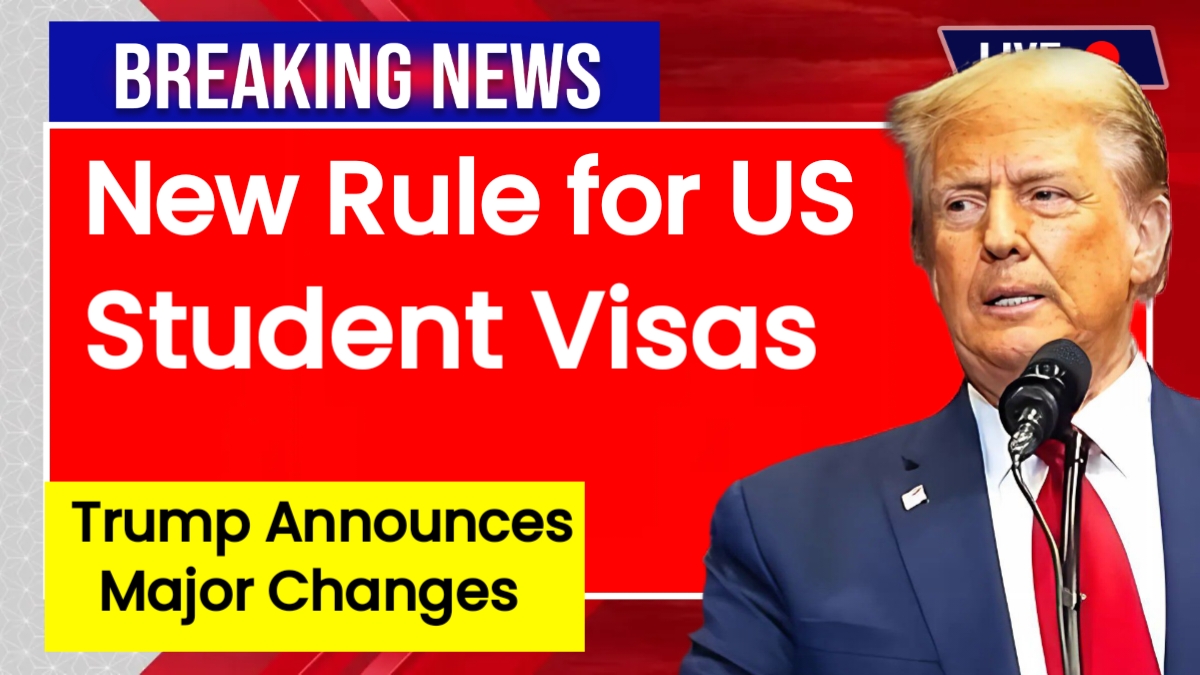
New Rule for US Student Visa: International students hoping to study in the United States are witnessing a major shift with the new student visa changes proposed under the Trump administration. Announced through the DHS regulatory agenda in mid-November 2025, the proposal introduces stricter rules for F-1, J-1, and M-1 visa holders. Although the rule has not yet been officially published, it has already created a wave of concern across universities and student communities. As of November 22, 2025, the changes remain in draft form, but experts expect the rule to appear soon, making early preparation essential.
Why the U.S. Is Overhauling Student Visa Rules
The primary motivation behind these student visa reforms is national security, fraud prevention, and protecting U.S. workers from job displacement. Officials argue that existing student visa rules allow too much flexibility, especially in work programs like OPT and CPT, which some believe are misused for cheap labor. The new proposal follows earlier discussions from August 2025 about fixed admission periods. Now, the focus shifts heavily to post-study work permissions, prompting concerns from students who rely on work experience to recover tuition costs and build careers in the United States.
Major Changes Targeting F-1 Visa Holders
The most significant impact falls on F-1 visa students, especially those planning to work after graduation. The proposal seeks to restrict Optional Practical Training by eliminating the informal “day one CPT” practice and requiring strict salary floors and employer-approved training plans. Many students use OPT as a stepping stone to secure long-term employment, but under the new rule, work options may shrink dramatically. A fixed four-year cap on visa duration may also affect those pursuing longer programs or switching majors, forcing them to justify any extension under tighter DHS scrutiny.
यह भी पढ़े:
 IRS Just Confirmed: $2,000 Direct Deposit Payments Coming November 2025 – Are YOU Getting One?
How J-1 Exchange Students Will Be Affected
The J-1 visa category, commonly used for cultural exchange programs, research trainees, and scholars, will also see new limitations. The proposal reduces the traditional grace period after program completion to only 30 days, reducing the window for students to prepare for departure or transition to another program. Sponsors will need to verify strict academic reasons for any transfers. These changes are expected to reduce flexibility for exchange visitors, potentially discouraging universities and global partners from expanding international collaboration.
M-1 Vocational Students Face New Restrictions
Students in vocational programs under the M-1 visa will experience similar tightening. Extensions will no longer be easily granted, and students must show strong academic progress and valid reasons to remain. The proposal also aligns the M-1 grace period with other categories, limiting the post-study stay to 30 days. Schools offering technical and career-focused programs worry that these rules may discourage future enrollment, as many students choose U.S. vocational programs specifically for applied training opportunities.
A Universal Four-Year Cap Across Visa Categories
Another major change is the introduction of a fixed four-year cap for F-1, J-1, and M-1 visas, regardless of how long a degree or program actually takes. Students pursuing medicine, research doctorates, or long-term technical courses may face challenges completing their studies within this limit. Extensions may still be allowed, but they will require additional DHS review, strong academic justification, and evidence of compliance throughout the previous visa period. Critics worry this cap may lead to frequent interruptions in education and increased administrative burdens.

When Will These Student Visa Changes Take Effect?
The DHS proposal is expected to be fully published by the end of 2025, after which a 60-day public comment period will follow. Once finalized, the rule is likely to take effect in the second quarter of 2026. Current students who follow all rules will be allowed to continue under their existing terms, meaning they may be “grandfathered” into the old system. However, OPT approvals may slow down immediately due to heightened scrutiny, and students applying from January 2026 onward may face the new restrictions first.
How Students Can Prepare for the Upcoming Rule Changes
International students planning new applications or renewals must act quickly. Those close to graduation are advised to submit OPT applications as early as possible before the rule takes effect. Maintaining updated and accurate SEVIS records will be crucial, as any mistakes may result in delays or denials under the stricter framework. Students on J-1 and M-1 visas should secure strong sponsor support letters and prepare for the reduced grace period. Experts also suggest consulting licensed immigration attorneys early, as navigating the new requirements may be more complicated than before.
Why These Changes Are Causing Global Concern
Education experts warn that the proposed rules could sharply reduce international enrollment in U.S. institutions. Organizations like NAFSA estimate a possible 15–20% drop in student arrivals if OPT is significantly restricted. Universities rely heavily on international students for cultural diversity and financial stability, generating nearly $40 billion annually for the U.S. economy. The new rules may also harm America’s global reputation for educational excellence, as students may choose countries like Canada, the U.K., or Australia, which offer more stable and welcoming visa policies.

Economic and Cultural Impact on Students and Institutions
For many international students, studying in the United States is a life-changing experience that opens doors to world-class education and career opportunities. The proposed rules threaten to disrupt these dreams by limiting practical training, shortening grace periods, and applying strict caps. Students may face uncertainty about their future, reduced job prospects, and financial challenges. Universities, especially public institutions and STEM programs, worry that losing thousands of international applicants could lead to budget cuts, fewer research projects, and less cultural exchange on campuses.
Trump’s proposed student visa changes for 2025 mark one of the most significant shifts in U.S. education policy in years. With new limits on OPT, shortened grace periods, stricter transfer rules, and a four-year cap across visa types, the landscape for international students is becoming more challenging. While the rules are not yet final, the expected timeline suggests they may reshape the 2026 academic year. Students are urged to stay informed, submit applications early, and track updates on official DHS, ICE, and USCIS websites. Preparing now can help avoid complications later as the new regulations move closer to becoming reality.
Disclaimer
This article is for informational purposes only and does not provide legal, immigration, or academic advice. Students should consult official government resources or licensed immigration professionals before making decisions regarding visas or study plans.