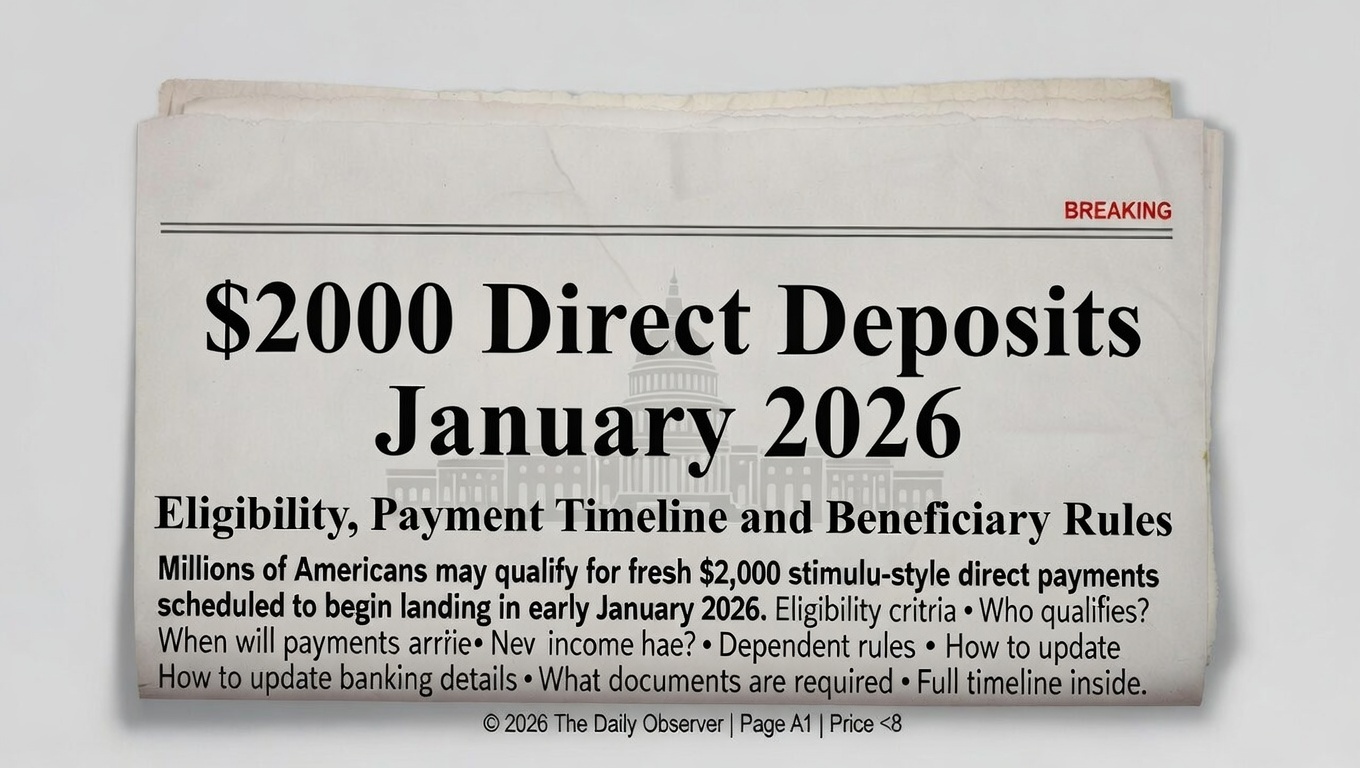
$2000 Direct Deposits January 2026: As January 2026 begins, conversations about money have once again become tense for many Americans. Even though inflation has slowed compared to previous years, everyday expenses such as rent, insurance, healthcare, and groceries continue to strain household budgets. Against this backdrop, social media posts claiming that $2,000 direct deposits are appearing in bank accounts have spread quickly. For many people, these claims feel believable because they remind them of past stimulus payments.
Despite how widely these rumors are shared, there is no newly approved federal program sending a universal $2,000 payment to everyone in January 2026. What people are seeing instead is a combination of regular government payments arriving close together. Understanding this difference is essential to avoid confusion, disappointment, and financial misinformation.
Why the $2,000 Amount Still Captures Attention
The number $2,000 carries strong emotional meaning for many Americans. During the pandemic, stimulus payments of similar amounts helped families stay afloat during sudden job losses and economic shutdowns. Those checks paid rent, kept food on the table, and covered urgent bills. Years later, the amount still represents relief and security.

When people see deposits near $2,000 today, it naturally triggers memories of that time. Without context, the assumption is that the government has brought back stimulus payments. Social media amplifies this reaction, turning individual experiences into widespread claims that appear official, even when they are not.
Why January Causes So Much Payment Confusion
January is one of the busiest months for federal payments. Social Security benefits often increase at the start of the year due to cost-of-living adjustments, meaning many retirees receive higher monthly payments. At the same time, the Internal Revenue Service begins processing early tax returns, including refunds tied to refundable tax credits.
When these payments arrive within days of each other, they can look like one large deposit. Holiday-related delays from December can also push payments into early January. Together, these timing overlaps create the illusion of a new benefit when nothing new has actually been introduced.
No New Stimulus Program for January 2026
Despite online claims, Congress has not approved a new nationwide stimulus payment for January 2026. Current policy discussions focus on controlling deficits and offering targeted support rather than issuing broad, universal checks. Large one-time payments are difficult to justify under today’s economic and political conditions.
The money people are seeing comes from long-standing programs that already exist. These include Social Security retirement payments, disability benefits, veterans’ compensation, and tax refunds. Each program follows established rules and eligibility requirements, not surprise announcements tied to the new year.
Who Is Most Likely to See Deposits Near $2,000
Not everyone will see federal payments close to $2,000, but some groups are more likely to notice amounts around that level. Retirees with average or higher Social Security benefits may receive monthly payments near that figure, especially after annual adjustments. Early tax filers who qualify for refundable credits may also receive sizable refunds.

Veterans with higher disability ratings or dependents may receive compensation that draws attention. However, these amounts vary widely. Two people living in the same neighborhood may receive very different payments based on work history, income, and benefit eligibility.
Why Misinformation Spreads During Financial Stress
Periods of financial strain create ideal conditions for rumors to spread. When households are stretched thin, people are more likely to believe and share news that suggests relief is coming. January intensifies this effect because of payment overlap and different bank posting schedules.
Some banks release deposits earlier than others, while some hold them until the official posting date. To account holders, this can feel random and unexpected. What looks like surprise money is usually scheduled income arriving sooner or later than expected.

The Growing Risk of $2,000-Related Scams
Whenever talk of federal payments increases, scams follow closely behind. Fraudsters send texts, emails, and messages promising guaranteed $2,000 deposits. These messages often ask for bank details, Social Security numbers, or verification fees to “release” the money.
Government agencies do not operate this way. They do not request sensitive information through unsolicited messages. Seniors, low-income households, and people with disabilities are often targeted first, making awareness especially important during times of confusion.
What These Rumors Say About the Economy
The renewed focus on $2,000 payments reflects deeper economic anxiety. Even as inflation slows on paper, real-world costs remain high. Housing, healthcare, and insurance continue to consume a large share of monthly income, leaving families with little margin for error.

Looking ahead, relief is more likely to come through adjustments to existing programs rather than new stimulus checks. Understanding how current systems work is more reliable than relying on viral claims that rarely match reality.
Disclaimer
This article is for general informational purposes only. It does not confirm the existence of a universal $2,000 direct deposit or stimulus payment for January 2026. Payment amounts, eligibility rules, and timelines depend on individual circumstances and existing federal programs, which may change. Readers are advised to verify information through official government sources and consult qualified professionals when needed.