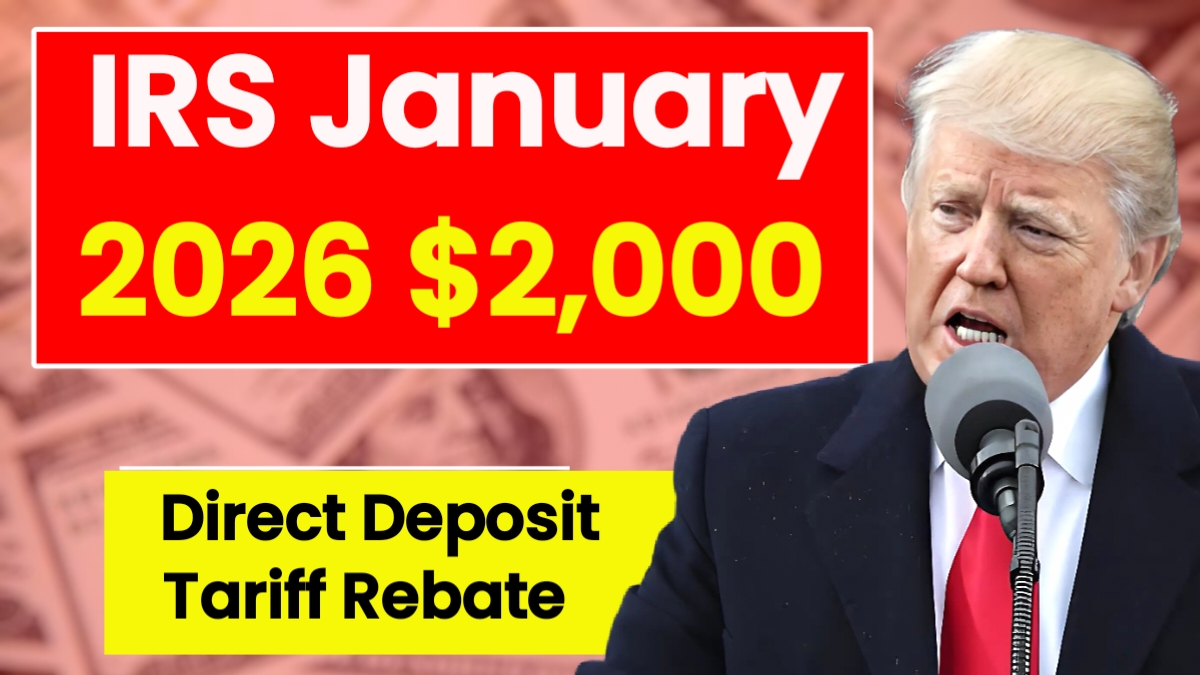
The idea of an IRS January 2026 $2,000 direct deposit tariff rebate has gained attention across social media, search platforms, and online news forums. Many taxpayers are asking whether a new relief payment is coming, who would qualify, and when the money could arrive. The discussion started after reports suggested that tariff-related consumer relief may be explored as a way to ease rising costs linked to import duties. While the topic sounds familiar to those who remember earlier federal relief programs, the current situation is very different.
As of now, there is no confirmed or automatic $2,000 payment approved for every taxpayer. What exists instead is policy discussion and speculation around potential tariff rebate mechanisms. This matters because misinformation spreads quickly, especially when people are under financial pressure. Understanding what is officially confirmed and what remains undecided helps taxpayers make informed decisions and avoid scams. The IRS January 2026 $2,000 direct deposit tariff rebate remains a proposal under discussion, not a finalized benefit.
Understanding the IRS Role in a Tariff Rebate
If a tariff rebate were approved, the IRS would be responsible for administering the payment. This would likely follow systems used in earlier relief efforts, using existing tax records, income data, and bank details already on file. The IRS is typically chosen for such tasks because it has nationwide payment infrastructure and verified taxpayer information.
यह भी पढ़े:
 IRS $2,000 January 2026 Deposit Explained
However, administration does not mean approval. The IRS cannot create or promise payments on its own. Its role would begin only after Congress authorizes funding and defines eligibility rules. Until then, the IRS has not issued guidance, forms, or notices related to a January 2026 tariff rebate, reinforcing that the idea remains under discussion.
What a Tariff Rebate Means for Consumers
A tariff rebate, in simple terms, refers to consumer relief funded by revenues collected from import duties or related trade measures. The goal is to offset higher prices that consumers may face due to tariffs on goods. Such rebates are not automatic and must be clearly defined through law, including how much each person receives.
In the current discussions, the proposed amount mentioned is up to $2,000, but this figure is not finalized. The actual payment, if approved, could be lower, phased out by income, or limited to specific groups. Until official rules are published, the term “tariff rebate” should be viewed as a concept, not a confirmed benefit.
यह भी पढ़े:
 IRS Confirms $2,000 Direct Deposit for January, 2026 – New Payment Dates and Eligibility Guide
Possible Eligibility Rules Under Consideration
Although no eligibility criteria are final, discussions suggest that any tariff rebate would likely follow patterns seen in earlier federal relief programs. This usually includes income thresholds, tax filing status, and residency requirements. Individuals with higher incomes may receive reduced amounts or may not qualify at all.
Eligibility would also depend on having up-to-date tax filings and accurate IRS records. Taxpayers who have not filed recent returns or who have unresolved account issues could face delays. These possibilities highlight why it is important not to assume universal eligibility for a $2,000 payment.
How Direct Deposit Payments Would Likely Work
If approved, direct deposit would probably be the fastest way to receive a tariff rebate. Taxpayers who already have bank information on file with the IRS would be prioritized, as seen in previous relief distributions. Those without direct deposit details could receive paper checks by mail.
यह भी पढ़े:
 IRS $2,000 January 2026 Deposit Explained
No separate application would be expected if IRS records are current, but this depends on final program design. Importantly, the IRS does not ask for fees or personal details through texts or emails. Any message claiming to “unlock” a rebate should be treated with caution.
Avoiding Misinformation and Financial Scams
Periods of uncertainty often lead to a rise in scams. Fraudsters may use the promise of an IRS January 2026 $2,000 direct deposit tariff rebate to collect personal or banking information. The IRS repeatedly warns that it does not initiate contact through social media or unsolicited messages.
Taxpayers should verify information only through official government websites or trusted news sources. Waiting for confirmed legislation and IRS announcements is the safest approach. Acting on rumors can lead to financial loss and identity theft.

Disclaimer
This article is for informational purposes only. It is based on publicly discussed proposals and unfinalized policy discussions. Payment amounts, eligibility rules, and timelines related to any IRS tariff rebate are subject to change and require official government approval. Readers should rely on confirmed IRS and congressional announcements for final information.