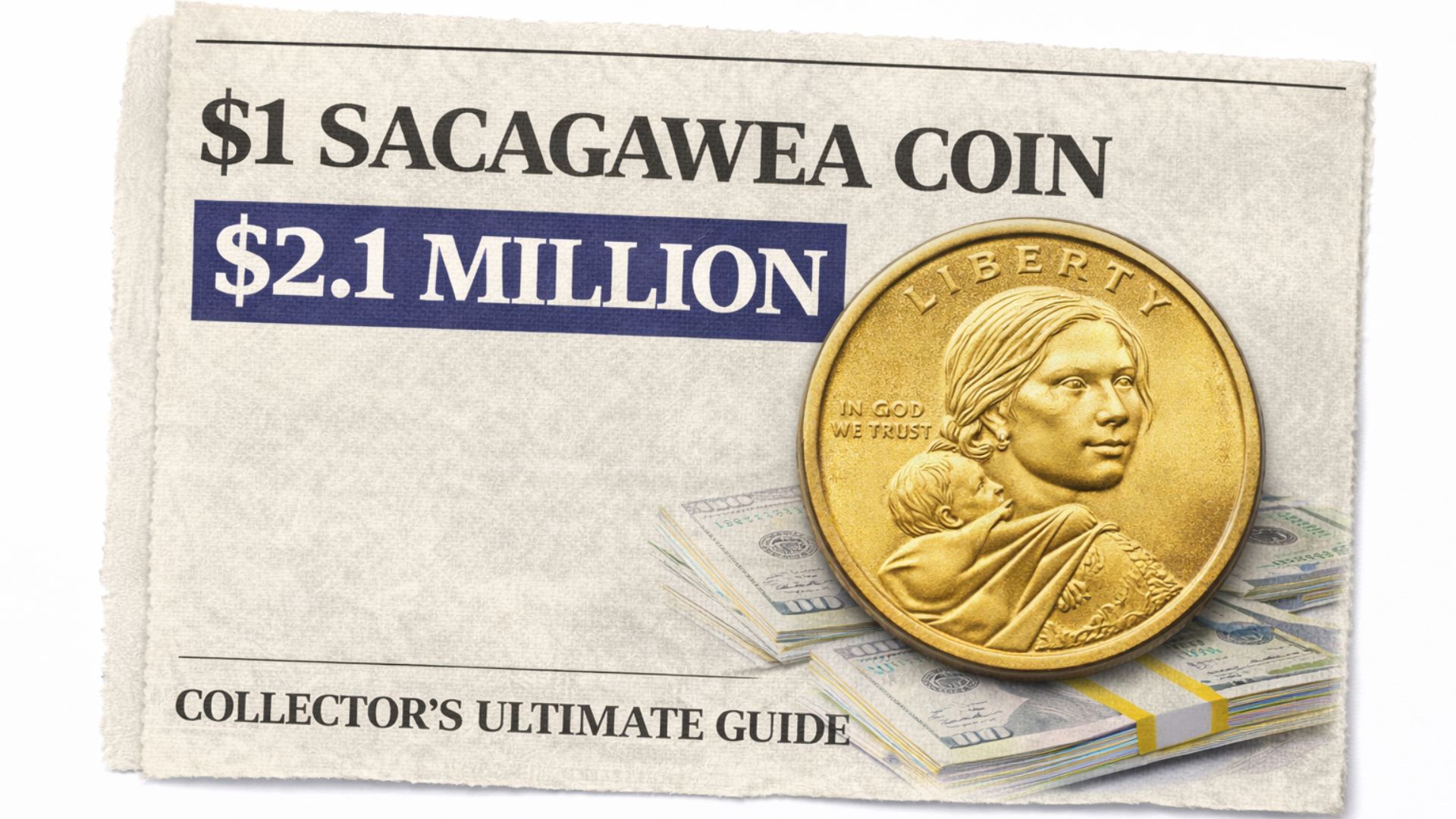
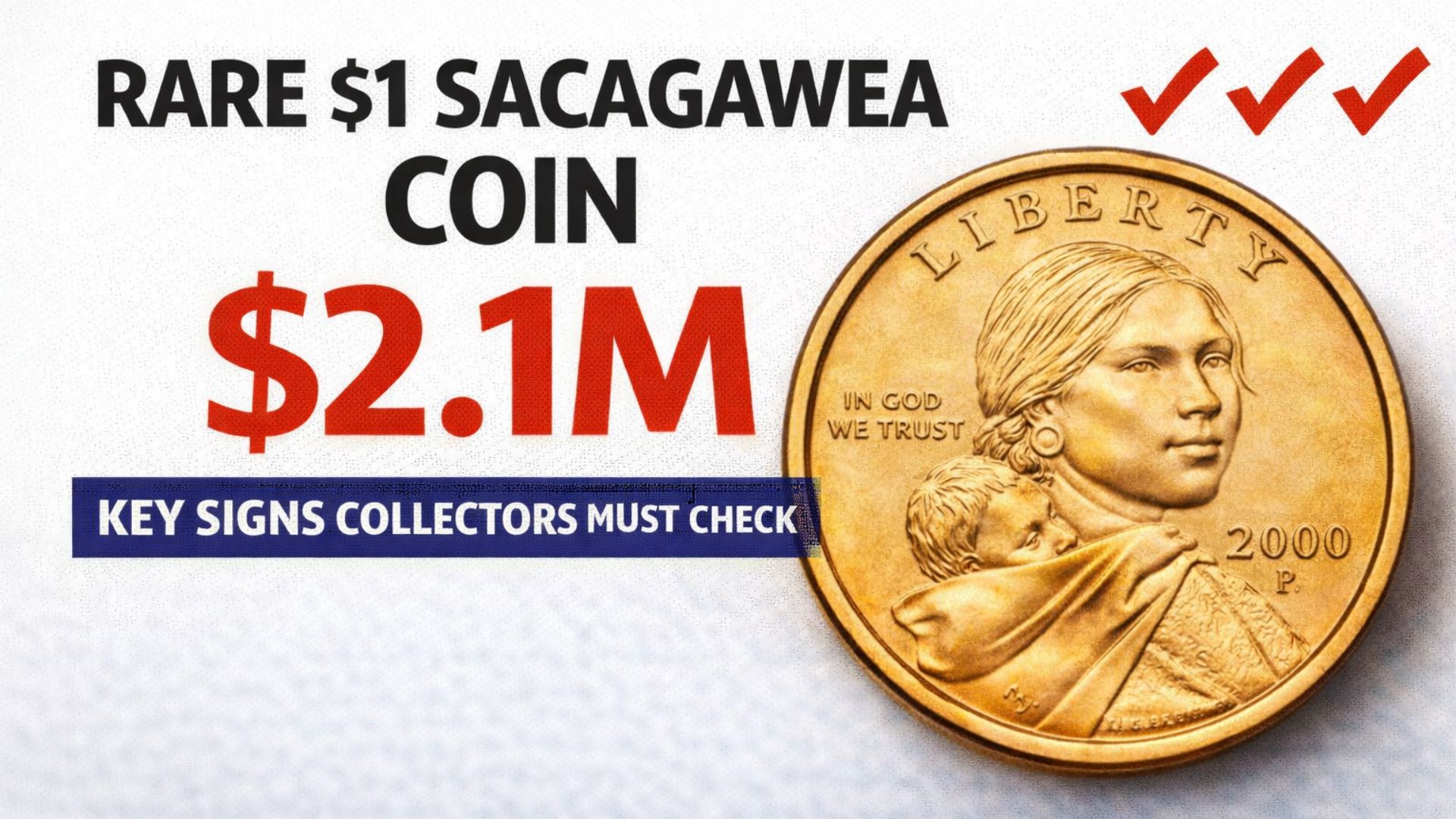
The Sacagawea dollar coin stands out as one of the most recognizable modern coins issued by the United States Mint. Introduced in the year 2000, it was created to replace the Susan B. Anthony dollar and encourage Americans to use dollar coins in daily transactions. Although millions of these coins were produced, a small group connected to a limited mintage of about 2.1 million has gained special attention from collectors due to its scarcity and historical importance.
The Story Behind the Sacagawea Dollar
The coin honors Sacagawea, a Shoshone woman who played a key role in guiding the Lewis and Clark Expedition. Her portrait shows her carrying her infant son, symbolizing guidance, strength, and Native American contributions to U.S. history. The original reverse design featured a flying eagle, representing freedom and exploration. Despite its attractive golden color and meaningful design, the coin never became popular in everyday use, as many people confused it with a quarter or preferred paper dollars.
Why the 2.1 Million Mintage Matters
Most Sacagawea dollars were produced in very large numbers, making them common. However, some later issues were minted in much smaller quantities, often intended for collectors rather than circulation. The reference to around 2.1 million coins usually points to one of these limited production years or special releases. Because fewer examples exist and many were never spent, these coins are harder to find today.
What Makes Certain Sacagawea Coins Valuable
Not every Sacagawea dollar is rare or valuable. Value increases when a coin comes from a low-mintage year, is preserved in uncirculated condition, or shows a unique design detail or minting error. Collector demand also strongly affects prices, especially when a specific variety becomes well known.
Condition and Professional Grading
Condition plays a major role in determining value. Coins that remain uncirculated, with smooth surfaces and sharp details, are far more desirable than worn examples. Professional grading services examine factors such as strike quality and surface preservation. A high-grade coin from a low-mintage year can be worth many times more than a circulated one.
Famous Varieties and Errors
Some Sacagawea dollars are collectible because of unusual features. One well-known example is the Cheerios dollar, which has enhanced eagle tail feathers and was distributed in cereal boxes. Other valuable varieties include coins with missing edge lettering, doubled designs, or coins struck on the wrong metal. These errors are rare and often bring strong prices.
How and Where to Look for Rare Examples
Collectors often find valuable Sacagawea dollars in mint sets, inherited collections, estate sales, or even bank rolls. Checking the date, mint mark, edge lettering, and overall condition is essential. Comparing your coin with trusted references can help spot differences that add value.
Final Thoughts on Sacagawea Coin Value
The rare 2.1 million Sacagawea dollar shows that even modern coins can become valuable. While most are common, a small number stand out because of low mintage, special features, or excellent condition. With careful inspection and the right knowledge, collectors may uncover hidden value in a coin many people overlook.
Disclaimer:
This article is for informational purposes only. Coin values depend on rarity, condition, grading, and market demand, which can change over time. For accurate valuation or selling advice, consult certified coin dealers or professional numismatists.