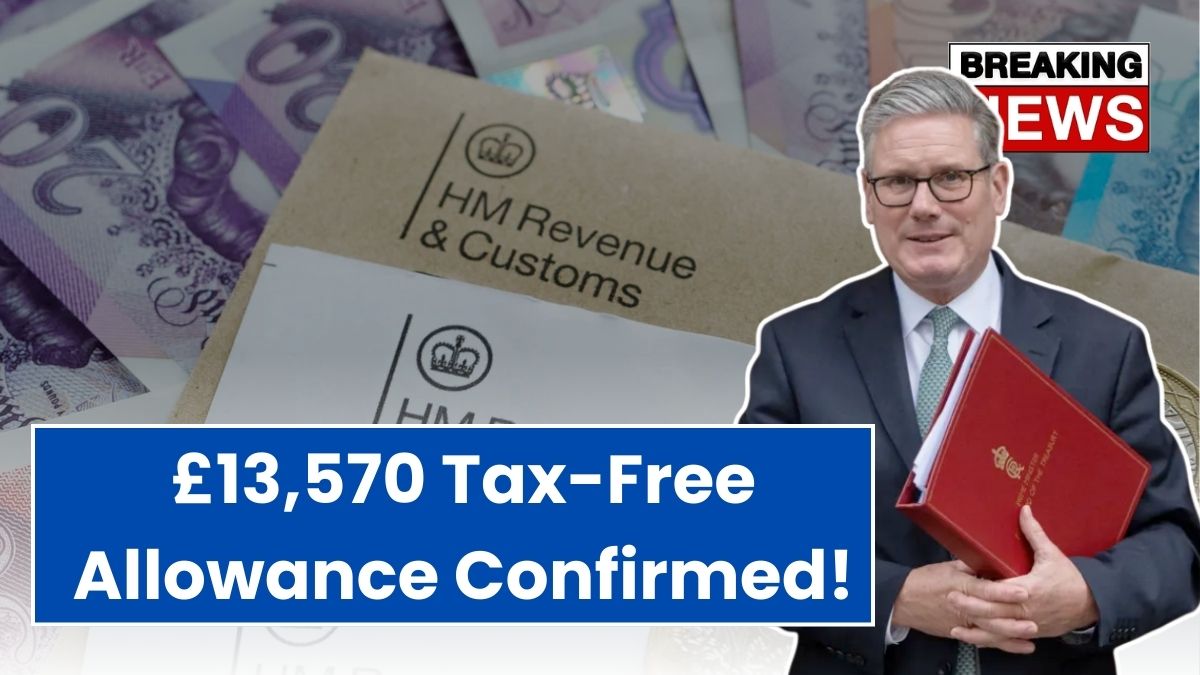
Tax-Free Allowance Confirmed – The HM Revenue & Customs has officially outlined plans to increase the tax-free Personal Allowance to £13,570, alongside the introduction of a new side rule that could change how the allowance is applied for some taxpayers. If approved, the move would affect millions of workers and pensioners across the UK, particularly those on low and middle incomes.
The announcement has attracted attention because the Personal Allowance has been frozen at £12,570 for several years. A £1,000 increase would represent a noticeable shift in tax policy, offering some relief from rising living costs, but the new side rule means not everyone will benefit in the same way.
What the Personal Allowance actually is
The Personal Allowance is the amount of income you can earn each tax year before paying Income Tax. At the moment, that figure is £12,570. Any income above this level is taxed according to your tax band, usually through PAYE or via Self Assessment.

For most people, the allowance is applied automatically through their tax code. Raising it to £13,570 would mean more of your income is protected from tax, reducing the amount you owe over the year.
Why HMRC is considering a £13,570 allowance
One of the main reasons behind this proposal is fiscal drag. Wages and pensions have risen in recent years, often just to keep up with inflation, but the frozen allowance has pulled more people into paying tax without them feeling any better off.
Pensioners have also been increasingly affected, especially those whose State Pension has risen under the Triple Lock and now nudges them over the tax threshold. The proposed increase is seen as a way to ease pressure without introducing broad tax cuts.

The move also fits with wider UK Government efforts to offer targeted relief while keeping public finances under control.
How much tax you could save
If the Personal Allowance rises to £13,570, most basic-rate taxpayers would see a clear saving. An extra £1,000 of tax-free income means paying less Income Tax over the year.
For someone paying the basic rate, this works out at around £200 less tax annually. While that may not sound huge, it can help offset rising costs such as energy bills, food prices, and transport. The saving is smaller or nonexistent for higher-rate taxpayers whose allowance is already reduced due to income levels.

Who benefits the most from the change
The biggest winners are likely to be people earning modest incomes just above the current threshold. This includes part-time workers, full-time employees on lower salaries, pensioners with a small private pension on top of the State Pension, and self-employed workers with modest profits.
Those earning below the current allowance already pay no Income Tax, so they would not benefit directly. However, the change could prevent more people from being pulled into the tax system as wages rise.
The new side rule explained in simple terms
Alongside the allowance increase, HMRC has proposed a new side rule that affects how the Personal Allowance is applied when someone has more than one income source. This includes people with multiple pensions, a pension plus a job, casual PAYE work, or a mix of PAYE and self-employed income.

The allowance itself would still be £13,570, but HMRC would apply stricter controls on how it is split across income streams. The aim is to stop the allowance being accidentally duplicated or applied incorrectly, which often leads to underpaid tax during the year.
Why HMRC wants this side rule
HMRC regularly deals with incorrect tax codes caused by complex income arrangements. These errors can leave people with unexpected tax bills at the end of the year or long delays waiting for refunds.
The new side rule is designed to improve accuracy, reduce mistakes, and make sure the right amount of tax is paid at the right time. HMRC says it is about fairness and administration, not about increasing tax overall.

How pensioners could be affected
Pensioners are one of the groups most affected by both the allowance increase and the side rule. Many retirees receive income from the State Pension alongside one or more workplace or private pensions.
Because the State Pension is paid without tax deducted, HMRC collects tax through other pensions. The tighter rules could mean tax is spread more evenly during the year, reducing the risk of surprise bills later. For many pensioners, the higher allowance should still reduce or remove their tax liability, but checking tax codes will be more important than ever.
Impact on PAYE workers
Employees paid through PAYE should see any allowance change applied automatically once it comes into force. However, people with second jobs, zero-hour contracts, or seasonal work may notice adjustments to their tax codes.

This does not necessarily mean paying more tax overall, but it could change when tax is deducted. HMRC will likely assign the full allowance to one main job to avoid confusion.
What it means for self-employed and side income
Self-employed workers claim the Personal Allowance through Self Assessment. A rise to £13,570 would reduce taxable profits and could lower the amount of tax due at the end of the year.
However, people combining self-employment with PAYE work may face closer scrutiny to ensure the allowance is applied correctly. Keeping accurate records and updating HMRC will be essential.

When the change might happen
Although HMRC has announced the plan, there is no confirmed start date yet. Any increase would need to be approved through legislation and is most likely to begin at the start of a tax year.
Most expectations point towards an April implementation, possibly following a Budget or Autumn Statement. Until then, the £12,570 allowance remains in place.
What UK taxpayers should do now
There is no need to take immediate action, but it is sensible to prepare. Checking your current tax code, reviewing all income sources, and making sure HMRC has up-to-date information can help avoid problems later.

People with multiple income streams may want to pay extra attention to how their allowance is being used.
Final thoughts
A rise in the tax-free Personal Allowance to £13,570 would be welcome news for millions, offering modest but meaningful relief at a time when household budgets are still under pressure. The new side rule, however, means the details matter more than ever.
For most taxpayers, the change should reduce Income Tax overall, but understanding how the allowance is applied will be key to avoiding surprises. Staying informed and checking your tax details will help ensure you benefit fully if and when the change takes effect.

Disclaimer
This article is for general information purposes only and does not constitute tax, financial, or legal advice. Tax rules, allowances, and eligibility criteria may change and can vary depending on individual circumstances. Readers should consult official guidance from HM Revenue & Customs or seek advice from a qualified tax adviser before making financial decisions based on the information provided.