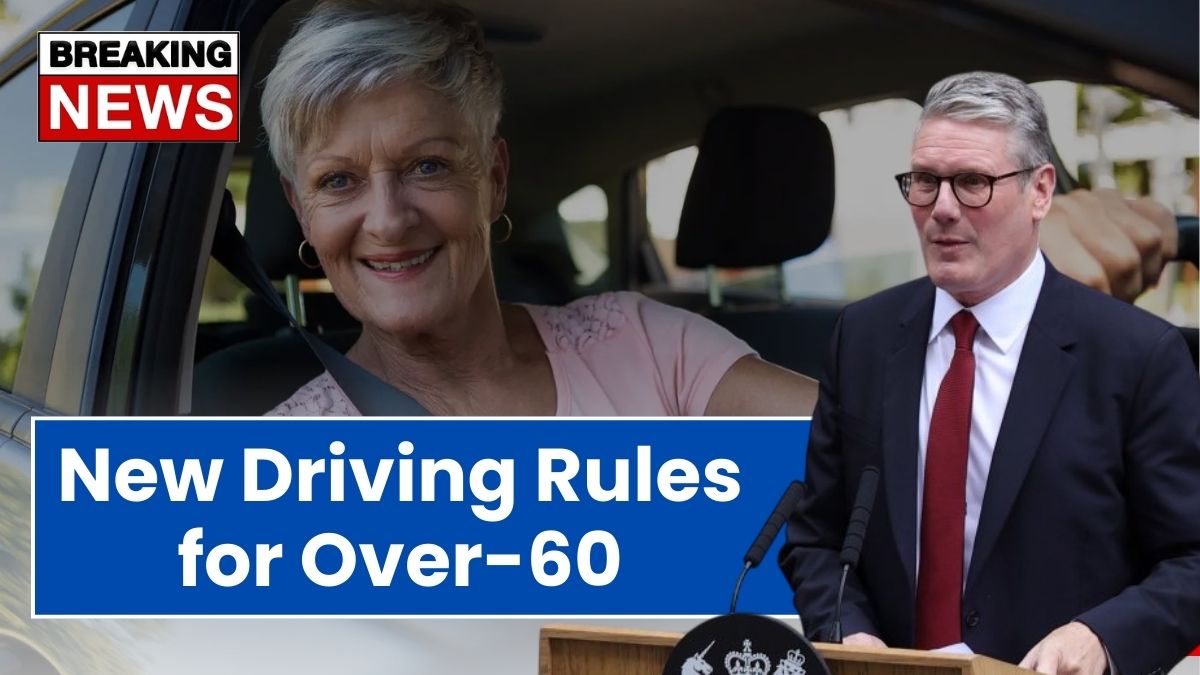
New Driving Rules for Over-60 Drivers – The UK Government has officially confirmed a set of updated driving rules for motorists aged over 60, due to come into force from January 2026. These changes form part of a wider road safety strategy that recognises the UK’s ageing population and the fact that many people are choosing to stay behind the wheel well into later life. Importantly, the new rules are not about taking licences away. Instead, they focus on awareness, health responsibility and keeping roads safe while allowing older drivers to remain independent and confident.
Why the Rules Are Changing
Britain’s population is ageing faster than ever before, and with better healthcare and longer life expectancy, more people are driving into their sixties, seventies and beyond. Government data shows that older drivers are often among the most cautious and experienced on the road. However, certain health conditions such as reduced eyesight, slower reaction times or long-term medical issues become more common with age. The updated rules aim to address these risks earlier, in a fair and supportive way, rather than waiting until problems arise after an accident or near-miss.
Understanding the New Age Threshold
One of the biggest changes is the shift in focus from age 70 to age 60. Previously, many formal checks and reminders were only triggered once drivers reached 70. Under the new approach, engagement begins earlier at 60. This does not mean new restrictions suddenly apply at that age. Instead, the government believes that starting conversations earlier encourages preparation, honesty and better long-term safety. The emphasis is on gradual awareness, not sudden changes or automatic limits.

Medical Declarations Explained
From January 2026, drivers over 60 will need to provide clearer medical self-declarations during licence renewals. This process focuses on health conditions that could reasonably affect driving ability, such as eyesight problems, cognitive changes or conditions that impact alertness. The goal is prevention rather than punishment. By encouraging drivers to reflect on their health earlier, issues can be managed with support from GPs or specialists before they become serious road safety concerns.
Drivers who fail to provide accurate medical information may face delays or temporary licence queries, but this is not designed to be heavy-handed. In most cases, the DVLA will simply request further details or clarification. Responding honestly and promptly is usually enough to keep everything running smoothly and avoid unnecessary disruption.
Changes to Licence Renewal
Licence renewal itself is not being overhauled dramatically, but it is becoming more structured. The government has confirmed that most renewals will continue to be completed online, with clear alternatives for those who are less confident with digital services. The emphasis is on accuracy, clarity and support rather than enforcement. For drivers who are medically fit and driving safely, renewals should feel much the same as before, just with clearer guidance along the way.

Health Areas Being Monitored
Under the new system, attention will be given to specific health factors linked to driving safety. These are not formal tests or exams, but guided declarations designed to encourage self-awareness. Eyesight clarity and reaction time are key areas, as is the presence of long-term conditions such as diabetes, heart disease or neurological issues. Medication is also considered, particularly where side effects like drowsiness or slowed reactions could affect driving. The intention is to help drivers think carefully about their fitness to drive, not to catch them out.
No Mandatory Retesting Based on Age
A major concern among older drivers has been the fear of compulsory retesting. The government has been clear that there will be no blanket retesting requirement simply because someone has reached a certain age. This reassurance has been welcomed by senior driver groups across the UK. Retesting will only be considered in individual cases where a genuine safety concern is identified by medical professionals or the DVLA. For the vast majority of over-60 drivers, everyday driving will remain unchanged.
The DVLA’s Role
The DVLA will play a central role in managing these updates. Rather than relying on age-based assumptions, the agency will focus more on medical declarations and professional input. Officials have promised clearer communication, including improved letters, guidance and online tools designed specifically for older drivers. The aim is to reduce confusion and anxiety, making it easier for drivers to understand what is expected of them and how to stay compliant without stress.

Support Available for Older Drivers
To help with the transition, the government plans to expand support services aimed at older motorists. These measures are designed to boost confidence rather than discourage driving. Optional refresher courses will be promoted for those who want to brush up on skills or learn about modern road layouts and technology. Clearer medical guidance from GPs will also play a role, along with more accessible DVLA helplines and local support options. The overall message is support, not restriction.
Impact on Car Insurance
The new rules do not directly change how car insurance works. However, insurers may take note of whether drivers are compliant with licence requirements and medical declarations. Drivers who follow guidance, keep documentation up to date and address health issues responsibly are expected to face fewer problems. Some industry experts even suggest that transparency could help demonstrate lower risk, reinforcing the value of honesty rather than avoidance.
Public Reaction Across the UK
Public response has been largely balanced. Many older drivers appreciate the clearer guidance and earlier communication, while advocacy groups continue to stress the importance of avoiding age discrimination. Road safety organisations have welcomed the evidence-based approach, noting that focusing on health and capability rather than age alone is a fairer and more effective way to improve safety. Overall, the changes aim to strengthen trust between drivers and authorities.

Getting Ready for January 2026
Drivers over 60 are encouraged to prepare well in advance. Simple steps like booking regular eye tests, reviewing medications with a GP and checking licence details can make the process straightforward. Keeping an eye on official DVLA updates will also help avoid last-minute confusion. Being proactive now means fewer surprises when the new rules officially come into effect.
Final Thoughts
The new UK driving rules for over-60s, starting in January 2026, represent a modern and balanced approach to road safety. Rather than limiting freedom, the changes focus on awareness, responsibility and early support. For most older drivers, daily motoring will continue as normal. Staying informed, honest and proactive will be the key to driving safely and confidently for many years to come.
Disclaimer

This article is for general information purposes only and is based on publicly discussed policy intentions at the time of writing. It should not be taken as legal, medical or official DVLA advice. Driving rules, licence requirements and medical obligations may change, and individual circumstances can vary. Always refer to official UK Government or DVLA guidance and consult a qualified medical professional for personal advice related to driving fitness.