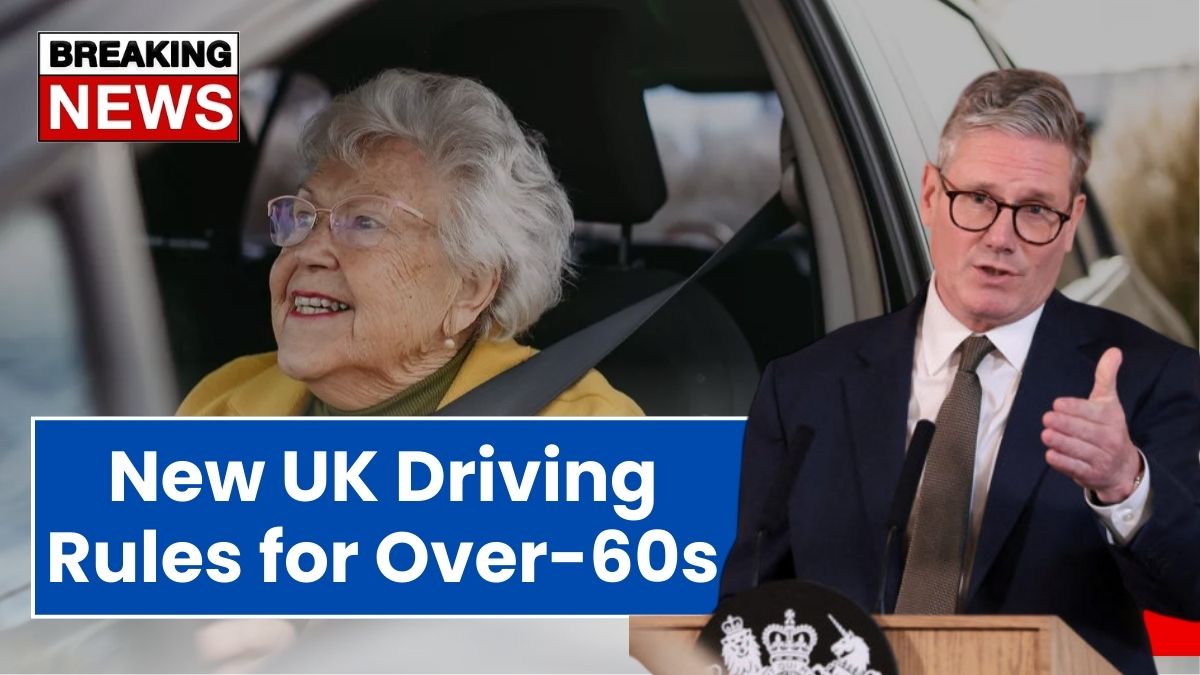
New UK Driving Rules for Over-60s – The UK Government has officially confirmed that new driving rules for motorists aged over 60 will come into force from January 2026. These changes form part of a wider road safety strategy that reflects the reality of an ageing population. More people are choosing to stay active, independent and behind the wheel well into later life, and the government says the updated approach is about supporting that choice rather than limiting it. The focus is on awareness, health responsibility and smoother licence management, not taking cars away from older drivers.
Why the Rules Are Changing
Britain’s population is ageing faster than ever, and that includes the number of drivers on UK roads. Many motorists in their sixties, seventies and even eighties are experienced, confident and safe drivers. Government data continues to show that age itself is not the biggest risk factor when it comes to accidents. However, certain medical conditions are more likely to develop later in life. The new rules are designed to address those risks early, in a sensible and respectful way, without making assumptions or applying blanket restrictions.
Age Threshold Explained Clearly
One of the biggest changes is when the conversation around driving health begins. Instead of waiting until drivers reach 70, the new framework starts at age 60. This does not mean restrictions suddenly apply at that age. Instead, it encourages earlier awareness and preparation. Officials believe that starting earlier helps drivers stay informed and confident for longer. There is no automatic action taken simply because someone turns 60. The emphasis is on gradual engagement, not sudden changes.

Medical Declarations Under the New System
From January 2026, drivers over 60 will be asked to provide clearer medical information during licence renewals. This builds on the existing self-declaration system but aims to make it more straightforward and focused. Conditions that may affect driving ability, such as eyesight problems or cognitive issues, will receive more attention. The aim is prevention rather than punishment, helping drivers identify concerns before they become serious issues on the road.
What Happens If Information Is Missing or Incorrect
Drivers who fail to provide accurate medical information during renewal may experience delays or temporary issues with their licence. In most situations, the DVLA will simply request additional details rather than taking immediate action. There is no intention to penalise honest mistakes. Responding promptly and providing accurate updates will help ensure licences remain valid and uninterrupted under the new rules.
Licence Renewal Changes Explained
Licence renewals themselves are not being made more difficult. The process will remain largely online, with clear support available for those who are less comfortable using digital services. Paper options and assistance will still exist. The government has stressed that the system is designed to support honesty and accuracy, not to catch people out. Most drivers who are medically fit will see little change to their driving routine.

Health Areas That Will Be Monitored
Under the updated approach, attention will be given to specific health areas linked to road safety. These are not formal tests but guided declarations intended to raise awareness. Drivers will be asked to consider eyesight quality, reaction time, long-term conditions such as diabetes or heart disease, neurological issues, and medications that may cause drowsiness or slow reactions. The goal is safer roads while respecting drivers’ independence and rights.
No Mandatory Retesting Based on Age
One of the biggest concerns among older motorists has been the fear of compulsory retesting. The government has been clear that there will be no mandatory driving retests based solely on age. This reassurance has been welcomed by senior driver groups across the UK. Retesting will only be considered in individual cases where medical professionals or the DVLA identify a genuine safety concern. For the vast majority of over-60 drivers, nothing about everyday driving will change.
The Role of the DVLA
The DVLA will be central to managing the updated system. Rather than relying on age-based assumptions, the agency will focus on medical declarations and professional input where necessary. Communication is also set to improve, with clearer letters, updated online tools and guidance specifically designed for older drivers. The aim is to reduce confusion and stress, making responsibilities easier to understand and manage.

Support Available for Older Drivers
To help drivers adapt smoothly, the government plans to expand support services aimed at senior motorists. These include optional refresher driving courses, clearer medical guidance through GPs, and more accessible DVLA helplines and local support options. These services are designed to build confidence and reassurance, not to discourage driving. Staying safe and mobile for as long as possible remains the priority.
Impact on Car Insurance
The new rules do not directly change how car insurance works. However, insurers may take note of whether drivers are compliant with licence requirements. Maintaining accurate medical declarations and a valid licence can help avoid complications. Some industry experts suggest that responsible compliance could even demonstrate lower risk, reinforcing the importance of transparency rather than avoidance.
Public Reaction Across the UK
Public response has been largely balanced. Many older drivers appreciate clearer guidance and early engagement, while advocacy groups continue to stress the importance of avoiding age discrimination. Road safety organisations have welcomed the evidence-based approach, noting that focusing on health and capability rather than age alone helps maintain trust between drivers and authorities while improving overall safety.

How to Prepare for January 2026
Drivers over 60 are encouraged to prepare well ahead of the changes. Simple steps like booking regular eye tests, reviewing medications with a GP and checking licence details can make the transition smooth. Staying informed through official DVLA updates will help avoid last-minute stress and ensure everything is in place before the new rules take effect.
Final Thoughts
The new UK driving rules for over-60s reflect a modern, balanced approach to road safety. Rather than limiting freedom, they aim to support responsible driving through awareness and early action. For most older drivers, daily motoring will continue exactly as before. Being informed, honest and proactive will be the key to staying confident, independent and safe on the road in the years ahead.
Disclaimer

This article is for general information purposes only and is based on publicly available government guidance at the time of writing. Driving rules, DVLA procedures and medical requirements may change, and individual circumstances can vary. Readers are advised to check official DVLA or UK Government sources for the most up-to-date and accurate information before making decisions regarding licence renewal or driving eligibility.