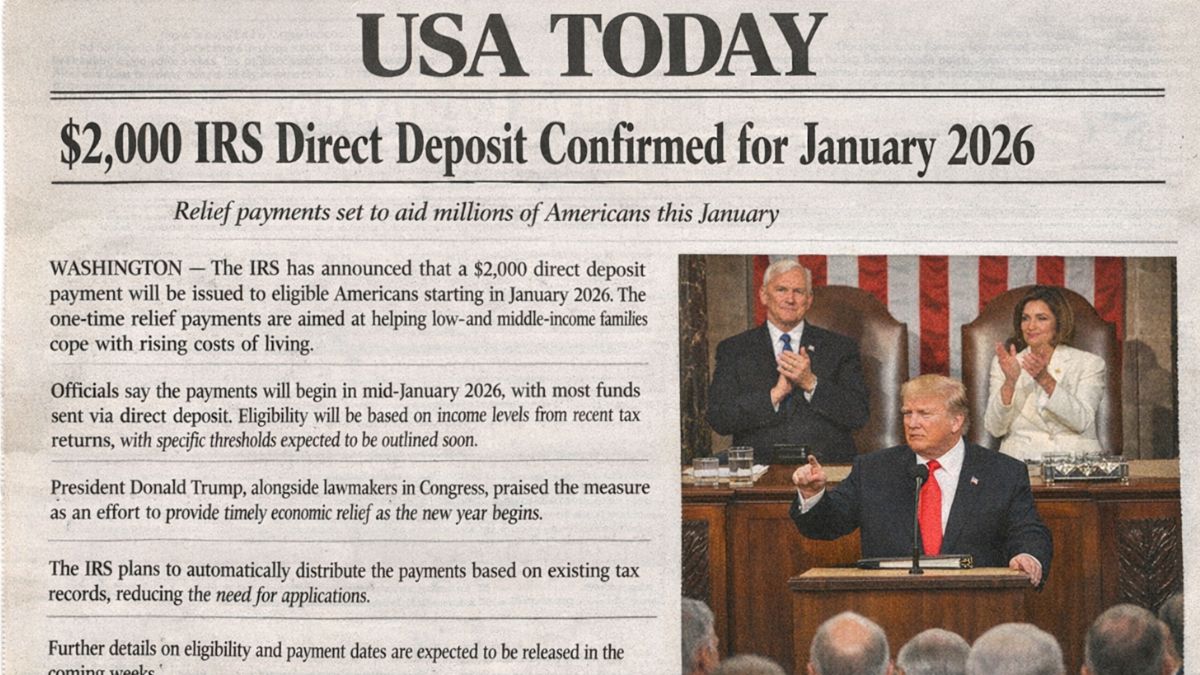
IRS Announces $2000 Direct Deposit – As 2026 kicks off, money is once again a major topic at kitchen tables across America. Prices for groceries, rent, utilities, and everyday essentials haven’t exactly gone back down, and many families are still feeling the pressure. That’s why news of a possible $2,000 direct deposit relief payment from the IRS has caught so much attention. For households trying to stretch every dollar, this kind of support could make a noticeable difference at the start of the year.
The idea behind this payment is simple: give people a little breathing room during a time when expenses tend to pile up. January often brings post-holiday credit card bills, heating costs, and regular monthly payments all hitting at once. A one-time boost could help families catch up, stay current, or at least reduce some of the financial stress that tends to build early in the year.
What the $2,000 IRS Relief Payment Actually Is
Let’s clear up one important point right away. This $2,000 payment is described as a one-time relief measure. It is not a loan that has to be paid back, and it is not just a regular tax refund arriving early. Instead, it’s framed as temporary financial support aimed at helping eligible taxpayers deal with rising living costs.

The IRS is expected to rely on existing tax records to handle this process. That means, for most people, there would be no long application form, no complicated sign-up, and no new program portal to figure out. The system would look at the information already on file from recent tax returns and use that to determine who qualifies and where to send the money. This automatic approach is designed to make things faster and reduce confusion.
Who May Qualify for the Payment
Eligibility is expected to focus mainly on income levels, filing status, and residency. In simple terms, the payment is aimed at low- and middle-income individuals and families. The IRS would review details from 2024 or 2025 federal tax returns to decide who falls within the set income limits.
Filing status also plays a role. Single filers, married couples filing jointly, and heads of household could all be considered under different income thresholds. Households with dependents may receive added consideration, since raising children comes with higher day-to-day costs like food, clothing, school needs, and healthcare.

Even if someone’s income changed during the year, that doesn’t automatically mean they’re out. People who worked part of the year, changed jobs, or had fluctuating income may still qualify if their overall earnings fall within the guidelines. The key factor is what the tax return shows when the IRS reviews it.
How and When Payments Could Be Sent
Timing matters, and the IRS is expected to roll out payments in stages throughout January 2026. Taxpayers who already have direct deposit information on file with the IRS are likely to be at the front of the line. For them, deposits could begin as early as mid-January, going straight into their bank accounts.
Direct deposit is usually the fastest method. There’s no waiting for the mail and less risk of delays. That’s why having updated banking details on your most recent tax return can make a big difference.

For people who don’t have bank account information on file, a paper check may be mailed instead. These payments would likely go out later in the month, since printing and mailing checks takes more time. Delivery speed could also depend on postal service timelines and individual locations.
Processing time may vary from person to person. Complicated tax situations, recent address changes, or mismatched information could slow things down. That’s why it’s smart to double-check details ahead of time.
Steps You Can Take to Avoid Delays
While the payment is described as automatic, that doesn’t mean you should ignore your tax information. A few simple checks could help avoid unnecessary headaches.

Start by reviewing your most recent tax return. Make sure your bank account number and routing number are correct if you expect direct deposit. If you’ve moved, confirm that your mailing address is updated. A wrong address can easily lead to a delayed or lost check.
Filing status is another detail worth checking. If your marital status changed or you’re now claiming dependents, those updates should be reflected correctly on your return. The IRS uses this information when determining eligibility and payment amounts.
Any updates should be made through official IRS tools or during the regular tax filing process. Taking care of these details early increases the chances that your payment, if you qualify, will arrive smoothly during the January distribution period.

Why This Payment Matters Right Now
For many households, this isn’t just extra cash — it’s a buffer. A $2,000 deposit could help cover rent, pay down utility bills, restock the fridge, or reduce high-interest credit card balances built up during the holidays. Even if it doesn’t solve every financial challenge, it can take some pressure off at a time when budgets feel especially tight.
This type of relief is meant to be short-term, not a long-term solution. Still, short-term help can make a big difference in real life. It can prevent late fees, avoid service shutoffs, and give families a chance to reset financially as the new year begins.
Staying Informed Is Key
Because programs like this can change, staying informed is important. Official IRS guidance is the best source for updates on eligibility rules, payment schedules, and any adjustments to the plan. Rumors and social media posts often spread faster than verified information, which can lead to confusion.

Checking reliable sources and reviewing your own tax details are two of the most practical steps you can take. Being proactive doesn’t just help you stay prepared — it also reduces stress, since you’ll know you’ve done what you can on your end.
Final Thoughts
The proposed $2,000 direct deposit for January 2026 is designed to give struggling households some breathing room during a financially demanding time. By using existing tax data and automatic payments, the process aims to be simple and efficient. While not everyone may qualify, those who do could find it helpful for covering essential expenses. Keeping your tax information current and following official updates are the best ways to be ready.
Disclaimer
यह भी पढ़े:
 $2000 Federal Deposit Checks in January 2026: Eligibility Possibilities and Payment Facts
This article is for general informational purposes only and should not be considered official tax advice. Payment amounts, eligibility requirements, and distribution timelines may change based on updated IRS guidance or federal decisions. Individual situations can vary widely. Readers should confirm details through official IRS sources or speak with a qualified tax professional before making financial plans or decisions based on this information.