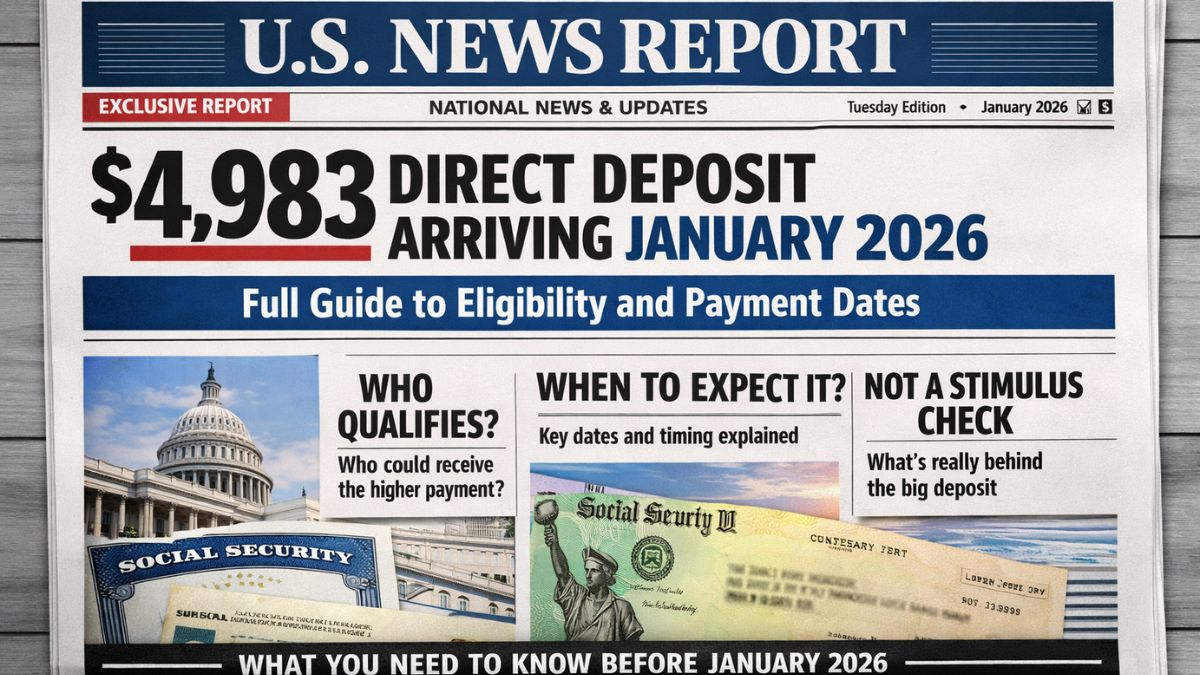
$4983 Direct Deposit Arriving January – As January 2026 gets closer, the number $4,983 has been popping up all over social media, online forums, and headline-style posts. For many Americans dealing with higher rent, rising medical costs, and everyday bills that seem to grow every month, that number sounds like a lifeline. Naturally, some people have assumed it must be a new government payment or stimulus-style deposit.
The reality is less dramatic, but still important to understand. The $4,983 figure does not represent a new federal stimulus check or a one-size-fits-all payment. Instead, it reflects how several existing benefit adjustments, delayed payments, or corrections can sometimes line up at the start of the year, making a January deposit appear much larger than usual.
Why the $4,983 Amount Is Being Talked About
The reason this specific figure is circulating has a lot to do with timing. January is when many federal programs apply annual updates, including cost-of-living adjustments and benefit recalculations. In some cases, beneficiaries may also receive back pay, corrected amounts from earlier months, or delayed credits that were processed late in the previous year.

When these adjustments hit at the same time, the deposit total can look surprisingly large. That is where numbers like $4,983 come from. It is not a bonus or special payout, but rather a snapshot of multiple routine adjustments arriving together. For someone used to a much smaller monthly payment, seeing a larger deposit in January can understandably cause confusion.
This Is Not a Universal Government Payment
One of the most important things to clear up is that there is no nationwide $4,983 payment being sent to all Americans. No federal agency has announced such a program, and there is no legislation approving a lump-sum payment in that amount for January 2026.
Eligibility for any larger-than-usual deposit depends entirely on individual circumstances. Some people may see an increased payment, some may see no change at all, and others may not receive anything beyond their regular benefits. Online posts often leave out this context, which leads to unrealistic expectations and disappointment.

Who Is More Likely to See a Larger January Deposit
While the payment is not universal, certain groups are more likely to notice higher deposits at the beginning of the year. Retirees and individuals receiving disability-related benefits often see changes due to annual recalculations. These adjustments are designed to help benefits keep pace with inflation and rising living costs.
Low-income households enrolled in income-based assistance programs may also see adjustments or reconciliations if their benefits were updated late in the year. Additionally, some tax filers could receive refundable credits or corrected amounts if earlier payments were delayed or miscalculated. In these situations, January becomes the catch-up month.
How Cost-of-Living Adjustments Play a Role
Cost-of-living adjustments, often called COLAs, are a major factor behind larger January payments. These adjustments are applied annually and are meant to reflect changes in inflation. When prices for essentials like food, housing, and healthcare rise, benefit amounts are adjusted upward to help recipients maintain purchasing power.

Sometimes, these increases are combined with payments that were not fully applied in previous months. When that happens, the first deposit of the new year can look much higher than a normal monthly benefit, even though it represents standard policy rather than extra aid.
Payment Timing and Delivery Methods Matter
Another reason January payments cause confusion is timing. Direct deposit is the fastest and most common way benefits are delivered, but exact arrival dates can vary. Bank processing schedules, weekends, and federal holidays all affect when money shows up in an account.
Paper checks take longer and may arrive days or even weeks after direct deposits. When people compare deposits online without considering these factors, it can create the impression that something unusual is happening, even when the system is functioning as designed.

Why Online Claims Often Exaggerate the Situation
Viral posts and attention-grabbing headlines often blur the line between possibility and guarantee. A single example of someone receiving a large deposit gets shared widely, stripped of context, and turned into a claim that “everyone is getting paid.” That is rarely the case.
It is also important to be cautious of scams. Government agencies do not contact people through text messages, social media, or emails asking for banking details. Any post or message claiming you must “sign up” or “confirm information” to receive a $4,983 deposit should be treated as a red flag.
How to Stay Informed and Protect Yourself
The best way to understand what payments you may receive is to rely on official government sources and your own account records. Reviewing benefit statements, checking official notices, and keeping personal information updated can help prevent surprises.

January payments are often the result of administrative adjustments rather than new policy decisions. Knowing this ahead of time allows households to plan realistically, avoid misinformation, and make smart financial choices without relying on rumors or inflated expectations.
The Bottom Line for January 2026
A $4,983 direct deposit in January 2026 is not a new stimulus and not something everyone should expect. For those who do receive a larger deposit, it is typically the result of combined adjustments, delayed payments, or recalculated benefits. Understanding how and why these deposits happen can help reduce confusion and keep expectations grounded in reality.
Disclaimer

This article is intended for informational purposes only and should not be considered financial, legal, or tax advice. The $4,983 direct deposit mentioned is not a guaranteed or universal payment and does not represent a new federal stimulus program. Payment amounts, eligibility, and timing depend on individual circumstances and specific program rules. Readers should verify information through official government sources or consult qualified professionals before making financial decisions.