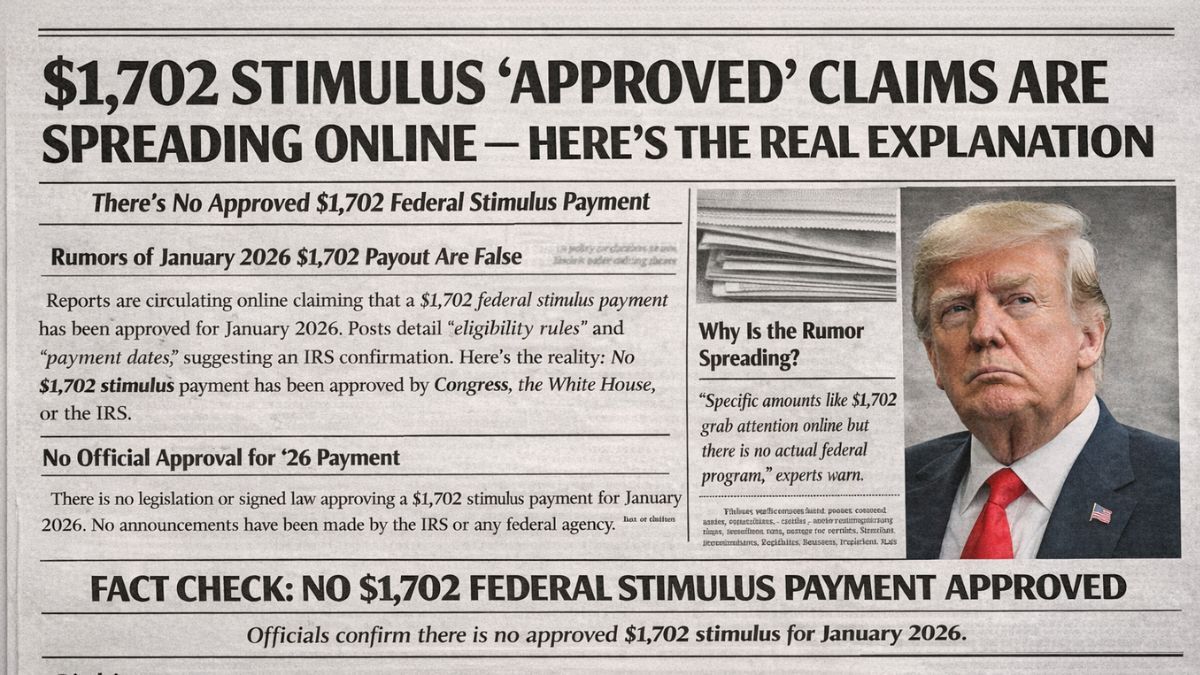
Over the past few weeks, social media feeds and online headlines have been filled with claims about a so-called 1,702 dollar federal stimulus payment supposedly arriving in January 2026. Some posts go into impressive detail, listing eligibility rules, payment schedules, and even suggesting that the IRS has already approved the program. That level of detail makes the story sound credible at first glance. The reality, however, is much simpler and far less exciting. There is currently no approved 1,702 dollar federal stimulus payment, and no federal agency has announced plans for one.
This situation highlights how quickly financial rumors can spread online, especially at a time when many households are struggling with higher costs for essentials like food, rent, utilities, and healthcare. When money is tight, any suggestion of government relief naturally draws attention. That is exactly why it is important to separate verified facts from viral claims before making assumptions or financial plans.
Is a 1,702 Dollar Stimulus Payment Approved for January 2026
The short answer is no. A federal stimulus payment cannot exist without formal approval from Congress. That process requires lawmakers to pass a bill that clearly authorizes the payment, allocates funding, and defines eligibility rules. Once that happens, the President must sign the bill into law. Only after all of that do agencies like the IRS or the Treasury Department issue official guidance explaining how payments will work.

None of these steps have occurred for a 1,702 dollar stimulus payment. There is no bill, no signed law, and no announcement from Congress, the White House, the Treasury, or the IRS. Without those actions, a nationwide federal payment simply cannot be issued, regardless of how convincing online posts may seem.
Why Such Specific Claims Sound Convincing
One reason this rumor has gained traction is the very specific amount being mentioned. A number like 1,702 dollars sounds calculated and official, which can make people assume it is based on real data. In reality, amounts like this often come from unrelated sources. They may resemble average tax refund figures, state-level rebate programs, or rough estimates created by combining different benefits.
Once a number appears in a few posts, it quickly gets repeated. As more websites and videos reuse the same figure, it begins to feel familiar. Familiarity can be mistaken for accuracy, especially when the claim is shared by multiple sources that appear to agree with one another.
How Social Media Amplifies Financial Rumors
Social media platforms play a major role in spreading claims like this. Content that promises money, relief, or financial help tends to generate strong reactions. Likes, comments, and shares push those posts into more feeds, regardless of whether the information is accurate.
Over time, repeated exposure creates the illusion that something must be real because everyone seems to be talking about it. Unfortunately, algorithms do not check facts. They reward engagement. This is how unverified claims can spread faster than official announcements, even when there is no legal basis behind them.
What Would Happen If a Real Stimulus Were Approved
Looking back at past federal stimulus programs helps clarify what people should expect if a new payment were ever approved. In previous cases, eligibility was based on factors such as income limits, tax filing status, residency requirements, and information already on file with the IRS. Recent tax returns were usually the main tool used to determine who qualified and how much they received.

Payment methods followed clear patterns. Direct deposit was the fastest option for those with bank details on file. Others received paper checks or prepaid debit cards by mail. Importantly, all of this information was released publicly through official channels before payments began. None of that has happened for a 1,702 dollar payment.
The Truth About Payment Dates and Schedules
Many posts claim that January 2026 payment dates are already set. This is not true. Payment schedules can only be created after a program is officially approved and agencies have time to prepare their systems. Since no 1,702 dollar stimulus program exists, there are no payment waves, no deposit calendars, and no mailing timelines.
When real federal payments are approved, the IRS publishes detailed updates and frequently asked questions. Major news organizations report on those announcements using direct statements from government officials. The absence of this kind of coverage is a clear sign that the claim is not legitimate.

IRS Guidance and Scam Warnings
The IRS has not released any guidance, forms, or online tools related to a 1,702 dollar stimulus payment. This matters because rumors like this often attract scammers. Fake emails, text messages, and websites may claim to help people apply or confirm eligibility. These scams often ask for Social Security numbers, bank details, or small fees.
Legitimate stimulus programs do not require people to pay fees to receive money. In most cases, there is no separate application at all. Payments are based on existing tax records. Any request for personal information tied to this claim should be treated as a serious warning sign.
The Role of Congress in Federal Payments
Large-scale federal stimulus payments can only be created by Congress. The process involves public debate, votes in both the House and Senate, and a presidential signature. Because these programs involve billions of dollars, they receive widespread media coverage and formal documentation.

They do not appear quietly through anonymous posts or unofficial websites. That is why relying on random online sources for information about federal payments is risky. Official government announcements are always the final authority.
Why Verifying Information Really Matters
Misinformation about government payments can cause real harm. People may delay paying bills, take on debt, or make spending decisions based on money that will never arrive. In worse cases, scams linked to these rumors can lead to identity theft and financial loss.
Taking a few minutes to verify claims through official government sources or established news outlets can prevent stress and protect personal information. Skepticism is not negativity; it is a practical response to unverified claims.

The Bottom Line on the 1,702 Dollar Claim
There is no approved 1,702 dollar federal stimulus payment for January 2026. No eligibility rules exist, no payment dates have been scheduled, and the IRS has not confirmed any such program. Until Congress passes legislation and federal agencies release official guidance, this claim should be treated as unverified.
While the idea of extra financial support is appealing, especially during times of economic pressure, hope should be grounded in facts. Staying informed, cautious, and alert to misinformation is the best way to avoid disappointment and protect yourself from scams.
Disclaimer
यह भी पढ़े:
 $2000 Federal Deposit Checks in January 2026: Eligibility Possibilities and Payment Facts
This article is provided for general informational purposes only and should not be considered financial, legal, or tax advice. Federal payment programs depend on official legislation, funding approval, and agency guidance, all of which may change or never be implemented. Information presented here is based on publicly available facts at the time of writing. Readers should verify details through official government sources before making financial decisions or sharing personal information.