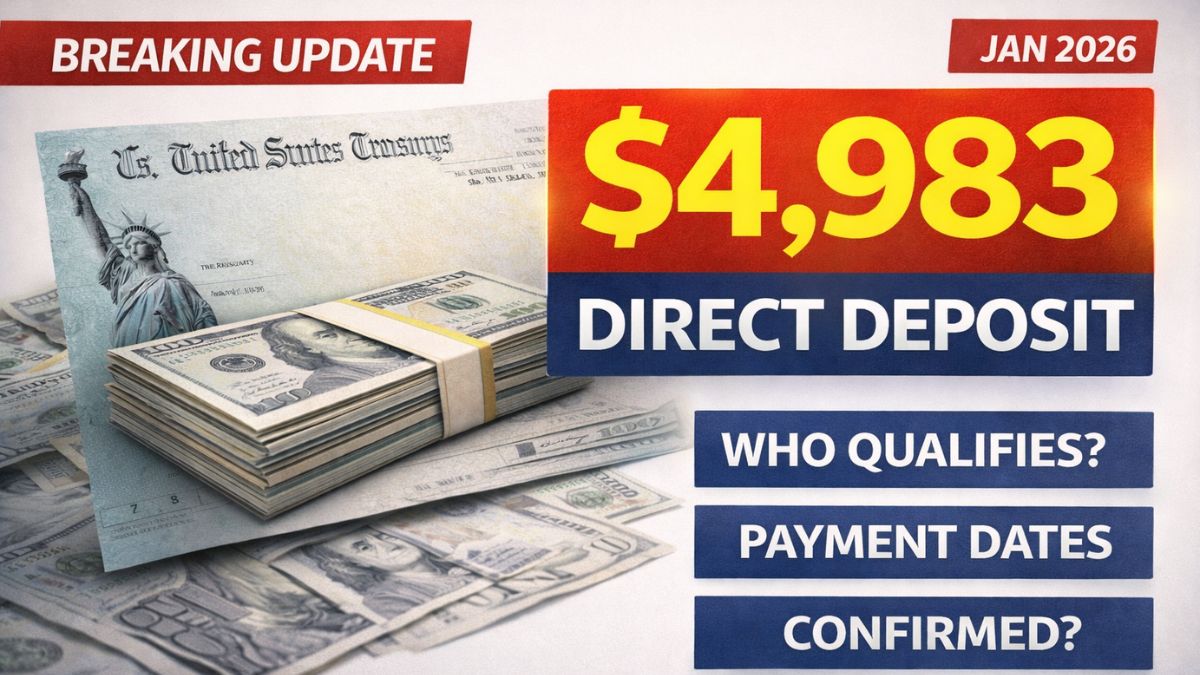
As January 2026 begins, many Americans are paying extra attention to their bank balances. After holiday spending, household budgets often feel tight, and any mention of a $2,000 federal deposit naturally creates excitement. Social media posts and online discussions have fueled expectations, leaving many people unsure whether a new government payment has actually been approved.
No New Nationwide $2,000 Stimulus Program
Despite widespread online claims, there has been no official announcement from Congress, the IRS, or any federal agency confirming a new universal $2,000 stimulus payment for all Americans. For a nationwide payment to exist, Congress must pass a law and allocate funding. That process has not happened. As of now, there is no single federal program sending $2,000 to everyone in January 2026.
Why Some Deposits Look Like $2,000 Payments
Even without a new stimulus, many people are still receiving deposits close to $2,000. These payments are coming from existing federal systems, not from a newly created relief plan. January is a busy month for government payments, which explains why so many deposits appear around this time.

Tax Refunds Are a Major Source
Early tax filing plays a big role. People who file their tax returns early and choose direct deposit may receive refunds in January. Refundable tax credits linked to income level, dependents, or education can increase refund amounts significantly. In many cases, these refunds can reach or exceed $2,000, leading people to believe a new payment has arrived.
Ongoing Benefit Payments Continue as Usual
Regular benefit programs also contribute to the confusion. Social Security, SSI, and SSDI payments continue on their normal schedules in January. Depending on benefit type, cost-of-living adjustments, and household circumstances, some monthly payments are close to $2,000. Occasionally, delayed or corrected payments are issued as lump sums, which can further add to the misunderstanding.
Who Is Most Likely to See These Deposits
Eligibility depends entirely on the payment source. Early tax filers owed refunds are often the first to see deposits. Families qualifying for refundable credits may receive larger amounts. Benefit recipients receive payments based on their specific program and personal details. There is no single eligibility rule covering everyone.

Payment Timing and Safety Tips
There is no universal payment date. Social Security payments usually arrive early in the month, while tax refunds depend on filing and processing speed. Filing accurately, confirming bank details, and using official IRS or Social Security tools helps avoid delays. People should also stay alert for scams, as federal agencies do not ask for personal information through texts or social media.
Understanding the Reality
The $2,000 federal deposit discussion in January 2026 is not about a new stimulus check. It reflects routine tax refunds, refundable credits, and ongoing benefit payments. Knowing this helps replace confusion with clarity and supports better financial planning.
Disclaimer
This article is for informational purposes only and does not provide legal, tax, or financial advice. Federal payment programs, eligibility rules, and timelines may change, and individual situations vary. Readers should rely on official IRS, SSA, or other federal agency resources, or consult a qualified professional for personalized guidance.