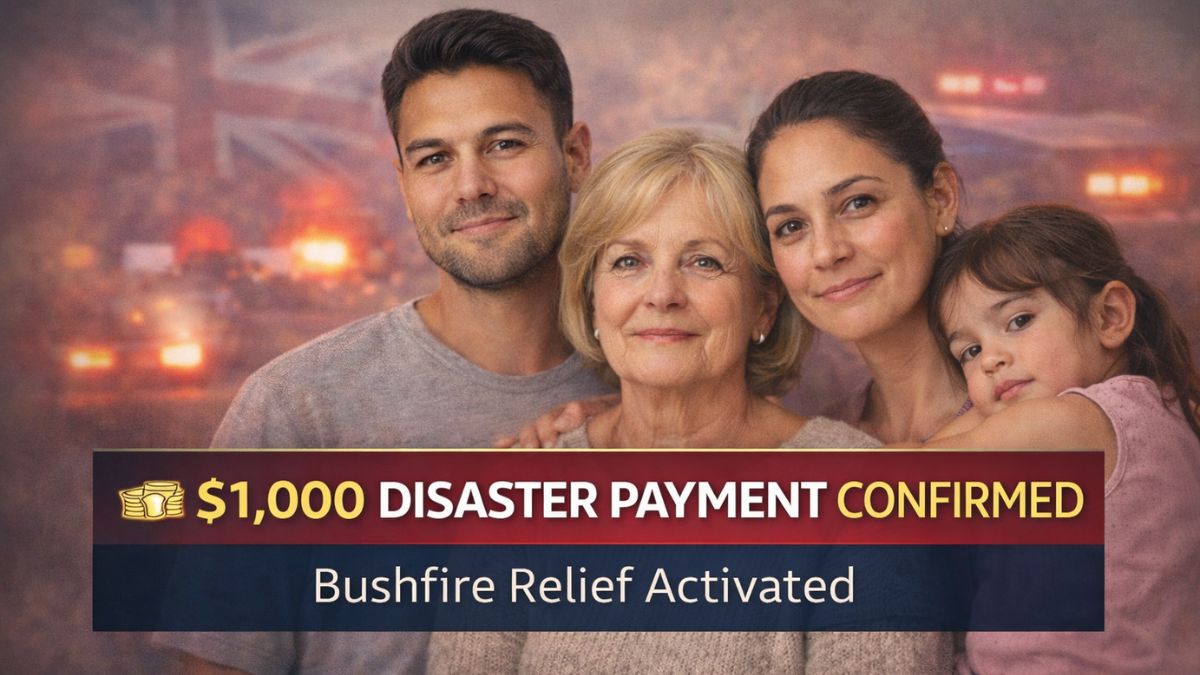
Severe bushfires continue to affect large parts of Victoria, burning more than 350,000 hectares of land and destroying over 300 properties. Many families have been forced to evacuate, losing homes, belongings, and a sense of security. As emergency crews work to control the fires, governments have moved quickly to provide financial help to people whose lives have been disrupted by this disaster.
$1,000 Disaster Payment Now Available
The Australian Government has activated the Australian Government Disaster Recovery Payment for people affected by the Victorian bushfires. This payment provides $1,000 for each eligible adult and $400 for each eligible child. It is a one-off payment designed to help people manage immediate needs after experiencing serious loss or disruption due to the fires.
Who Can Access the Payment and When
From 2pm on Wednesday, January 14, eligible residents in Barkers Creek, Harcourt, Harcourt North, Longwood, Longwood East, Natimuk, Ravenswood South, Ruffy, and Sutton Grange can apply for the payment. Services Australia staff are available to help people check eligibility and submit claims, ensuring support reaches those who need it as quickly as possible.

Purpose of the Financial Assistance
This payment is intended to help cover essential costs during recovery. These may include replacing basic household items, buying clothing, paying for food, or securing temporary accommodation. For families facing sudden evacuation or property loss, this financial support can provide important short-term stability during an extremely stressful time.
Additional Disaster Support Through DRFA
Federal assistance is provided alongside the Disaster Recovery Funding Arrangements, jointly funded by the Australian and Victorian governments. This support is currently available in Strathbogie, Towong, Mansfield, and Murrindindi shires. The funding helps with emergency relief centres, personal and financial counselling, debris removal from residential properties, and restoration of essential public assets.
Emergency Relief Payments for Evacuated Families
Emergency relief assistance is also available for eligible community members whose homes were damaged, destroyed, or located in evacuation warning zones. This support includes a one-off payment of $680 per adult and $340 per child, with a maximum of $2,380 per family. These payments help cover urgent needs such as food, medication, clothing, and short-term accommodation.

How to Make a Claim Online or by Phone
People can check eligibility for the disaster recovery payment through the Services Australia website. The fastest way to apply is online through a myGov account linked to Centrelink. Those needing assistance can call the Australian Government Emergency Information Line on 1800 226 226 for support with the claims process.
State-Based Support and Emergency Contacts
Eligibility for Disaster Recovery Funding Arrangements can be checked by visiting an Emergency Relief Centre or calling the VicEmergency hotline on 1800 226 226. Ongoing updates about relief services, recovery programs, and community support are available on the VicEmergency website, helping residents stay informed during recovery.
Managing Centrelink Obligations During the Crisis
People affected by the bushfires who need to pause or change Centrelink debt repayments can do so online, through the Centrelink mobile app, or by calling 1800 076 072. These options are designed to reduce financial pressure while families focus on safety and rebuilding.
यह भी पढ़े:
 Centrelink Confirms $581.50 DSP Increase from January 2026: What It Means for Australians
Disclaimer
This article is for informational purposes only. Payment amounts, eligibility criteria, affected locations, and support services may change based on official government decisions. Readers should check Services Australia, Centrelink, and VicEmergency websites or contact official helplines for the most accurate and up-to-date information related to their individual circumstances.