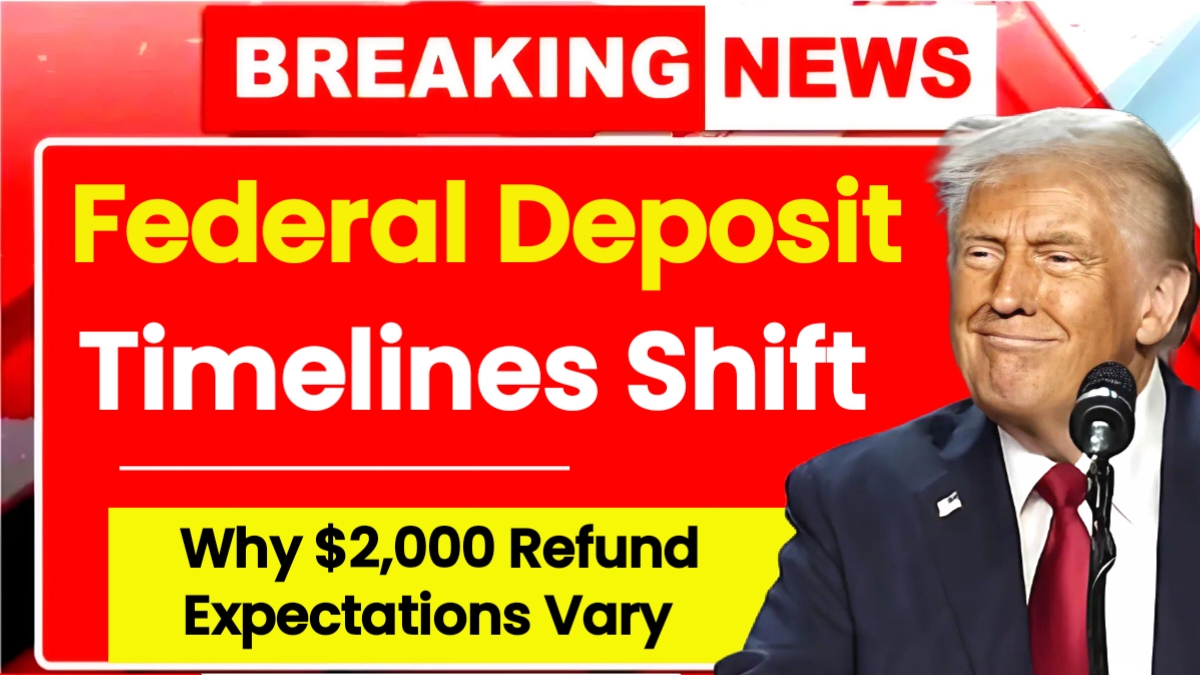
Federal Deposit Timelines Shift in January 2026: As the 2026 tax season began, many Americans noticed online discussions about a possible $2,000 federal payment. These conversations were linked to tariff revenue ideas and past stimulus-style deposits. Social media posts and blogs suggested that a new payment could arrive in January, creating confusion among taxpayers.
In reality, official federal deposit schedules for January 2026 are focused on regular tax refunds. There is currently no confirmed plan for an automatic $2,000 federal payment. Understanding this difference helps people set realistic expectations for the new tax year.
Where the $2,000 Payment Idea Came From
The idea of a $2,000 payment became popular after public remarks by President Donald Trump in 2025. He discussed the possibility of using money collected from tariffs to provide rebate checks to Americans. These statements sparked interest and speculation across news platforms and social media.

However, these comments were not backed by formal legislation. No law was passed to create a tariff-funded dividend. As a result, the idea remains a proposal rather than an active federal program.
IRS Focus for January 2026 Deposits
The Internal Revenue Service announced that the 2026 tax filing season officially opened on January 26, 2026. From that date, taxpayers could begin submitting their federal income tax returns. The IRS’s main responsibility during this period is processing returns and issuing refunds.
Refund payments follow long-established procedures. These deposits are not connected to tariff revenue or stimulus proposals. The IRS operates based on existing tax laws, not on unapproved policy ideas.
यह भी पढ़े:
 IRS Confirms $2,000 Direct Deposit for January, 2026 – New Payment Dates and Eligibility Guide
How Tax Refund Deposits Are Processed
Once a tax return is accepted, the IRS reviews it for accuracy and completeness. If no issues are found, refunds are issued according to the taxpayer’s selected payment method. Electronic filing with direct deposit is usually the fastest option.
Some refunds may take longer if returns require additional review. Paper-filed returns also take more time. These normal processing steps explain why refund dates vary among taxpayers.
Why Some Refunds Appear Close to $2,000
Many taxpayers receive refunds around $2,000 due to tax credits or overpaid taxes during the year. Credits related to income levels or family status can increase refund amounts. When these deposits arrive, they are sometimes mistaken for a new federal payment.

Online posts often label these refunds as “stimulus checks,” even though they are standard IRS refunds. This misunderstanding plays a major role in spreading false expectations.
Current Status of the Tariff Dividend Proposal
As of January 2026, the $2,000 tariff dividend proposal has not been approved by Congress. No legislation exists that authorizes the Treasury or IRS to issue such payments. Without congressional approval, federal agencies cannot legally distribute funds under this concept.
Some political allies have suggested that a tariff dividend could happen later in the year. However, these comments do not represent official action or guaranteed timelines.

Why Expectations Differ Among Taxpayers
Public expectations differ because proposals and confirmed programs often get mixed together. Past stimulus payments created a lasting impression that similar relief could return easily. In reality, every federal payment requires new laws and funding approvals.
Another reason is confusion about tariff revenue. Independent financial analyses suggest tariff collections are not high enough to fund universal $2,000 payments. These financial limits are often ignored in viral online claims.
Recent Developments Around Tariff Revenue
In early January 2026, U.S. Treasury officials spoke about tariff revenue in relation to legal challenges. These discussions focused on the government’s ability to manage potential tariff refunds if certain cases are decided by the Supreme Court.
यह भी पढ़े:
 $2,000 Direct Deposit for U.S. Citizens in January 2026 – Know Eligibility and Payment Dates
These remarks were about trade law and legal risks, not consumer rebate checks. While tariffs affect federal revenue, they do not automatically create payment programs for taxpayers.
Legal Requirements for Any Federal Payment
For any federal payment to be issued, several legal steps must be completed. Congress must pass a law that defines payment amounts, eligibility, and funding sources. Money must then be approved through the federal budget process.
After that, agencies like the Treasury and IRS must set up systems to distribute payments. None of these steps have been completed for a tariff-based $2,000 payment, which is why no such deposit exists in January 2026.

What Taxpayers Can Expect in 2026
Taxpayers can expect regular tax refunds if they are owed money after filing. These refunds follow the IRS schedule and depend on individual tax situations. There is no automatic $2,000 payment included in the current federal deposit cycle.
Planning finances around confirmed income and refunds is the safest approach. The IRS refund tracking tools remain the most reliable source for payment updates.
Avoiding Misinformation During Tax Season
Tax season often brings confusion, especially when financial rumors spread quickly online. Headlines mentioning large payments attract attention, even when they are based on speculation rather than fact.

Relying on official IRS announcements and government websites helps avoid disappointment. Federal agencies do not announce payments through social media rumors or unofficial blogs.
Final Thoughts on Federal Deposit Expectations
The discussion around a $2,000 federal payment highlights how easily proposals can be mistaken for reality. While tariff dividends have been discussed publicly, they remain unapproved ideas. Tax refunds, on the other hand, are real and follow clear rules.
Understanding this distinction allows taxpayers to make informed decisions. Accurate information is essential during tax season to avoid confusion and false financial expectations.

Disclaimer
This article is for informational purposes only and does not guarantee any federal payment. Information is based on publicly available guidance as of January 2026. Readers should verify updates through official sources such as IRS.gov, Treasury.gov, or congressional records before making financial decisions.