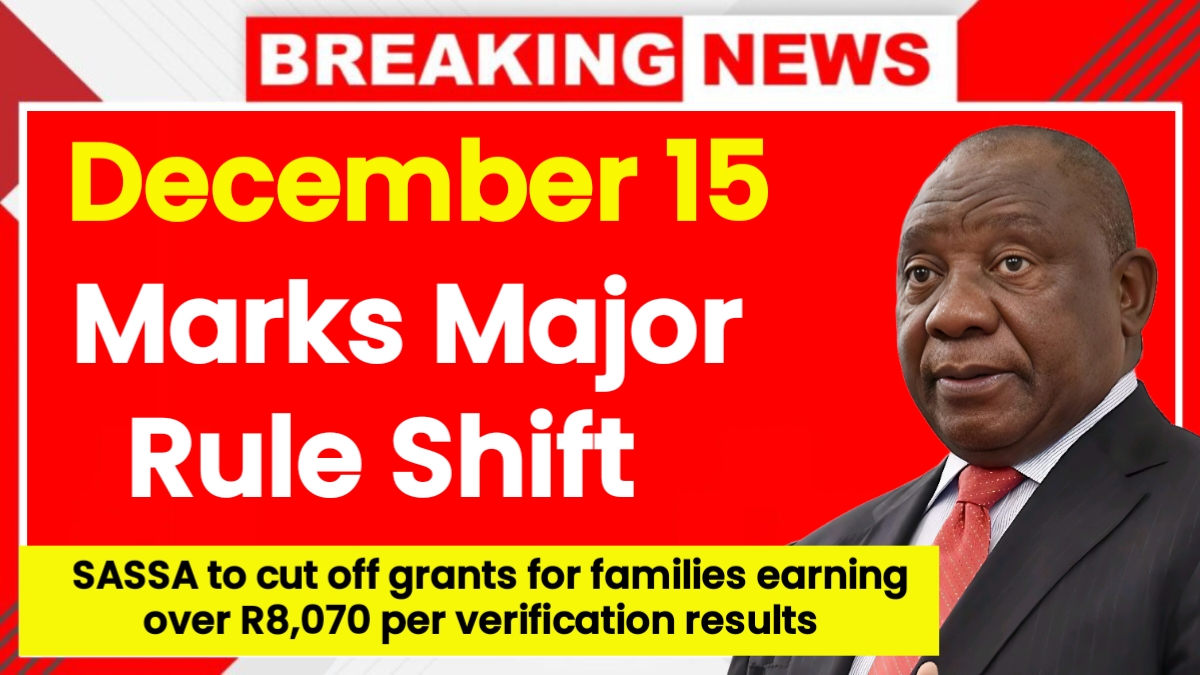
December 15 Marks Major Rule Shift: The South African Social Security Agency has announced an important policy change that will affect thousands of households across the country. By December 15, SASSA will discontinue grant payments for families whose monthly income is above R8,070. This decision forms part of a broader effort to strengthen the social assistance system and ensure that support is directed toward those who need it most. Many households rely on these funds during difficult economic conditions, and the change comes at a time when the cost of living continues to rise. As the deadline approaches, families whose income exceeds the threshold must begin preparing for financial adjustments.
SASSA explained that the purpose of the new income rule is to better align social welfare programs with current economic realities. The agency intends to direct assistance only to the most vulnerable citizens instead of distributing grants across a wider group that includes families with relatively stable earnings. Officials believe that improved targeting of funds will help create a more sustainable system that continues supporting the poorest households. This approach is expected to strengthen long-term social protection and reduce pressure on public finances.
Understanding SASSA’s New Income Threshold
The decision to stop payments for families earning more than R8,070 per month signals a significant shift in SASSA’s strategy. The agency aims to channel support toward families facing severe financial struggles, many of whom rely entirely on social grants for survival. By narrowing the eligibility group, SASSA hopes to reduce misuse of social welfare funds while improving the quality of support for those in desperate need. This policy change is also intended to encourage families with higher incomes to work toward financial independence rather than relying on government assistance.

Officials have explained that the new threshold aligns with the broader goal of ensuring long-term sustainability of social grants. As South Africa continues to face economic pressures, the government must balance providing immediate relief with maintaining a stable welfare system for future generations. The shift also reflects a desire to reduce grant dependency among families with growing income levels. By focusing on lower-income households, SASSA hopes to improve poverty reduction efforts and protect the most vulnerable members of society.
How the Income Rule Affects South African Households
The discontinuation of payments will create financial challenges for many households currently receiving support. Families earning just slightly above the R8,070 threshold may find the sudden loss of income difficult to manage. These households will need to reassess their financial priorities, especially if their monthly budgets rely heavily on social grant assistance. The impact may force some families to explore alternative financial strategies, reduce expenses and adopt more disciplined budgeting habits.
For families earning between R8,070 and R10,000, there may be uncertainty about whether payments will stop immediately or be gradually phased out. This income group is encouraged to monitor their financial documents and seek clarification from SASSA to avoid unexpected disruptions. Those earning above R10,000 will lose grant eligibility entirely and will have to depend on self-managed income sources. While this transition may be difficult at first, it could also encourage greater financial independence and reduced reliance on government aid.
यह भी पढ़े:
 IRS Confirms $2,000 Direct Deposit for December 2025: Eligibility, Payment Dates & How to Get Yours
Preparing Before the December 15 Deadline
SASSA has advised affected households to prepare early for the upcoming change. Families must take time to understand the policy and how it affects their financial situation. Reviewing monthly income and expenses is essential for determining where adjustments can be made. Some households may need to identify areas where they can reduce spending or re-organize their budgets to reflect the loss of grant payments. Others may explore opportunities to boost income through part-time work, side businesses or other employment options suited to their skills.
Seeking advice from financial experts may benefit families going through this transition. Financial advisors or community counselors can help households develop practical budgets and long-term plans that reduce financial strain. This period also presents an opportunity for families to strengthen their financial literacy and learn essential budgeting skills. By planning ahead, households can minimize the negative impact of losing grant payments and improve their financial resilience over time.
Steps Families Should Take After Losing SASSA Payments
Once the December 15 cutoff takes effect, families who no longer qualify for grants must take practical steps to adapt. Understanding the policy in detail is the first and most important step. Beneficiaries should contact SASSA directly if they need clarification regarding their status, documentation or income evaluation. Staying informed prevents confusion and ensures that families make decisions based on accurate information.

Developing new financial habits is essential. Families should focus on improving budgeting, setting financial goals and prioritizing necessities over non-essential spending. Learning how to manage money effectively can reduce stress during this transition period. Exploring income-generating opportunities such as freelance work, seasonal jobs or small business ventures can also help support household finances. Many community organizations offer job training, employment services and financial education workshops that families can take advantage of.
Community Resources to Support Affected Families
Community programs play an important role in helping families adjust to changes in social grant eligibility. Local centers and non-profit organizations provide valuable services that can ease financial pressure. These include financial literacy classes, job readiness programs, counseling and networking opportunities. By participating in these programs, families can gain practical skills, connect with employment resources and access emotional support during a stressful period.
Community support groups also offer a safe space for individuals to share their experiences and learn strategies from others facing similar challenges. Access to financial advisors through community programs can help households plan for the future and set achievable financial goals. Utilizing these resources can significantly improve a family’s ability to manage the transition away from SASSA grants and develop long-term financial stability.

Exploring Alternative Income Opportunities
Families adjusting to the loss of SASSA assistance may need to find new income sources. South Africa offers a variety of ways to earn additional money depending on personal skills and available time. Small businesses, part-time employment, freelance work and online services can help families supplement their income. Exploring these opportunities not only replaces lost grant income but also encourages long-term financial independence.
Families should consider their strengths, interests and previous work experience when exploring new options. Building multiple income streams can provide greater financial security and reduce vulnerability to economic changes. While the process may require effort, the long-term benefits include improved stability and a stronger financial foundation for the household.
Disclaimer
This article is for informational purposes only and does not serve as official government advice. Readers should verify policy changes directly through the South African Social Security Agency’s official channels before making financial decisions.