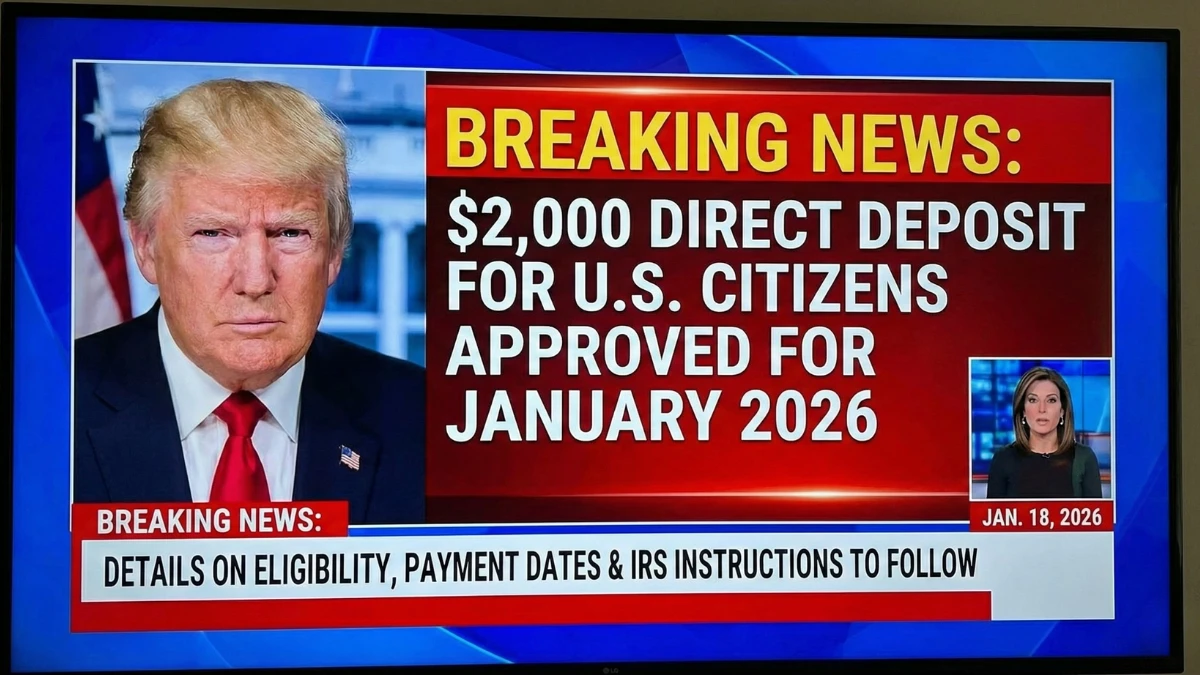
$2,000 Direct Deposit January 2026 Explained: In recent weeks, search interest around a possible $2,000 direct deposit for U.S. citizens in January 2026 has increased sharply. Many people are seeing social media posts, headlines, and online discussions suggesting that a new payment is coming. This has created both hope and confusion, especially for families already dealing with high living costs and financial pressure. It is important to clearly understand what is confirmed and what is only speculation.
At this time, there is no official announcement confirming a universal $2,000 payment for all U.S. citizens in January 2026. However, many Americans may still receive deposits close to this amount through normal government processes. These payments are usually related to tax refunds, refundable tax credits, or benefit adjustments rather than a new nationwide stimulus program.
Which Government Authorities Handle These Payments
All federal tax-related payments in the United States are handled through a structured system involving multiple authorities. The Internal Revenue Service is responsible for reviewing tax returns, checking eligibility, and approving payment amounts. Once a payment is approved, the U.S. Department of the Treasury releases the funds.

After the Treasury sends the payment, banks and financial institutions process the deposit and credit it to individual accounts. This final step depends on each bank’s internal posting schedule. Because several agencies and systems are involved, payments do not reach everyone at the same time, even if they are approved on the same day.
Is a $2,000 Direct Deposit Officially Confirmed for January 2026
As of now, there is no confirmed federal program that guarantees a $2,000 direct deposit to every U.S. citizen in January 2026. Government agencies have not issued any official notice announcing a new universal stimulus or relief payment of this amount. Any claims suggesting that all Americans will automatically receive $2,000 should be treated with caution.
That said, many people do receive deposits near $2,000 each year. These amounts usually come from tax refunds, earned income tax credits, child tax credits, or delayed adjustments from previous tax filings. Because these deposits often appear around tax season, they are sometimes mistaken for new stimulus payments.

Who May Receive Around $2,000 in January 2026
Eligibility to receive a deposit close to $2,000 depends entirely on individual tax or benefit situations. Taxpayers who overpaid taxes during the year may receive refunds in this range when they file their returns. Individuals who qualify for refundable tax credits may also see similar amounts deposited into their accounts.
In some cases, people may receive back payments or corrections related to prior tax years. These adjustments can happen if a return was reviewed, amended, or delayed earlier. Benefit recipients may also receive adjusted payments if previous calculations were corrected. Each case is unique, and there is no single rule that applies to everyone.
Why Payment Dates Are Different for Everyone
One common misunderstanding is the belief that federal payments are released on a single nationwide date. In reality, payments are issued in batches over several days or even weeks. The timing depends on when a tax return is filed, whether it requires verification, and how quickly it is processed.

Bank processing times also play a major role. Some banks post deposits immediately after receiving them, while others may take additional time. Weekends, holidays, and internal banking policies can all affect when the money actually appears in an account. This is why two people with similar payments may receive them on different days.
IRS Instructions Taxpayers Should Follow
The IRS regularly advises taxpayers to make sure their personal and banking information is accurate. Incorrect bank account numbers, outdated addresses, or filing errors can delay payments significantly. Filing accurate and complete tax returns is one of the most important steps to avoid unnecessary delays.
The IRS also warns against filing duplicate returns or responding to unofficial payment timelines shared online. Relying on unverified sources can lead to confusion and mistakes. Official IRS tools and communications are always the most reliable way to understand payment status and timing.

How to Check Your Direct Deposit Status Safely
Taxpayers who are expecting a refund or adjustment can check their payment status using official IRS tracking tools. These tools provide real-time updates on whether a return has been received, approved, or paid. Account transcripts can also show detailed information about processed payments.
Using official IRS resources helps avoid scams and misinformation. Many fraudulent websites and messages claim to offer early payment details, but they are not trustworthy. The IRS does not contact taxpayers through social media or unofficial channels regarding payments.
What People Should Keep in Mind Moving Forward
While many Americans may receive deposits close to $2,000 in January 2026, these payments are not part of a new universal program. Most of them are connected to regular tax processes or benefit adjustments. Understanding this distinction helps set realistic expectations and reduces unnecessary stress.
Staying informed through official sources is the best approach. Government policies can change, but any confirmed payment program will always be announced through proper channels. Until then, individuals should focus on accurate filing and monitoring their accounts through trusted tools.
The surge in interest around a $2,000 direct deposit in January 2026 reflects genuine financial concerns among U.S. households. However, there is no confirmed nationwide payment for all citizens at this time. Most deposits in this amount range are related to tax refunds, credits, or payment adjustments handled by the IRS and the U.S. Treasury.
Payment timing varies based on individual circumstances, processing schedules, and bank policies. To avoid confusion, taxpayers should rely only on official IRS instructions and tracking tools. Clear information and accurate filing remain the most reliable way to ensure timely and correct payments.
Disclaimer
This article is for informational purposes only and does not provide legal, tax, or financial advice. Federal payment amounts, eligibility rules, and timelines are subject to change based on government decisions and official announcements. Readers are encouraged to consult the Internal Revenue Service or a qualified professional for personalized guidance.