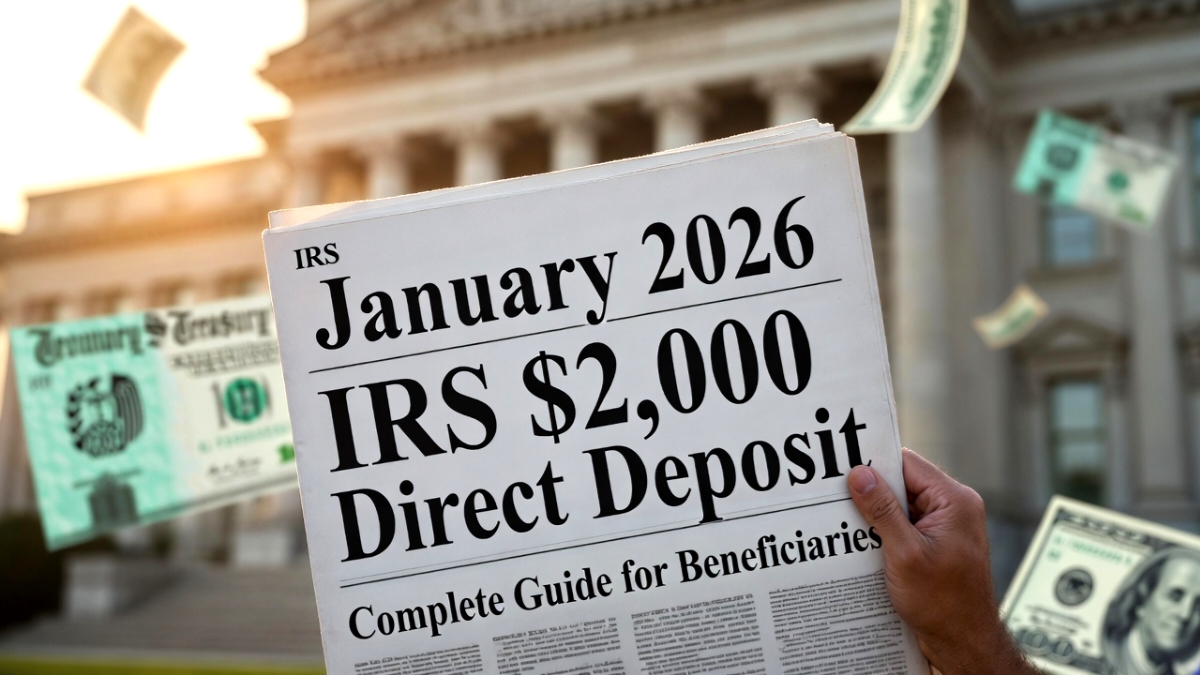
$2,000 Direct Deposit January 2026 Explained: As January 2026 begins, many Americans are entering the new year with mixed feelings. While there is hope for fresh opportunities, there is also growing concern about rising prices that continue to strain household budgets. Rent, groceries, fuel, and healthcare costs are placing pressure on families across the country. Against this backdrop, news and discussions about a possible $2,000 direct deposit have drawn widespread attention.
For some households, this amount could help clear overdue bills. For others, it may simply provide short-term stability during a financially demanding time. However, it is important to understand what this $2,000 figure truly represents before forming expectations.
Understanding the $2,000 Direct Deposit
The $2,000 direct deposit being discussed is not a new stimulus check being issued to everyone. Instead, it refers to money already included within existing federal payment systems. For eligible individuals, payments from different programs may add up to around $2,000, depending on their situation.
यह भी पढ़े:
 $2,000 Direct Deposit January 2026 Explained: Eligibility, Payment Dates, and IRS Instructions
These funds come from ongoing government programs rather than a newly approved relief plan. That distinction matters, because it explains why some people may receive this amount while others do not.
Where the Money Can Come From
The most common source of a $2,000 deposit in January 2026 is an IRS tax refund. Taxpayers who overpaid taxes or qualify for refundable credits may see refunds around this amount. For others, the deposit may be linked to Social Security benefit adjustments or regular SSI or SSDI payments.
Veterans receiving VA compensation or pensions may also receive payments during this period. In some cases, payments from multiple programs may arrive close together, creating the impression of a single large deposit.
यह भी पढ़े:
 Federal $2,000 Deposit January 2026 – Beneficiaries Are Checking Accounts (Full Guide Inside)
Who May Qualify for the Payment
Eligibility for receiving money around $2,000 depends on the specific federal program involved. It is not based solely on U.S. citizenship. Individuals who qualify for tax refunds, benefit corrections, or income-based assistance may be eligible.
Social Security recipients, including retirees and disability beneficiaries, may see adjusted payments. Veterans enrolled in VA programs may also receive scheduled deposits. Each case is evaluated individually based on records already on file.
Why the Amount Can Vary
Not everyone will receive exactly $2,000. Some people may receive less, while others may receive more. The final amount depends on income level, benefit category, tax credits, and filing status.

Tax refunds, in particular, vary widely. Two people with similar incomes may receive different refunds depending on dependents, withholding, and credits claimed. This variation is why there is no guaranteed flat payment.
January 2026 Payment Timing Explained
There is no single nationwide payment date for the $2,000 direct deposit. Timing depends on which agency is issuing the money. IRS-related payments may arrive throughout January, especially for those who file early.
Social Security payments follow the standard SSA schedule based on birth dates. SSI payments usually arrive at the beginning of the month. VA payments are typically deposited during the first few days of January. Most eligible payments are sent automatically.
यह भी पढ़े:
 $2,000 Direct Deposit in January 2026: Who Qualifies, Payment Timing, and What’s Official
Why Direct Deposit Matters
Direct deposit is the fastest and safest way to receive federal payments. It avoids postal delays, reduces the risk of lost checks, and ensures money arrives quickly. For families managing tight budgets, timing can be just as important as the payment amount itself.
Those without direct deposit on file may receive paper checks, which take longer. Keeping banking information updated helps avoid unnecessary delays.
IRS Guidance to Prevent Payment Issues
The IRS strongly advises taxpayers to file returns accurately and on time when payments are tax-related. Incorrect information is one of the most common reasons refunds are delayed. Ensuring that bank account details are correct is also essential.

Taxpayers are encouraged to use official IRS tools to track refunds and review any notices carefully. The IRS does not request sensitive information through unsolicited messages, and such requests should always be ignored.
What to Do If No Deposit Arrives
If January ends and no deposit appears, it does not automatically mean something is wrong. Processing times can vary depending on verification requirements or missing information. Checking online IRS or SSA accounts is the best first step.
In many cases, delays are caused by outdated records or incomplete details. Once corrected, payments are usually issued without further problems. Contacting the appropriate agency can provide clarity when needed.

Avoiding Confusion and Misinformation
Online rumors and social media posts often exaggerate or oversimplify federal payments. Claims that everyone will receive $2,000 can be misleading. Understanding that these payments are program-based helps avoid disappointment.
Relying on official sources rather than viral posts is the best way to stay informed. Clear information protects both finances and peace of mind.
Why This Payment Matters to Households
For many Americans, $2,000 is not extra spending money. It can mean paying rent on time, covering medical costs, or reducing debt. Even a temporary boost can ease stress during uncertain economic times.

While the payment may not solve long-term financial challenges, it can offer short-term stability for those who qualify.
The $2,000 direct deposit in January 2026 is not a universal benefit, but it is real for eligible individuals under existing programs. Understanding where the money comes from and how it is issued helps replace uncertainty with clarity.
Staying informed, keeping records updated, and following IRS guidance ensures that eligible payments arrive smoothly. Sometimes, financial assistance is not about abundance, but about balance and stability.

Disclaimer
This article is for informational purposes only and does not confirm any new or universal $2,000 federal payment. Payment amounts, eligibility, and timelines depend on individual circumstances and official government policies, which may change. Readers should consult official IRS, SSA, or VA resources or qualified professionals for guidance related to their personal situation.