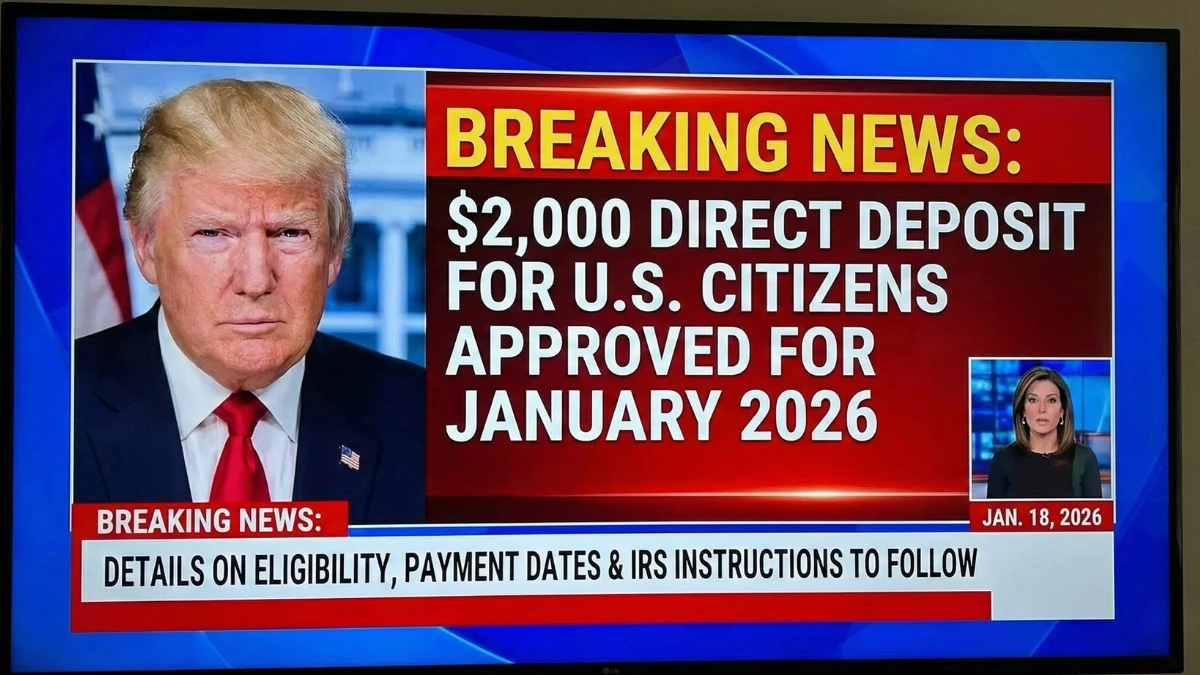
$2,000 Direct Deposit January 2026 Explained: As January 2026 begins, many Americans are stepping into the new year with mixed emotions. While there is hope for a fresh financial start, the reality of rising rent, medical costs, groceries, and post-holiday bills continues to place pressure on household budgets. Against this backdrop, talk of a $2,000 direct deposit arriving in January has gained widespread attention and sparked intense curiosity.
Social media posts and online headlines have amplified the idea, leaving people wondering whether a new federal payment has been approved. To avoid confusion, it is important to understand what this $2,000 deposit truly represents and who may realistically receive money during this period.
Is There a New $2,000 Payment for Everyone?
Despite the growing excitement, there is no officially approved nationwide $2,000 stimulus payment for all Americans in January 2026. Federal agencies, including the IRS, have not announced any new universal relief program similar to the pandemic-era stimulus checks. No legislation has been passed authorizing such a payment.
यह भी पढ़े:
 Federal $2,000 Deposit January 2026 – Beneficiaries Are Checking Accounts (Full Guide Inside)
However, many people are still seeing deposits close to $2,000 in their bank accounts. These payments are legitimate, but they are not part of a new stimulus. Instead, they come from existing federal systems that regularly issue payments at the start of the year.
Why $2,000 Deposits Are Appearing in January
January is one of the busiest months for federal payments, which explains why many deposits arrive around the same time. Early tax refunds, refundable credits, and benefit payments often overlap during this period. When combined or viewed without context, these deposits may appear to be a single special payment.
In reality, the money usually represents funds that individuals were already entitled to receive. Tax refunds, Social Security benefits, and delayed IRS corrections are commonly processed in January, making this month feel unusually active for bank deposits.

The Role of IRS Tax Refunds in January
One of the biggest contributors to $2,000 deposits is early tax refunds. The IRS begins processing tax returns in January, and taxpayers who file early and accurately may receive refunds quickly. Depending on income, withholding, and credits, refunds can easily reach or exceed $2,000.
Many taxpayers overpay during the year through payroll withholding. When the IRS returns this excess, it may appear as a large deposit that feels unexpected. This often leads to confusion and assumptions that a special payment has been issued.
Refundable Tax Credits Increase Payment Amounts
Refundable tax credits play a major role in boosting refund totals. Credits such as the Earned Income Tax Credit and the Child Tax Credit are designed to support working families and low-to-moderate income earners. These credits can significantly increase refund amounts beyond what was withheld during the year.
यह भी पढ़े:
 $2,000 Direct Deposit in January 2026: Who Qualifies, Payment Timing, and What’s Official
When these credits are included, refunds may climb well above $2,000. Although these payments feel similar to stimulus checks, they are part of the regular tax system and depend entirely on eligibility and filing details.
Social Security and Federal Benefits in January
Social Security, SSI, and SSDI payments continue on their normal schedules in January. While these benefits are not IRS payments, some recipients receive monthly amounts close to $2,000 depending on their benefit category and personal situation. For those receiving multiple benefits, the combined monthly income may appear unusually high.
Veterans’ benefits and other federal assistance programs also issue payments early in the year. When these payments align closely with tax refunds, they can add to the perception of a new federal deposit.

IRS Corrections and Back Payments Explained
Another reason some Americans receive one-time deposits in January is IRS account corrections. If the IRS resolves an error from a previous tax return or processes an amended return, it may issue a back payment. These payments are often labeled as IRS or Treasury deposits, making them easy to misinterpret.
Delayed credits or recalculated refunds can also arrive at the start of the year. These deposits are legitimate but apply only to individuals whose tax records required adjustment.
Who Is Most Likely to See a $2,000 Deposit?
Eligibility for deposits around $2,000 depends entirely on individual circumstances. Early tax filers with refundable credits are among the most common recipients. Families with dependents often see larger refunds, especially when credits apply.

Individuals receiving Social Security or disability benefits may also see monthly payments near this amount. Taxpayers owed money due to IRS corrections are another group likely to receive one-time deposits in January.
When Can Payments Arrive in January 2026?
There is no single payment date for a $2,000 deposit. Timing depends on the source of the payment. Benefit payments often arrive early in the month, while tax refunds usually begin appearing from mid to late January. The IRS typically processes refunds within about 21 days, though delays are possible.
Direct deposit remains the fastest method of receiving payments. Paper checks usually take longer due to mailing and processing time. Banking schedules, weekends, and holidays may also affect deposit timing.

What the IRS Recommends Taxpayers Do
To avoid delays and confusion, the IRS advises taxpayers to file early and ensure all information is accurate. Choosing direct deposit significantly speeds up refund delivery. Double-checking bank details before submitting a return reduces the risk of failed or delayed payments.
Taxpayers should rely only on official IRS tools to track refunds and avoid unverified online claims. The IRS never asks for personal or banking information through texts, emails, or social media messages.
The idea of a $2,000 direct deposit in January 2026 is not entirely false, but it is widely misunderstood. These payments are not new stimulus checks, but routine refunds, credits, and benefits already built into the federal system. Millions of Americans will receive legitimate deposits, but eligibility varies by situation.

Understanding where the money comes from replaces speculation with clarity. By filing accurately, staying informed, and following official guidance, individuals can approach the new year with confidence and greater financial peace of mind.
Disclaimer
This article is for informational purposes only and does not constitute tax, legal, or financial advice. Federal payment programs, IRS rules, and refund timelines may change. Readers should consult official IRS resources or a qualified professional for guidance specific to their individual circumstances.