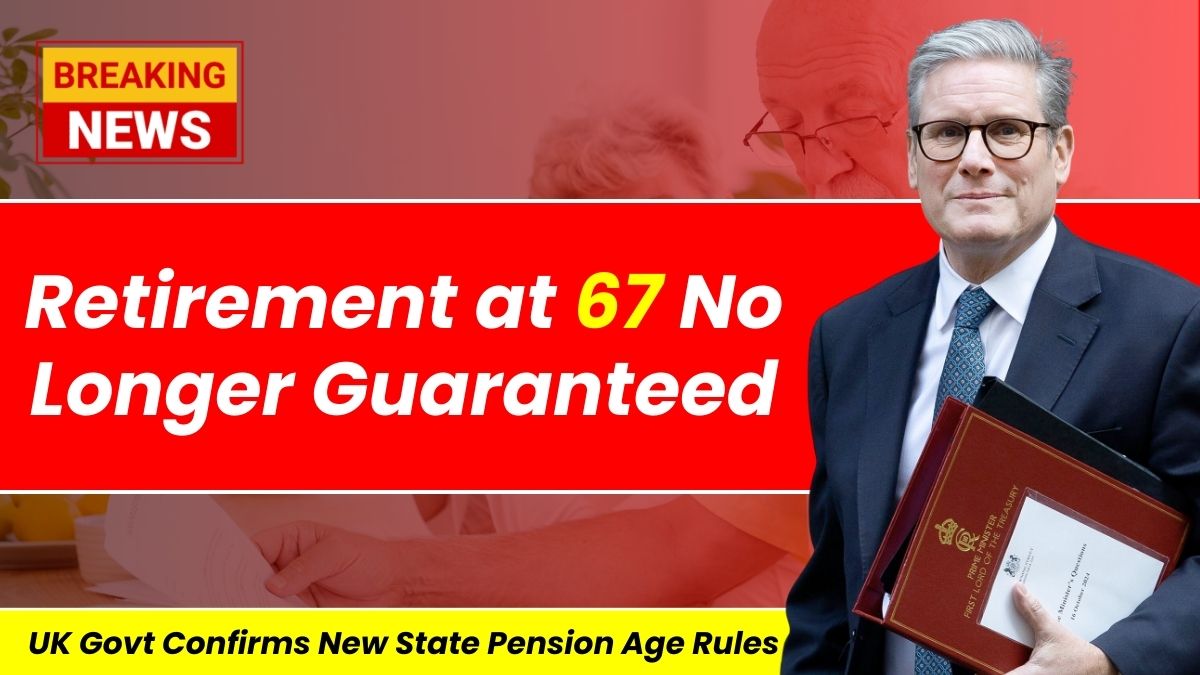
For years, many people in the UK planned their working lives around one clear idea — retire at 67 and start receiving the State Pension. That assumption is now changing. The UK Government has officially confirmed that retiring at 67 is no longer guaranteed, marking a major shift in how the State Pension age will be decided in the future. This change does not mean everyone must suddenly work longer, but it does signal a new approach where retirement age is no longer fixed. Instead, it will be reviewed regularly based on how long people live, how the economy performs, and how sustainable pension spending remains.
Why the State Pension Age Is Changing
The biggest reason behind this decision is longer life expectancy. People in the UK are living much longer than when the pension system was first designed. As a result, many retirees now receive the State Pension for 20 years or more, placing increasing pressure on public finances. The government has said that keeping the retirement age permanently fixed at 67 would become too expensive over time. With fewer working-age people supporting a growing retired population, changes were seen as unavoidable.
Retirement at 67 Is No Longer Guaranteed
One key point the government has made clear is that age 67 is no longer a fixed end point for everyone. While some people may still retire at that age, others — especially younger workers — could see their State Pension age move to 68 or later. Instead of setting a retirement age decades in advance and leaving it unchanged, the government has approved a flexible system that can adapt over time.
When These Changes Could Take Effect
Although the decision has been approved, nothing changes overnight. Reviews will take place at regular intervals, and any approved increases will be phased in gradually. For most people under 55, it is sensible to assume that the State Pension age could rise beyond 67 at some point in the future.

Why This Matters for Retirement Planning
Many people still treat the State Pension as the foundation of their retirement income. If the pension age rises, that income arrives later, potentially leaving a gap between stopping work and receiving payments. Without planning, this gap could cause financial stress. Understanding the new system early allows people to adjust savings, work plans, and expectations before problems arise.
Impact on Physically Demanding Jobs
One of the biggest concerns is how this affects people in physically demanding roles. Not everyone can comfortably work into their late 60s or beyond. While the government points to flexible working and retraining as solutions, critics argue that more support may be needed for those whose health limits their ability to continue working longer.
Effect on Workplace and Private Pensions
State Pension age changes can influence workplace and private pension planning. Many schemes base retirement assumptions on the State Pension age, which may now shift. While early access to private pensions usually remains possible, retirement income projections may change. Workers are encouraged to review pension statements carefully.

The State Pension Is Not Being Removed
It is important to be clear — the State Pension is not ending. What is changing is the age at which people can claim it. The weekly payment will still exist, and future governments are expected to continue protecting pensioner incomes. However, qualifying later means people may need alternative income for longer.
Public Reaction Across the UK
Reaction has been mixed. Some people accept the change as a reflection of longer lives, while others feel it places extra pressure on younger generations already facing rising housing and living costs. There is also concern among those who planned retirement based on old assumptions and now feel uncertain about their future.
Lessons From Past Pension Age Changes
Previous increases caused frustration due to poor communication and limited notice. This time, the government has promised clearer timelines and better warnings. Whether that promise is delivered will be closely watched by pension groups and policy experts.

What UK Residents Should Do Now
Anyone still working should take practical steps now. Checking your State Pension forecast, reviewing workplace pension contributions, and building additional savings can all help reduce future uncertainty. Most importantly, avoid assuming retirement will happen exactly at 67.
Life Expectancy Will Shape Future Decisions
Life expectancy data will play a central role in future reviews. If people continue to live longer, further increases may follow. If trends change, increases could slow or stop. This makes the system more flexible, but also less predictable.
Will Retirement Keep Moving Further Away
There is no confirmed final retirement age. The government has not set an upper limit. Instead, it has approved a system that adjusts over time based on evidence. This means retirement age could stabilise or rise further depending on future conditions.

How the UK Compares Internationally
The UK is not alone in making these changes. Many European countries are already moving retirement ages toward 68 or higher, often linking them directly to life expectancy. The UK’s approach now aligns more closely with international trends.
What This Means for Younger Generations
For people in their 20s and 30s, flexibility is key. Relying solely on the State Pension is becoming increasingly risky. Building private savings, maintaining adaptable skills, and planning for later retirement will be essential.
Key Takeaways
Retirement at 67 is no longer guaranteed. The State Pension age will be reviewed regularly, and younger workers are most likely to be affected. Planning ahead has never been more important.

Final Thoughts
The end of guaranteed retirement at 67 reflects economic reality rather than sudden policy change. While it creates uncertainty, it also gives people time to adapt. Staying informed, planning early, and avoiding outdated assumptions can help ensure retirement security — even if it comes later than expected.
Disclaimer
This article is for general informational purposes only and does not constitute financial, legal, or retirement advice. State Pension rules, retirement ages, and eligibility criteria are subject to change based on government policy and individual circumstances. Readers should check their official State Pension forecast and seek advice from qualified financial or pension professionals before making retirement or financial planning decisions.