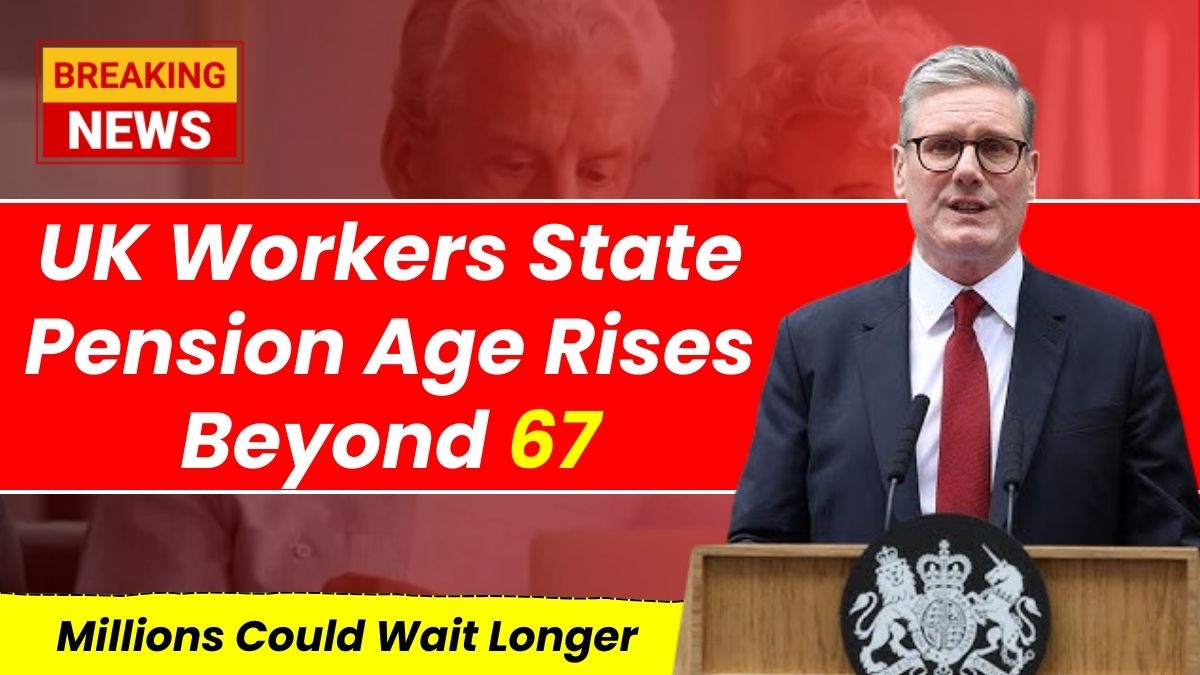
State Pension Age Rises Beyond 67 – For years, retiring at 65 — and then 67 — felt like a solid promise for millions of UK workers. You paid your National Insurance, did your years of work, and expected that one day, the State Pension would kick in on a fixed date. That certainty is now changing. The UK Government has officially confirmed that the State Pension age is set to rise again, meaning retiring at 67 may no longer be the reality for many, especially those born after the early 1970s.
This change has left people across the country confused, frustrated, and worried. From office workers to self-employed tradespeople, everyone is asking the same question: when will I actually be able to retire? Here’s a breakdown of what’s happening, who it affects, and what it could mean for your retirement plans.
What the Government Has Confirmed
The key announcement is simple but significant: the State Pension age will no longer stay fixed at 67 for everyone. It’s set to rise to 68 and, potentially, even higher in the future depending on your date of birth. While the idea of reaching 68 was already part of long-term plans, ministers have indicated that the increase could happen sooner than originally expected, after reviewing life expectancy, public finances, and workforce participation.
First, people are living longer. Life expectancy has gone up significantly since the State Pension system was first designed. More years in retirement mean more costs for the Treasury.

Second, there are fewer workers supporting more pensioners. The ratio of working-age people to retirees is shrinking, putting extra pressure on National Insurance funding.
Third, the cost of the Triple Lock — the policy that increases the State Pension each year by the highest of inflation, earnings growth, or 2.5% — has made the system more expensive to maintain. While it’s popular among pensioners, it comes with a hefty price tag.
From the Government’s perspective, raising the pension age is a way to manage these pressures, even if it’s unpopular.

Who Will Be Affected Most
Not everyone will feel the impact immediately. People who are already over State Pension age will not be affected and can continue receiving their payments as normal. The biggest impact is on people currently in their 40s and early 50s — those born after the early 1970s.
These workers have already had to adjust expectations multiple times, first from 65 to 66, then 67, and now potentially 68. For manual workers and anyone in physically demanding roles, working until 68 or beyond feels particularly unrealistic and unfair.
What the New State Pension Age Looks Like
The rise to 68 won’t happen overnight. It will be phased in gradually based on your date of birth. While exact dates are still being finalised, the trend is clear: the State Pension age is going up, and regular reviews are now planned rather than one-off assessments. This means future increases are possible, adding a layer of uncertainty for anyone planning their retirement.

How This Affects Your Retirement Income
Delaying the State Pension has a direct financial impact. For each year your pension is delayed, you’ll need to either keep working, rely on private savings, or claim other benefits if eligible.
This is particularly concerning for people without strong workplace or personal pensions. The State Pension is a major source of retirement income for millions of households, so even a one-year delay can mean losing out on thousands of pounds — right when living costs may be higher due to health needs or reduced earning capacity.
For lower-income workers, this gap can be especially hard to manage, making early planning and saving more important than ever.

What Happens If You Cannot Keep Working
One of the most controversial aspects of this change is its impact on people who physically cannot continue working into their late 60s. While the Government points to benefits such as Universal Credit or disability support, these payments are often much lower than the State Pension and come with strict eligibility rules.
Campaigners argue that raising the pension age disproportionately affects manual labourers, people with long-term health conditions, carers, and those who face redundancy later in life. For these groups, “working longer” is simply not realistic.
Public Reaction and Backlash
The confirmation of the rise has triggered a strong reaction. Many feel the goalposts are being moved yet again, and there are calls for fairer policies. Critics highlight that people who have paid National Insurance for decades deserve clarity, and that gains in life expectancy are not equal — poorer communities often live shorter, less healthy lives.

There are also growing calls for flexible retirement options, early access for those in poor health, and better support for older workers. The Government acknowledges these concerns but maintains that the changes are necessary to sustain the system.
What You Can Do Now
If you’re worried about how this will affect you, there are a few practical steps to take. First, check your State Pension forecast online to see your current expected pension age and payment amount. Second, review any workplace or private pensions. Even small increases in contributions can add up over time.
Third, consider long-term planning, such as retraining, exploring flexible work, or phased retirement options later in life. Finally, stay informed. Pension rules are changing more frequently, so keeping up to date is now essential rather than optional.

Will the State Pension Age Rise Again?
Many people fear this won’t be the last increase. While no rise beyond 68 has been officially set, future reviews will continue to consider affordability. Experts widely expect further increases in the coming decades.
This makes private saving and early planning more crucial than ever — particularly for younger generations who may not see the State Pension until much later in life.
What This Means for the Future of Retirement
The idea of a fixed retirement age is fading. Retirement is becoming more flexible, more individual, and more uncertain. For some, working longer may be manageable or even welcome, but for others, it feels like an unfair burden after decades of contribution.

The key takeaway is that the State Pension alone can no longer be relied upon as the only source of retirement income. Retiring at 67 is no longer guaranteed, and future increases remain a real possibility.
Final Thoughts
The Government’s message is clear: retiring at 67 is no longer the default for millions of UK workers. The State Pension age is rising, reviews will continue, and further changes are possible. While these policies aim to protect public finances, they also bring uncertainty for many planning their later years.
Planning, awareness, and adaptation are now essential. For anyone in mid-life or younger, understanding these changes isn’t optional — it’s crucial.

Disclaimer
This article is for informational purposes only and does not constitute financial advice. State Pension rules may change over time, and individual circumstances can affect eligibility and payment amounts. Readers are encouraged to check official UK Government sources and consult a financial advisor before making decisions related to retirement planning or pensions. The content here reflects the situation as of the time of writing and may be subject to updates.