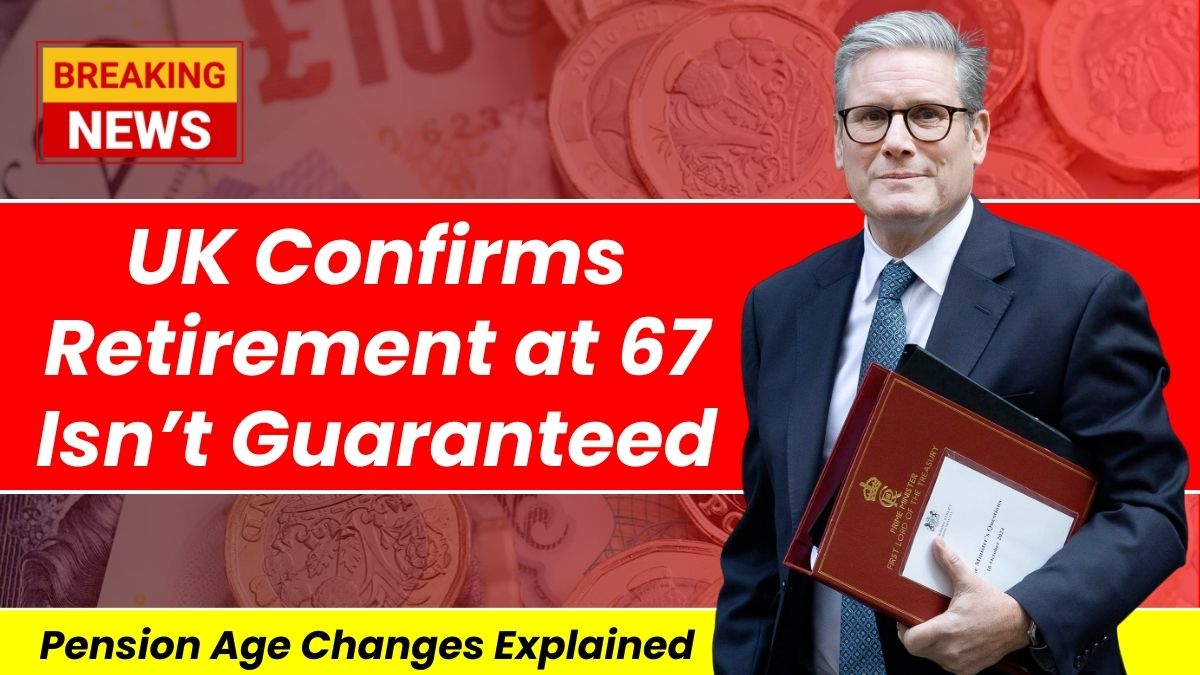
For many years, retiring at 67 felt like a clear finish line for millions of UK workers. People planned their careers, savings, mortgages and lifestyle around the idea that once they reached that age, the State Pension would begin. However, recent confirmation from the UK Government has made one thing clear: retiring at 67 is no longer something anyone can safely rely on. The State Pension Age, often referred to as SPA, is entering a new phase. Instead of being fixed for decades, it will now be reviewed more regularly and adjusted depending on life expectancy, economic conditions and public finances. For younger workers especially, this could mean working longer than originally expected.
What the Government Has Confirmed
The Government has confirmed that 67 is no longer being treated as a permanent retirement age. While the move to 67 is still happening for certain age groups, officials have made it clear that future increases are very much on the table. Current plans already include a rise to 68, which was originally expected to take place between 2044 and 2046. However, new reviews suggest that this increase could happen earlier. The Government has not announced an exact date yet, but it has confirmed that the timetable is under active consideration.
Why the State Pension Age Is Being Reviewed Again
The main reason behind these changes is longer life expectancy. People in the UK are living much longer than when the pension system was first designed. While living longer is positive, it also means the State Pension is being paid for many more years. At the same time, the number of working-age people contributing through National Insurance is not rising at the same pace. This imbalance puts increasing pressure on public finances. According to Government reviews, keeping the pension age fixed while pension costs continue to rise would be difficult to sustain long-term.
Why Younger Workers Face the Biggest Change
People in their 30s, 40s and early 50s are most likely to feel the impact of these changes. They still have many working years ahead, which gives the Government more flexibility to adjust retirement ages during their careers. Many younger workers feel frustrated, believing they will have to work longer than previous generations. The Government’s position is that acting earlier spreads the impact more evenly and avoids larger, more painful changes later on.

What This Means for Retirement Planning
The biggest takeaway is simple: if you are under 55, do not assume you will retire at 67. Retirement planning now needs to factor in the strong possibility of working until 68 or even later. This makes workplace pensions and private savings more important than ever. The State Pension alone is unlikely to provide a comfortable retirement, especially if access is delayed. Regularly reviewing pension contributions and savings plans is becoming essential rather than optional.
The Role of the Triple Lock in These Changes
The Triple Lock has played a major role in pushing these reviews forward. It guarantees that the State Pension rises each year by the highest of inflation, wage growth or 2.5 per cent. While this protects pensioners, it has also made the system more expensive, especially during periods of high inflation and strong wage growth. As pension spending rises, increasing the age at which people can claim it becomes one of the few ways to control long-term costs without cutting payments.
Public Reaction Across the UK
Reactions have been mixed. Current pensioners have largely welcomed confirmation that they will not be affected. However, people in their 40s and 50s feel uneasy, as they may have limited time to adjust their plans. Trade unions and labour groups have also raised concerns about people in physically demanding jobs, who may struggle to work into their late 60s. Calls for flexibility and early access options for certain professions are likely to grow.

Why Working Longer Is Becoming the Norm
One of the Government’s long-term goals is to rebalance how many years people spend working compared to how many years they spend in retirement. In the past, people often spent 10 to 15 years drawing a pension. Today, many retirees receive the State Pension for 20 years or more. Raising the State Pension Age gradually helps keep the system sustainable while still allowing people to enjoy later life.
The Growing Importance of Workplace Pensions
As the State Pension Age rises, workplace pensions are becoming the backbone of retirement income. Auto-enrolment has helped millions start saving, but many may need to increase contributions or remain in schemes for longer. Employers may also need to adapt by offering flexible working, phased retirement options or lighter duties for older staff. Supporting longer working lives will become increasingly important.
What Experts Expect Next
Most pension experts agree that further changes are likely. Some believe the State Pension Age could eventually rise to 69 or even 70 for younger generations. Others expect adjustments to the Triple Lock rather than its removal. What is clear is that retirement in the UK is becoming less predictable and more personalised, with greater responsibility placed on individuals to prepare financially.

Final Thoughts
The confirmation that retiring at 67 is no longer guaranteed marks a major shift in UK pension policy. While the changes will happen gradually, the message is clear: future retirees need to plan for flexibility. Staying informed, checking your State Pension forecast and building strong private pension savings are now essential steps. Retirement may come later than expected, but with proper planning, financial security is still achievable.
Disclaimer
This article is for general informational purposes only and does not constitute financial, legal or retirement advice. State Pension ages, entitlement rules and Government policies may change over time and depend on individual circumstances. Readers should check their official State Pension forecast and consult a qualified financial adviser or official UK Government sources before making any decisions related to retirement planning or pension contributions.