The Federal $2,000 deposit planned for 2026 has drawn strong attention from taxpayers who were expecting extra financial relief early in the year. While the payment has not been canceled, recent updates confirm that the timing and delivery method have changed. These adjustments will affect how refunds are calculated and when money reaches eligible households. Understanding the revised structure is important for avoiding confusion during the upcoming tax season.
Purpose of the One-Time Relief Payment
The $2,000 amount was introduced as a one-time relief measure to help individuals and families manage higher living costs. Inflation has continued to impact essential expenses such as housing, food, healthcare, transportation, and debt payments. The intent of the deposit was to provide direct financial support while also encouraging consumer spending that supports the broader economy.
Change in How the Payment Will Be Delivered
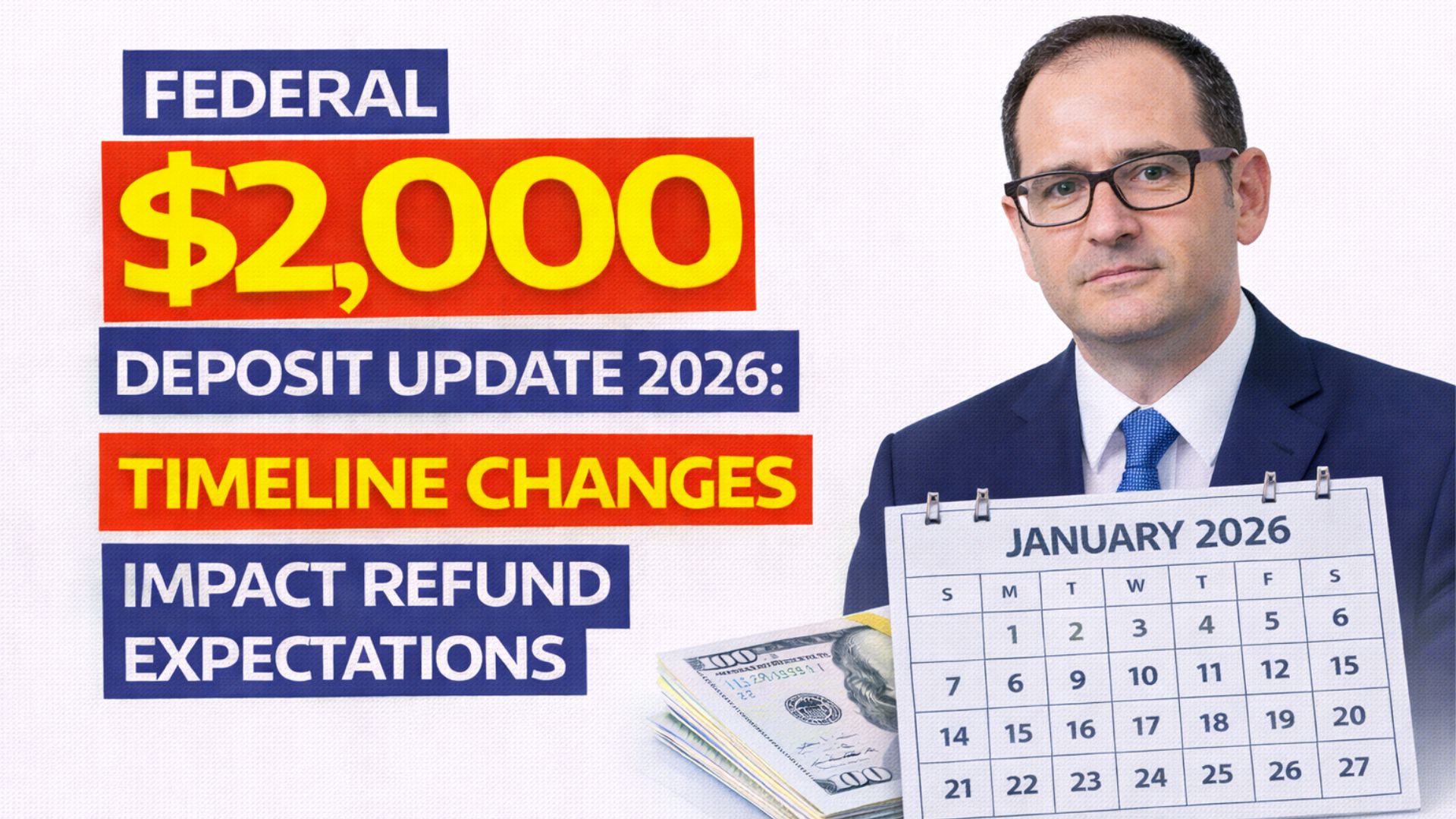
The most important change is that the $2,000 will no longer be issued as a separate payment. Instead, it will be included directly in the 2026 tax refund calculation. This means eligible taxpayers will receive one combined refund amount rather than two separate deposits. While this simplifies tracking payments, it also changes expectations about timing and refund size.

Revised Tax Filing and Refund Timeline
Because the $2,000 payment is now integrated into standard refunds, the IRS needs additional time to update systems and verification processes. As a result, the 2026 tax filing season is expected to begin later than usual, likely in mid-to-late February. Refunds may also take longer to process, especially for returns requiring additional review. The typical 21-day refund timeline may not apply consistently this year.
How Refund Amounts May Look Different
Under the new structure, eligible taxpayers will see a larger single refund instead of a standard refund followed by an extra deposit. For many people, this will result in a noticeably higher refund total. However, it also removes the expectation of receiving a separate payment later in the year, which could cause confusion if taxpayers are not aware of the change.
Eligibility Rules Remain the Same
Eligibility requirements remain largely unchanged. Qualification is based on income limits, filing status, and valid taxpayer identification using 2025 tax return data. Low- and middle-income households are prioritized, with gradual phaseouts for higher earners. Some individuals who normally do not file taxes may need to submit a basic return to receive the integrated amount.

Planning Ahead for the 2026 Tax Season
With refunds arriving later than usual, taxpayers may need to adjust early-year financial plans. Understanding the updated timeline can help households prepare for delays and reduce stress. Accurate filing and realistic expectations will be key to navigating the 2026 tax season smoothly.
Disclaimer
This article is for informational purposes only and does not provide financial, tax, or legal advice. Tax laws, eligibility rules, and IRS timelines may change. Readers should rely on official IRS announcements or consult a qualified professional before making financial decisions.