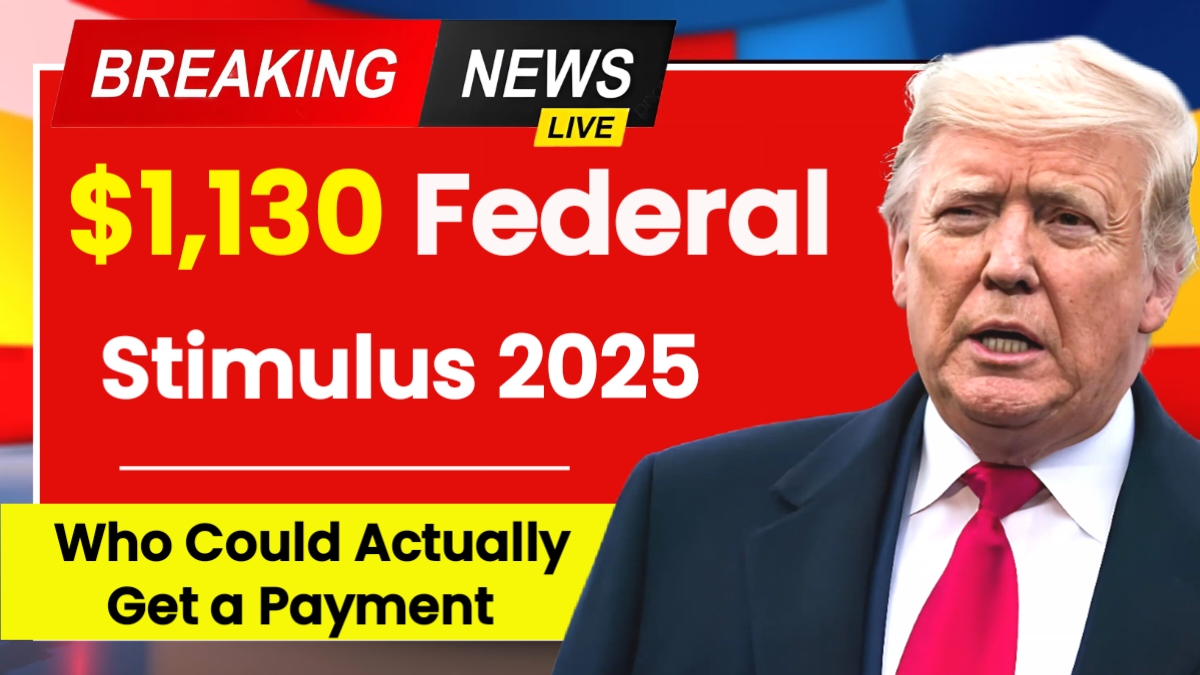
$1130 Stimulus Checks 2025: The rumour about a new $1,130 federal stimulus payment in 2025 has spread quickly across the United States, leading to confusion among millions of Americans. Many people believe that the IRS is preparing to issue a nationwide payment, largely because of viral posts on social media. However, as of now, the federal government has not approved any stimulus worth $1,130, and the IRS has made no announcement confirming such a deposit. The misinformation grew faster than the truth, and many households have been trying to understand whether the payment is real or just another online claim.
The growing interest in the rumoured payment is understandable because inflation continues to raise the cost of living across the country. Families facing rising grocery bills, rent hikes, medical expenses, and transportation costs are naturally drawn to any mention of federal relief. During the COVID-19 pandemic, stimulus checks helped millions survive financially, so people expect that a similar program could return. However, the $1,130 figure circulating online is not linked to any confirmed federal policy, making it important for taxpayers to rely only on official IRS updates rather than social media posts.
How the $1,130 Stimulus Rumour Started in the First Place
The rumour began gaining traction when several states across the country issued their own tax rebates and cost-of-living adjustment payments. These state payments often ranged between $800 and $1,200, closely matching the $1,130 number that was later spread online. Because many of these posts did not mention that the payments were state-specific, people assumed they were part of a new nationwide federal stimulus program. The similarity in amounts created confusion at a time when people were already expecting tax-related deposits.
यह भी पढ़े:
 IRS Just Confirmed: $2,000 Direct Deposit Payments Coming November 2025 – Are YOU Getting One?
Another major factor behind the rumour was routine IRS refunds issued during the early months of 2025. Some taxpayers received deposits that matched or came close to $1,130 because of delayed refunds, amended tax returns, or adjustments involving the Earned Income Tax Credit and Child Tax Credit. Many individuals saw these unexpected deposits in their bank accounts and believed they were part of the rumoured stimulus payment. Old images of pandemic-era stimulus checks were also recycled on social media, intensifying the misunderstanding.
What the IRS Is Actually Paying in 2025
The IRS has clarified that it is not issuing any new federal stimulus payments in 2025. Instead, the agency is processing routine refund transactions that occur every year. These include payments for taxpayers who filed late returns, corrected previously reported income, or qualified for additional tax credits after recalculation. Many of these payments happen automatically when the IRS updates its records or completes manual reviews. Although the amounts may look similar to a stimulus payment, they have nothing to do with new federal relief.
In addition to regular refunds, some taxpayers are receiving reissued deposits from earlier years. This occurs when previous payments were returned due to incorrect bank details, inactive accounts, or incomplete tax information. When these funds are finally released, they can appear unexpectedly and resemble a relief deposit. The IRS has emphasized that none of these transactions represent a new stimulus program. Instead, they reflect the standard processing cycle of tax adjustments, corrections, and delayed refunds.

State-Level Payments That Caused Nationwide Confusion
While there is no federal stimulus, several states continue to provide their own cost-of-living relief. Some state legislatures approved payments that were close to $1,130, which added to the nationwide misunderstanding. These programs are funded through state budgets or special surplus funds and follow rules that apply only to residents of those specific states. Because many online posts do not clarify the difference between state and federal benefits, people mistakenly assume that all Americans are eligible for the same payment.
The design and purpose of these state-level payments vary widely across the country. Some states offer inflation relief for middle-income households, while others provide rebates for renters, seniors, or families with children. These programs are fully separate from the IRS and do not reflect any national policy. Any deposit similar to the $1,130 rumour should be checked against the guidelines of the specific state offering the payment rather than assuming federal involvement.
Who Might Still Receive Money Even Without a Federal Stimulus
Even though the $1,130 stimulus rumour is false, some people may still receive deposits close to that amount for genuine IRS-related reasons. These can include recalculated refunds from earlier years, corrections to EITC or CTC claims, or payments released after long processing delays. Such deposits may seem surprising, but they follow standard IRS procedures and are not related to any new economic relief package. The exact amount varies depending on each taxpayer’s financial history and eligibility.

Some taxpayers might also receive long-delayed refunds because they updated their tax information, fixed incorrect details, or responded to IRS letters. In rare cases, individuals who amended past returns may see a refund that falls close to the rumoured amount. These scenarios should not be confused with stimulus checks. Anyone who receives such a deposit should check their IRS online account or tax transcript to understand the exact source of the payment.
What Americans Should Expect Going Forward
Looking ahead, it is unlikely that a federal stimulus check will be issued in 2025 unless Congress passes a new economic relief bill. Any genuine stimulus requires a formal vote, funding approval, and an official announcement from the IRS and Treasury Department. None of these steps have occurred for a $1,130 payment. The government is currently prioritizing targeted tax credits and long-term economic measures rather than broad stimulus checks like those issued during the pandemic.
It is important for Americans to be cautious about misleading online posts. Viral videos and rumours often claim that deposits are guaranteed on specific dates, but these claims have no legal basis. The safest way to stay informed is by following official IRS updates, state government websites, and verified news sources. Until the federal government announces a new program, there is no reason to expect a national $1,130 stimulus payment in 2025.

Disclaimer
This article is for informational purposes only. No $1,130 federal stimulus has been approved for 2025. Any deposits received may come from routine IRS refund processing or state-level programs. Always verify updates through official IRS and government sources.