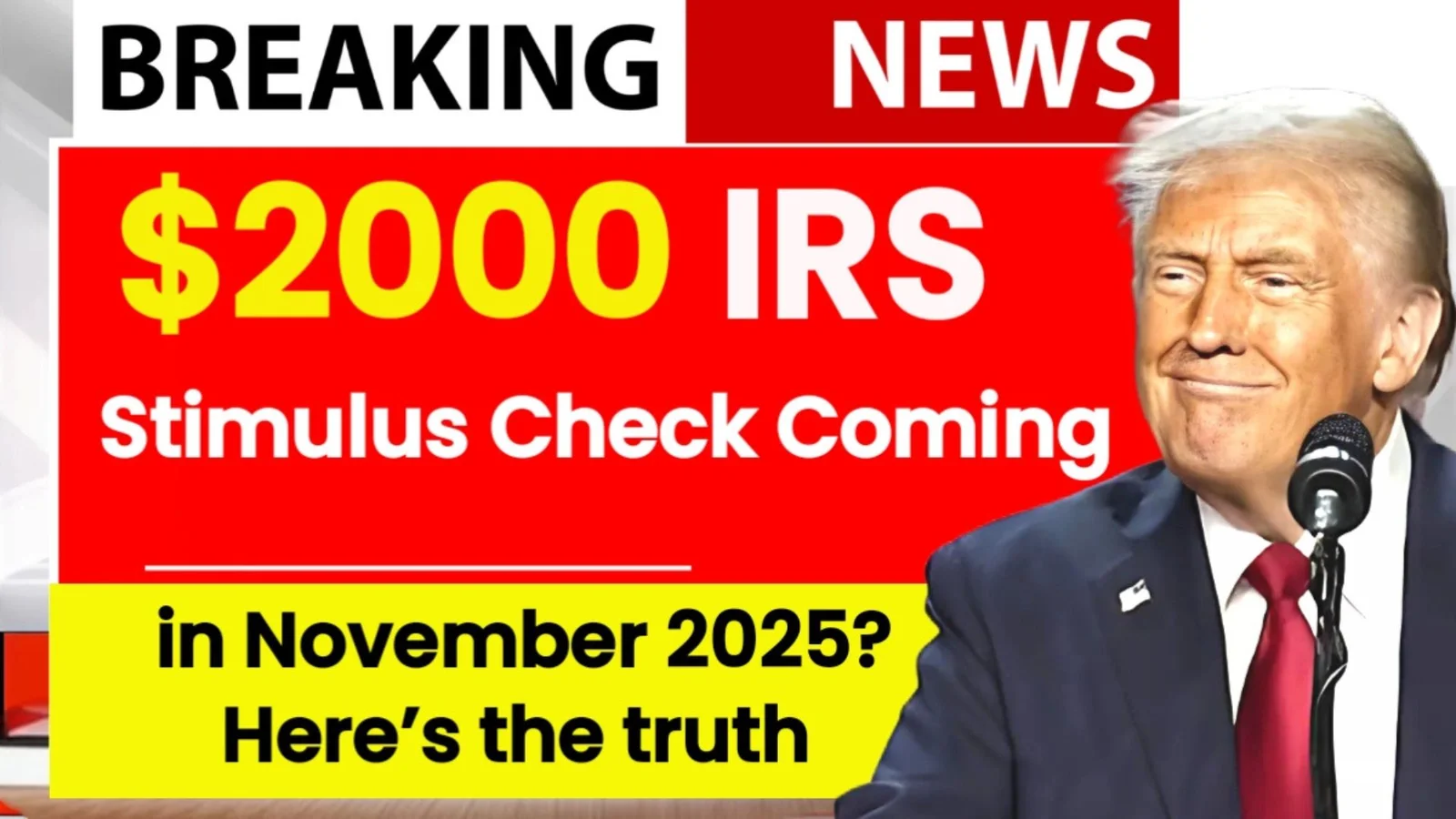
$2000 IRS stimulus check coming in November 2025: In today’s fast-moving world, rumors about government payments spread faster than ever. Social media platforms like TikTok, Facebook, and YouTube have recently exploded with claims that the IRS is preparing to send a $2000 stimulus check in November 2025. With rising grocery costs, higher rent and increasing household expenses, people are eager to believe that extra cash might be coming. But the big question remains: Is this $2000 IRS stimulus check real or just another viral myth? This guide breaks down the facts in simple language so you can stay informed and avoid falling for online tricks.
Why the $2000 Stimulus Check Hype Is Everywhere
The buzz about a $2000 IRS stimulus check has grown because people are struggling financially. Many households are dealing with expensive bills, and any talk of relief quickly grabs attention. Content creators know that videos promising free money get millions of views, so they repeat the same claims without verifying the facts. These viral posts mix fear, hope and confusion to draw people in. However, after reviewing official sources, there is no approved $2000 IRS stimulus payment scheduled for November 2025. The IRS and the Treasury Department have confirmed that they are not issuing new nationwide stimulus checks at this time.
Social media plays a major role in turning small rumors into large-scale panic. A single misleading video can spread across thousands of feeds within minutes. Many viewers assume that if enough people are talking about something, it must be real. This creates a cycle where false information grows faster than verified updates. That is why it is important to pause, question the source and rely on official channels before trusting any news about government money.
यह भी पढ़े:
 IRS Just Confirmed: $2,000 Direct Deposit Payments Coming November 2025 – Are YOU Getting One?
No Official Approval for a New $2000 IRS Payment
When it comes to government payments, the IRS works through secure systems and official announcements. As of now, there is absolutely no federal approval for a new $2000 IRS stimulus check in 2025. The only payments Americans can expect include their regular tax refunds and Social Security benefits for retirees, disabled individuals and surviving spouses. These are routine programs that operate every year and have nothing to do with the viral rumors spreading online.
Government officials have warned people to stay alert, especially when they receive unexpected messages about stimulus money. The IRS does not send text messages, emails or social media alerts asking people to “claim” payments. If someone receives such messages, it is almost certainly a scam designed to steal personal information. The safest place to check for any updates is always IRS.gov, where all official announcements are published.
How Scammers Use the Rumor to Trick People
Scammers take advantage of financial stress and viral topics. When a rumor like the $2000 stimulus check becomes popular, fraudsters quickly create fake websites, emails and social media posts urging people to provide their bank account numbers or Social Security details. They promise fast approval or early access to benefits that do not exist. These scams appear convincing because they use government logos, professional designs and urgent language. Unfortunately, many people fall for them during difficult times.

The key to staying safe is understanding that real government agencies never ask for sensitive information through social media or text messages. They never ask for upfront payments, registration fees or private details through links. If something seems too good to be true, it is a strong sign that the message is a scam. Taking a moment to verify information can protect individuals from identity theft and financial loss.
The “DOGE Dividend” Proposal Behind the Confusion
A major source of the rumor is something called the “DOGE Dividend.” This idea was discussed by former President Donald Trump as part of a conversation about economic reform and government efficiency. The proposal suggested offering up to $5000 per person as a special tax break or bonus through the Department of Government Efficiency. Although the concept sounded appealing, it was only a suggestion and not a real program. Social media twisted the idea into claims of an upcoming $2000 payment, even though Congress has not approved anything related to the proposal.
Proposals like the DOGE Dividend require multiple government approvals, budget analysis and legal review before they become official. Without Congress voting on it, the IRS cannot act on the idea. Experts believe that even if the proposal moves forward in the future, it would take years to develop, organize and distribute funds. This means that the November 2025 rumor is not linked to any real government process.

Looking Back at What Real Stimulus Checks Looked Like
One reason these rumors gain traction is the memory of past stimulus checks during the COVID-19 crisis. Between 2020 and 2021, the government issued several rounds of Economic Impact Payments to help people manage the sudden economic shock. These were legitimate checks that reached millions of Americans and provided immediate relief. They were approved by Congress and distributed through official IRS systems. Those stimulus checks had clear guidelines, eligibility rules and deadlines, which made them easy to verify.
However, those programs ended years ago. The IRS also offered a “Recovery Rebate Credit” for those who missed earlier payment rounds, but that option closed on April 15, 2025. No new extensions or stimulus programs have been announced since then. Comparing current rumors to past stimulus events shows how misinformation often copies the structure of old programs to appear believable.
How to Identify Real IRS Updates and Avoid Fake Claims
Knowing how to separate real updates from scams is essential. The IRS provides a reliable online tool called “Where’s My Refund?” which allows taxpayers to check refund status using secure information. This tool is the most accurate source of truth for anyone looking for federal payments. If a rumor cannot be confirmed through the IRS website, it should not be trusted. Real government aid will always be announced publicly through official press releases and not through social media captions or viral videos.

People should also watch out for warning signs such as urgent messages, suspicious links, unrealistic promises or requests for immediate action. Messages claiming “everyone qualifies” or “guaranteed $2000 for all” are usually scams designed to create panic. Staying alert, informed and cautious reduces the risk of falling for false claims.
State Assistance Programs That Offer Real Support
While the federal government is not providing a new $2000 stimulus check, some states across the country offer their own financial support programs. These programs are legal, verified and funded at the state level. Depending on the state, residents may receive tax rebates, inflation payments or other forms of financial relief. These programs are smaller in value but provide genuine help without the risk of scams. Families should check their state’s tax or revenue department website for accurate updates.
State-funded programs are carefully planned and target specific groups based on income, residency or financial need. They are not surprise payments and do not require clicking unsafe links. This makes them reliable sources of assistance during times when federal aid is not available.

Final Word: The $2000 IRS Stimulus Rumor Is Not Real
The claim of a $2000 IRS stimulus check arriving in November 2025 is completely false. There is no approved federal program, no official timeline and no confirmation from the Treasury or IRS. The rumor comes from misunderstandings, social media exaggerations and early-stage proposals that have not been approved. To stay safe, individuals should rely on trusted government websites, not viral posts. Knowing the truth can protect people from disappointment and online scams while helping them focus on verified sources of support during financial challenges.
Disclaimer: This article is for informational purposes only. It is based on publicly available statements and IRS guidelines. Policies may change, so always refer to IRS.gov or consult a certified tax professional for the most accurate and updated information.