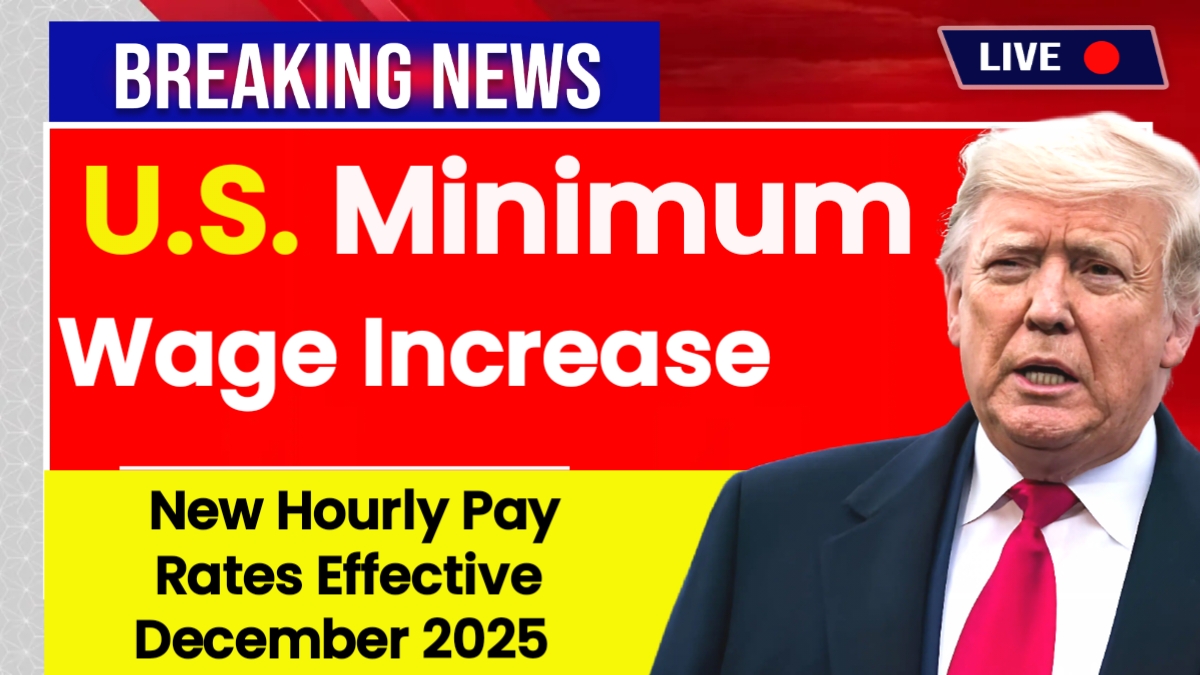
U.S. Minimum Wage Increase: The minimum wage situation in the United States continues to change in 2025 as several states increase their hourly pay requirements. These adjustments are important because they affect the income of millions of workers who rely on hourly wages, particularly those employed in retail, hospitality, food service, and seasonal jobs. While the federal minimum wage remains at $7.25 per hour, many states have raised their own standards in response to rising living costs, inflation pressures, and long-term wage plans that were approved in earlier years. The result is a wide range of wage levels across the country, with some states offering significantly higher pay than others.
Why the Federal Minimum Wage Still Matters in 2025
The federal minimum wage of $7.25 per hour, established under the Fair Labor Standards Act, has not increased since 2009. This means that workers covered under federal law must receive at least this amount, regardless of what their state mandates. In states that have adopted higher minimum wages, employers are required to pay the higher state rate. However, several states do not have their own minimum wage laws, which means the federal rate applies automatically. This creates a situation where workers in some states earn more than double the federal wage, while those in a handful of states earn just the federal minimum. The continued gap has increased national conversations about wage fairness and economic disparities across regions.
States Taking the Lead with Higher Wages
In 2025, a number of states have moved forward with inflation-indexed wage increases. These adjustments are based on systems that automatically raise the minimum wage in response to the cost of living. States such as California, Washington, New York, Arizona, and Colorado continue to lead the nation with some of the highest minimum wage requirements. Many of these states approved long-term, scheduled increases years ago, allowing wages to rise consistently without needing new legislative action. The approach gives workers more predictable earnings and helps protect buying power as rents, food prices, and transportation costs continue to rise in major metropolitan areas and suburban regions.
यह भी पढ़े:
 IRS Just Confirmed: $2,000 Direct Deposit Payments Coming November 2025 – Are YOU Getting One?
How Inflation Indexing Shapes Wage Growth
Inflation indexing has become one of the most influential tools in determining state-level minimum wage updates. These systems use data from the Consumer Price Index and other cost-of-living measures to calculate annual increases. The goal is to keep wages in line with local economic conditions. This helps workers avoid falling behind when prices rise quickly. States such as Maine, Missouri, and Arizona rely on these automatic adjustments, ensuring that wages do not remain stagnant even when legislative activity slows. As a result, workers in these states often experience steady income growth compared to workers in states still tied to the federal minimum.
Mid-Year Adjustments and Regional Wage Variations
Not all states apply wage changes each January. Some, including Oregon and the District of Columbia, update their minimum wage rates in the middle of the year. D.C. will raise its minimum wage on July 1, 2025, continuing its trend of maintaining the highest wage levels in the country. Oregon follows a unique regional wage system with different rates for the Portland metro area, standard counties, and non-urban regions. This structure acknowledges that living expenses are not the same everywhere within the state. States with regional wage divisions aim to create more balanced local economies by reflecting the actual cost of housing, utilities, and transportation in each area.
How Some States Still Rely on the Federal Minimum
While many states have introduced their own wage laws, a few continue to rely on the federal minimum wage by default. States such as Alabama, Louisiana, Mississippi, South Carolina, and Tennessee do not have their own minimum wage statutes. Workers covered under federal rules in these states must therefore receive $7.25 per hour. Meanwhile, states like Georgia and Wyoming technically list minimum wages below the federal requirement, but employers subject to federal laws must still pay the federal level. This ensures that workers do not fall below the national wage floor. However, the lack of state-driven adjustments means workers in these regions may earn considerably less than their counterparts in states with updated policies.

Employer Responsibilities Under Updated Wage Laws
Employers across the United States must pay close attention to changing wage schedules in 2025. Businesses operating across different states or counties must ensure that payroll reflects the highest applicable wage based on where each employee works. Updated workplace posters provided by the U.S. Department of Labor and state agencies must be displayed to inform employees of their rights. Employers who hire tipped workers, young workers in training programs, or seasonal employees must also follow specific rules that vary by state. Failure to comply with updated wage requirements can lead to penalties, back-pay orders, and legal disputes. Keeping payroll systems accurate and up-to-date is essential for employer compliance.
What Workers Should Know About Their Wage Rights
Workers should stay informed about the minimum wage in their state, especially if they have recently changed jobs, moved to a new location, or work for companies with multiple branches. Every state publishes its minimum wage data publicly, and the U.S. Department of Labor maintains a current national list online. Employees who believe they are being paid below the required rate can file complaints with their state labor department or the federal Department of Labor. Awareness of wage rules is especially important in industries where pay structures may differ based on tips, hours worked, or employer size. Understanding their rights helps workers ensure they receive fair pay based on the 2025 wage standards.
The Bigger Picture: What These Changes Mean for 2025
The minimum wage adjustments taking effect in 2025 highlight the growing divide between states with strong wage policies and those with minimal or no updates. States using inflation indexing and scheduled wage increases are helping workers stay ahead of rising costs, while states tied to the federal minimum leave workers with limited earning power. This uneven structure has become a major topic in economic discussions nationwide. As living costs continue to rise, more states are expected to reconsider their wage laws to ensure that workers can maintain financial stability. The coming years may see even more changes as employers, policymakers, and workers push for wages that reflect real economic conditions.

Disclaimer
This article is for informational purposes only. Minimum wage rates may change based on new state laws or federal regulations. Readers should verify the latest updates through official government websites, including the U.S. Department of Labor and their state labor agency.