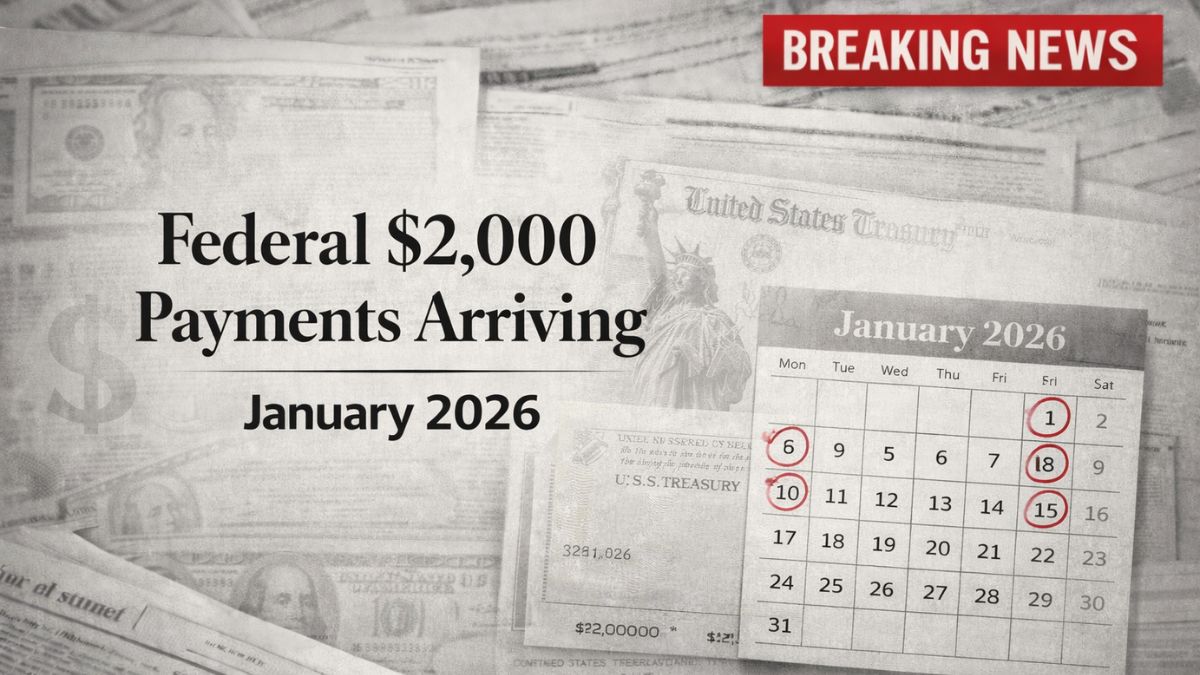
As January 2026 begins, millions of Americans are paying close attention to reports of a one-time federal payment of $2,000. With rising costs for rent, groceries, healthcare, and other daily expenses, even a single payment can provide meaningful relief. These payments are designed to help eligible households manage financial pressure at the start of the year.
Purpose of the Payment
The $2,000 payment is a one-time financial relief measure issued by the U.S. Treasury. It is intended to support households struggling with ongoing expenses. The funds are distributed either through direct deposit or mailed checks, depending on the information the government has on file. While the program is temporary, it provides flexibility for families to use the money on the most urgent needs, such as bills, groceries, or medical costs.
Who is Eligible
Eligibility for this payment is primarily based on income, as reported on the most recent tax return, usually the 2024 return. Recipients must have a valid Social Security number and meet U.S. citizenship or qualified residency requirements. Unlike some federal benefits, this payment is not limited to retirees or Social Security recipients. Households with qualifying dependents may receive additional amounts, but the total payment is not recurring.

How Payments are Delivered
Payments are expected to begin in January 2026. Individuals with direct deposit information on file will likely receive funds first, typically in early or mid-January. Those without direct deposit may get their payment via paper check or prepaid debit card, which can take longer. Most eligible recipients should receive the money by the end of the month.
No Separate Application Needed
For most people, no separate application is required. The IRS and Treasury use existing tax records to determine eligibility automatically. People who did not file a tax return but believe they qualify may need to complete a simplified filing process. It is important to ensure that the IRS has correct bank and mailing information to avoid delays.
Flexible Use of Funds
There are no restrictions on how the $2,000 payment is spent. Many households use it for rent, utilities, groceries, healthcare, or debt repayment. Others may save it to improve their financial stability. Although temporary, this payment can make a meaningful difference for families facing tight budgets and also provide an economic boost to local communities.

Disclaimer
This article is for informational purposes only and does not constitute legal, tax, or financial advice. Federal payment programs, eligibility rules, and payment timelines may change. For specific guidance, readers should consult official IRS or U.S. Treasury resources or seek advice from qualified professionals.