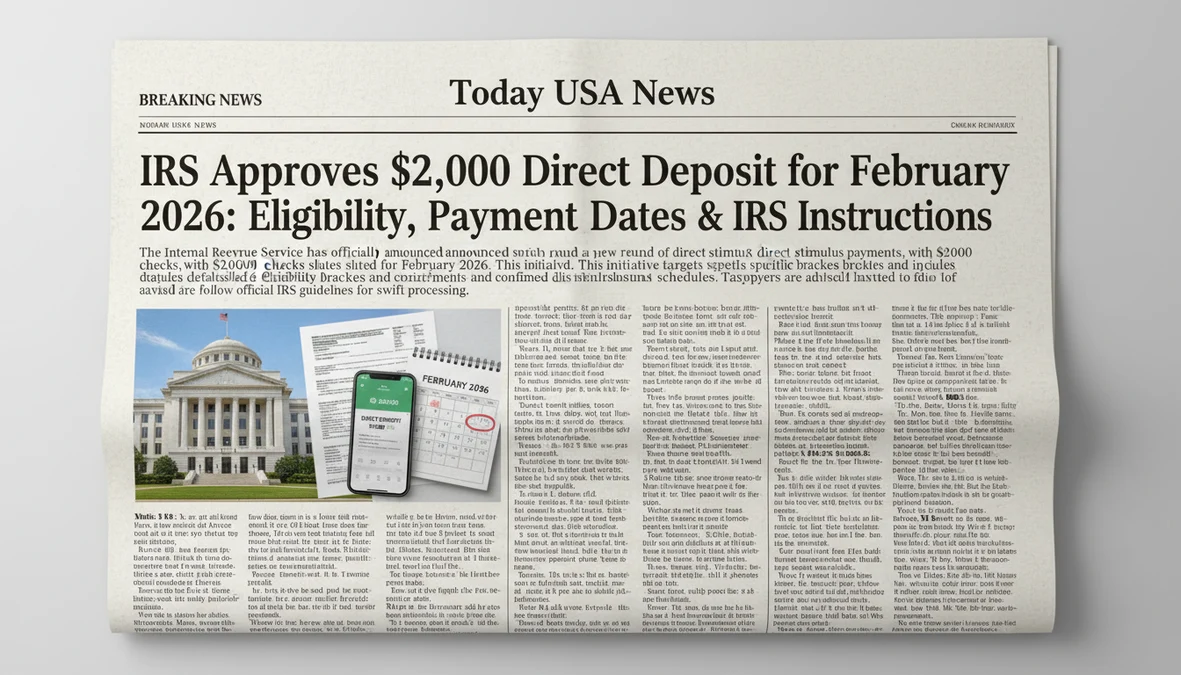
Over the past few weeks, talk of a “$2,000 IRS direct deposit” has spread rapidly across social media, video platforms, and private messaging groups. For families dealing with high rent, rising grocery prices, medical expenses, and mounting credit card debt, the idea of extra money arriving in February 2026 sounds like much-needed relief. As these claims circulate again and again, many people are left wondering whether this payment is real or just another online rumor.
The truth is more cautious than the headlines suggest. As of now, there is no officially approved $2,000 direct deposit scheduled by the IRS for February 2026. What people are seeing online is a mix of political discussion, speculation, and public hope. Understanding how this idea started and why it remains unconfirmed can help households avoid confusion and plan their finances responsibly.
Where the $2,000 Payment Idea Came From
The idea of a $2,000 direct deposit did not come from an IRS announcement. Instead, it grew out of broader discussions in Washington about tariff revenues. In recent months, some political leaders have suggested returning a portion of money collected from tariffs back to taxpayers. This concept is often described as a “tariff dividend” and is framed as targeted relief rather than a full stimulus program.

Once this idea reached the internet, it quickly took on a life of its own. Influencers and unofficial websites began calling it a “fourth stimulus check,” comparing it to the pandemic-era payments sent between 2020 and 2021. The familiar $2,000 figure made the claim sound believable, even though no law approving such a payment has passed Congress.
Why February 2026 Is Often Mentioned
February 2026 appears frequently in online claims, but this date is not official. Analysts believe the month is being used as an assumption rather than a confirmed timeline. In the past, large federal payments connected to tax data have often been issued early in the year, which may explain why February keeps appearing in discussions.
Without congressional approval, however, the IRS has no authority to set payment dates or distribute funds. There has been no announcement from the Treasury Department, no internal IRS notice, and no official government document confirming February 2026 as a payout period. Treating this date as guaranteed could lead to financial mistakes, especially for households depending on the money.
How a $2,000 Payment Could Work If Approved
If Congress were to approve a $2,000 direct deposit program, it would likely follow patterns used in previous relief efforts. Eligibility would probably be based on recent tax returns, using income levels to decide who qualifies and who does not. Payments would most likely be sent through direct deposit first, followed by paper checks or prepaid cards for those without bank details on file.
The amount would also likely vary. Single filers, married couples, and families with children might receive different totals. Any approved program would almost certainly include income limits and reduced payments for higher earners. This type of design is common in federal relief programs and helps control overall costs.
Who Would Benefit the Most
If such a payment ever moves forward, low- and middle-income households would likely benefit the most. Renters facing yearly rent increases, seniors living on fixed incomes, and families balancing childcare and education expenses would see the greatest impact. For many people, a one-time payment could help cover utilities, medical bills, or reduce high-interest debt.

Higher-income households would probably receive smaller payments or none at all. Past relief programs phased out benefits as income rose, and there is little reason to expect a different approach. Dependents claimed on someone else’s tax return would also likely not receive separate payments.
Lessons From Past Stimulus Programs
The pandemic-era stimulus checks provide helpful context. Those payments were praised for arriving quickly but also faced criticism for confusion, delays, and later repayment demands when errors occurred. They showed how complex nationwide cash programs can be, even when there is strong political support.
Compared to those emergency programs, the current $2,000 discussion is far less defined. There is no declared economic emergency pushing immediate action, and federal budgets remain tight. Some economists have also warned that broad cash payments could increase inflation instead of easing financial pressure.

The Risk of Misinformation and Scams
Whenever rumors about government payments spread, scams usually follow. Fake emails, text messages, and phone calls claiming to help “release” a $2,000 IRS payment have already been reported. These scams often ask for Social Security numbers or bank details, taking advantage of uncertainty and hope.
The IRS has made it clear that it does not contact people unexpectedly to request personal information. Any message asking for fees or sensitive details to unlock a payment should be considered a warning sign. Checking only official IRS updates and trusted news sources is the safest way to stay informed.
What Happens Next
Whether a $2,000 direct deposit ever becomes reality depends entirely on Congress. Lawmakers would need to write a bill, agree on funding, pass it through both chambers, and receive presidential approval. Until that happens, all figures and dates remain hypothetical.

Financial experts advise households not to count on unapproved payments. Planning based on confirmed income and benefits is safer, while treating any future relief as a bonus rather than a promise. Staying patient and informed can prevent unnecessary stress.
The idea of a $2,000 direct deposit is appealing, especially during a time of financial strain. However, there is currently no approved IRS payment scheduled for February 2026. Preparing by filing taxes on time, keeping records updated, and following official announcements are the best steps households can take.
Disclaimer
This article is for informational purposes only and does not provide financial, legal, or tax advice. As of now, no $2,000 IRS direct deposit for February 2026 has been officially approved or confirmed. Policies, eligibility rules, and timelines may change or may never be implemented. Readers should rely on official U.S. government sources for accurate and up-to-date information.