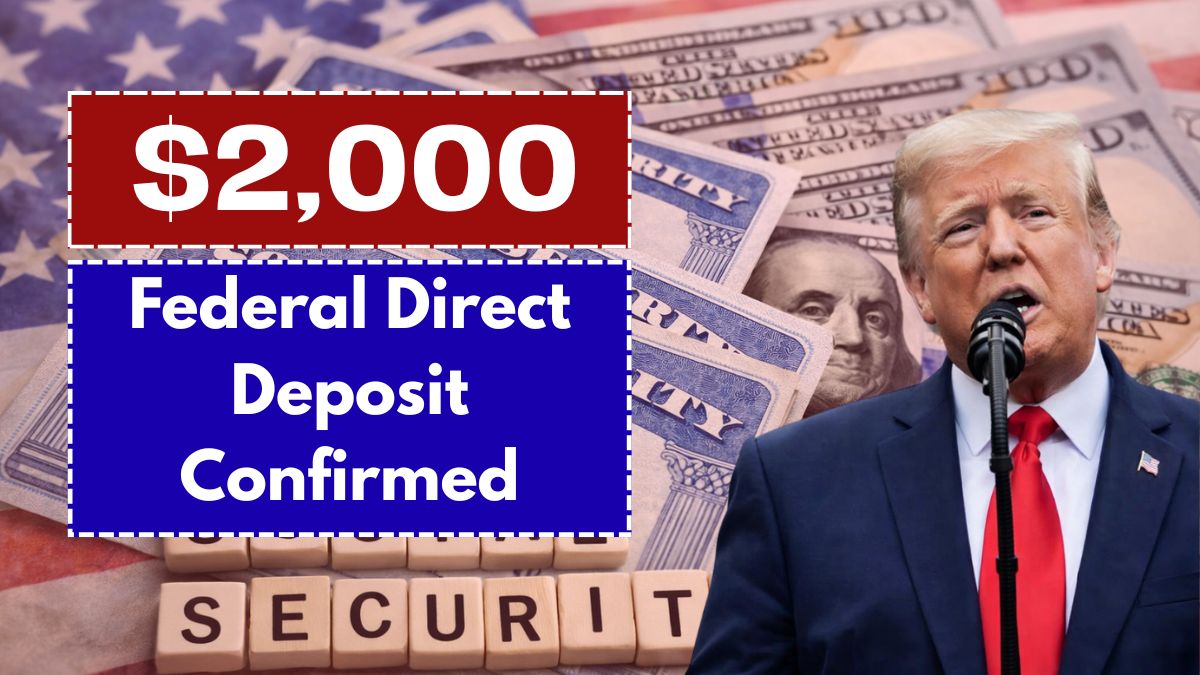
$2,000 Federal Direct Deposit Confirmed: Over the past few weeks, talk of $2,000 stimulus checks has once again flooded the internet. Social media posts, blogs, and short videos claim that new payments are confirmed, scheduled, or already being processed by the IRS. For millions of Americans struggling with rising living costs, inflation, and financial uncertainty, this news sounds hopeful and urgent.
However, when the noise is stripped away and only verified information is examined, the situation looks very different. At present, there is no confirmed nationwide $2,000 stimulus check program in the United States.
Why $2,000 Stimulus News Is Trending Again
The return of stimulus check discussions is not accidental. Many Americans still remember the pandemic-era payments of $1,200, $1,400, and $2,000 that were sent between 2020 and 2021. Whenever financial pressure increases, people naturally hope for similar relief, and comparisons to those years quickly resurface.

At the same time, prices for housing, food, insurance, and healthcare remain high. Even without official announcements, this environment makes stimulus-related content highly attractive. As a result, unverified claims spread rapidly and are often mistaken for confirmed news.
Is There a Confirmed $2,000 Stimulus Check Right Now
The clear and direct answer is no. There is currently no federal law approving a new $2,000 stimulus check for the general population. Congress has not passed any legislation authorizing such payments, and the IRS has not announced any new distribution plan.
There are also no official payment dates, eligibility rules, or application systems in place. Any claim stating that $2,000 checks are “approved,” “scheduled,” or “already being deposited” is not supported by official government action.

Where the $2,000 Claims Are Coming From
A major source of confusion is the discussion around a proposed idea known as a “tariff dividend.” Some political figures have suggested that revenue collected from tariffs on imported goods could be returned to Americans as direct payments, sometimes estimated around $2,000 per person.
These discussions have been mentioned in speeches and interviews, which has led many online outlets to present them as confirmed plans. In reality, these are policy ideas, not approved programs, and no checks can be issued without new laws being passed.
Why the Tariff Dividend Is Not a Real Payment Yet
For any federal payment to become real, a specific legal process must be followed. A bill must be written, debated, and approved by both chambers of Congress. After that, it must be signed into law by the President, and only then can federal agencies begin implementation.
यह भी पढ़े:
 $4,983 Direct Deposit Expected in December 2025 — Eligibility and Payment Dates Explained
None of these steps have occurred for a tariff dividend or a new $2,000 stimulus. At this stage, it remains a discussion, not a benefit that Americans can expect to receive.
How Online Articles Create Confusion
Many stimulus-related articles rely on vague language rather than confirmed facts. Phrases like “could be approved soon” or “payments expected any day” are often used without citing actual legislation or official statements. Headlines may imply IRS confirmation while the article itself provides no proof.
In some cases, older stimulus news is recycled and presented as if it were current. This approach generates clicks but leaves readers misinformed, especially those actively searching for financial relief.

What the IRS Has Actually Confirmed Recently
While no new stimulus program exists, the IRS has been involved in other types of payments. These include tax refund adjustments, corrections related to overpaid taxes, and delayed credits from previous filings. These payments are individual and case-specific.
Additionally, some state governments continue to issue their own relief payments or rebates. These are not federal stimulus checks and should not be confused with nationwide programs.
Are Some Americans Still Receiving Government Payments
Yes, but these payments are not new stimulus checks. Some people are receiving Social Security cost-of-living adjustments, veterans’ benefit changes, state-issued rebates, or regular tax refunds. Each of these programs has its own eligibility rules and timelines.
यह भी पढ़े:
 $2,000 Direct Deposit for U.S. Citizens in December 2025 – Know Eligibility and Payment Dates
These payments are often mistaken for stimulus checks when shared online, which adds to the confusion. However, they are not part of a new federal $2,000 relief effort.
Why a New Federal Stimulus Is Unlikely Soon
From a policy standpoint, large stimulus payments face major obstacles. The government has moved away from emergency pandemic spending, and lawmakers remain cautious due to inflation concerns. Injecting large amounts of cash into the economy is viewed as risky under current conditions.
Budget discussions today focus more on debt, taxes, and long-term spending rather than universal cash payments. While future relief is possible, there is no active momentum pointing toward an imminent $2,000 stimulus.
यह भी पढ़े:
 Social Security Benefits 2025: Understanding the Proposed $200 Monthly Increase for Seniors
What Americans Should Do Instead of Trusting Rumors
Relying on unconfirmed stimulus news can lead to poor financial planning. A better approach is to focus on verified programs that already exist. Reviewing eligibility for tax credits, refunds, and benefit programs can provide real assistance.
Staying informed through official government websites and established news sources is also important. Viral posts and sensational headlines should never be the sole source of financial information.
How to Identify Reliable Stimulus Information
Reliable stimulus news always includes clear references to passed legislation and official announcements. It avoids guaranteed language and appears consistently across multiple reputable sources. If these elements are missing, the information should be treated with caution.

Understanding the difference between a proposal and an enacted law is essential for avoiding misinformation.
The Bottom Line on $2,000 Stimulus Checks
At this moment, the widely circulated claims about $2,000 stimulus checks in the United States are not factual. There is no approved law, no IRS payment schedule, and no official eligibility system in place.
What exists instead is a mix of public discussion, political ideas, and online speculation. Americans deserve accurate and transparent information, especially during financially difficult times.

Looking Ahead at What Could Change
While no stimulus is approved today, future changes are always possible. New legislation, economic shifts, or political developments could reopen discussions about direct payments. Until that happens, claims of guaranteed $2,000 checks should be viewed skeptically.
Final Takeaway for Readers
The idea of a $2,000 stimulus check is not officially real at this time. It exists in conversation, not in law. For now, focusing on confirmed benefits and avoiding viral misinformation is the safest and smartest approach.
Disclaimer
This article is for informational purposes only and does not provide legal, tax, or financial advice. Government policies and relief programs may change at any time. Readers should verify all information through official government sources or consult a qualified professional before making financial decisions.