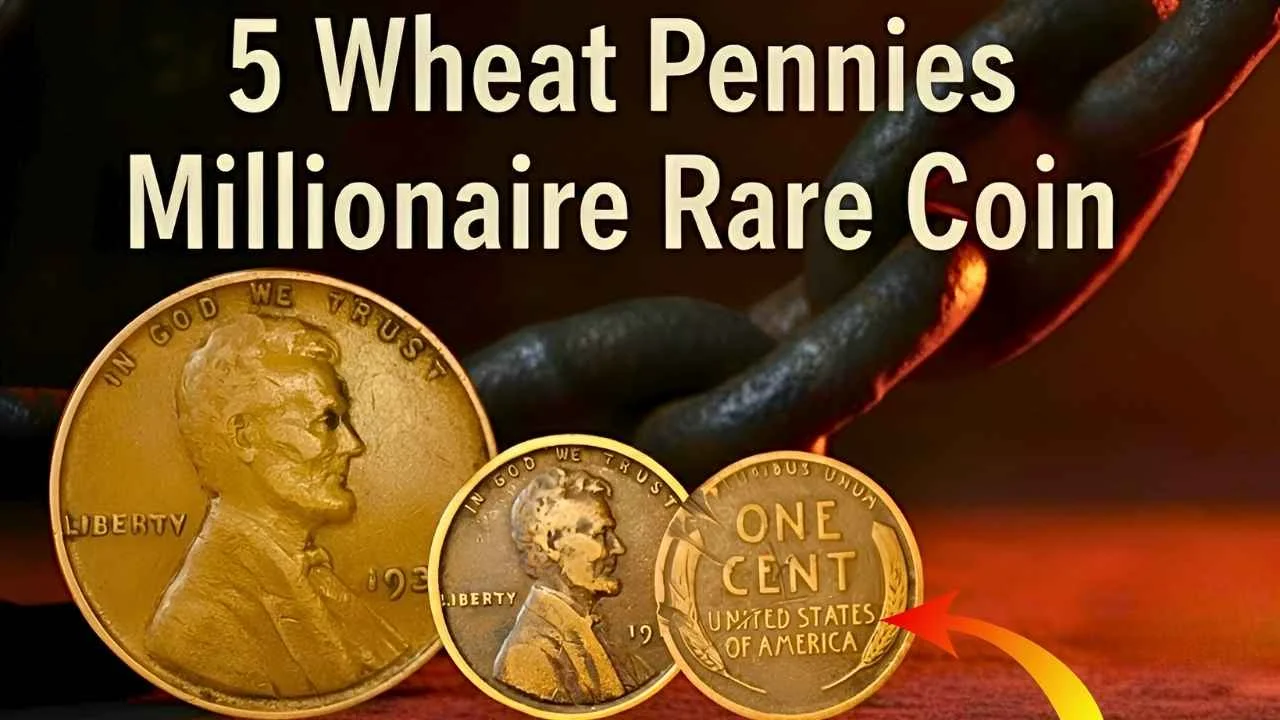
Coins are more than just currency — they hold history, stories, and hidden value. Among American collectible coins, wheat pennies stand out as some of the most popular. Minted between 1909 and 1958, these coins may look ordinary, but a few rare editions are worth thousands or even millions of dollars today. For collectors and investors, knowing which wheat pennies are rare can open the door to life-changing opportunities.

The Story Behind Wheat Pennies
Wheat pennies were introduced in 1909 to celebrate the 100th birth anniversary of Abraham Lincoln. Designed by Victor David Brenner, the coin featured Lincoln’s portrait on the front and two wheat stalks on the back. These wheat stalks symbolized prosperity and growth in America. Over nearly 50 years, billions of wheat pennies were produced. However, due to low mintages, errors, or special markings, some coins became extremely rare and valuable.
What Makes a Wheat Penny Valuable
Not all wheat pennies are worth a fortune. A coin’s value depends on several key factors. Rarity is the most important — coins minted in small numbers or with rare mint marks are harder to find. Condition also matters, as coins with minimal wear are more valuable. Some coins contain minting errors like doubling, missing mint marks, or off-center strikes, which make them unique. Historical importance and provenance can further increase desirability among collectors.

The Most Valuable Wheat Pennies in 2025
In 2025, collectors continue to focus on a few wheat pennies that consistently achieve high auction prices. These coins are rare, in demand, and hold strong historical value.
1909-S VDB Wheat Penny
One of the most famous rare coins, the 1909-S VDB was minted in San Francisco in very limited numbers. The initials VDB, representing the designer Victor David Brenner, appear on the reverse. Due to its low mintage and popularity, high-grade examples are extremely valuable.
1914-D Wheat Penny
The 1914-D penny from the Denver Mint is another top collectible. Its limited production makes it difficult to find today, especially in fine condition. Well-preserved pieces often reach six-figure prices at auctions.

1922 No D Wheat Penny
This is one of the most unusual coins in U.S. history. Although minted in Denver, some 1922 coins were accidentally struck without the D mint mark. This minting error turned it into a rare and highly desired collectible.
1931-S Wheat Penny
Minted in San Francisco with a low production run, the 1931-S penny is rare in uncirculated condition. Collectors appreciate its historical importance during the Great Depression, making it a valuable find.
1955 Doubled Die Wheat Penny
Famous for its dramatic doubling on the date and inscriptions, this coin is one of the most well-known error coins in U.S. history. The doubling is so strong that it’s visible without a magnifying glass. High-grade coins can command extraordinary prices.

How to Identify Rare Wheat Pennies
Finding a valuable wheat penny requires careful inspection. Mint marks under the date show where the coin was produced — D for Denver, S for San Francisco, and no mark for Philadelphia. Look closely for signs of doubling, missing mint marks, or unusual striking errors. Condition is judged using professional grading standards from PCGS or NGC. Coins graded MS65 or higher are far more valuable than those showing wear.
Why Collectors and Investors Love Wheat Pennies
Wheat pennies offer a combination of history and investment potential. Rare coins have a long record of increasing in value over time, making them safer than many other collectibles. Collectors enjoy learning the stories behind each coin, while investors see a way to diversify their portfolio with physical assets. With some wheat pennies selling for tens of thousands to over a million dollars, they remain a powerful choice for long-term value seekers.
Smart Tips for Investing in Rare Coins
Investing in valuable coins requires patience and knowledge. Buying from reputable dealers protects you from counterfeits. Certificates of authenticity and professional grading help maintain the coin’s value. Researching market trends ensures you make informed decisions. Diversifying your collection across different rare coins also reduces risk. Rare coins often grow in value over many years, so a long-term approach leads to better returns.

Key Highlights for Collectors
• Wheat pennies were minted from 1909 to 1958 and hold deep historical value.
• The rarest and most valuable coins include the 1909-S VDB, 1914-D, 1922 No D, 1931-S, and 1955 Doubled Die.
• Rarity, errors, condition, and mint marks determine value.
• Professional grading increases authenticity and market price.
• Wheat pennies offer strong investment potential along with historical interest.
Final Words: Small Coins, Big Opportunities
Rare wheat pennies are far more than small pieces of copper — they are treasures from American history with the power to create real financial gain. The five wheat pennies most valued in 2025 prove how rarity, condition, and minting errors can transform an ordinary coin into a million-dollar collectible. By learning how to identify and acquire these special coins, collectors and investors can enter the world of high-value numismatics and unlock extraordinary opportunities.
The information provided in this article is for general educational and informational purposes only. Coin values can vary widely based on condition, rarity, demand, and market trends. Prices mentioned are not guaranteed and may change over time. Readers are advised to research independently and consult professional numismatists or certified coin dealers before making any buying or investment decisions. The author and publisher are not responsible for any financial loss or decisions made based on this content.