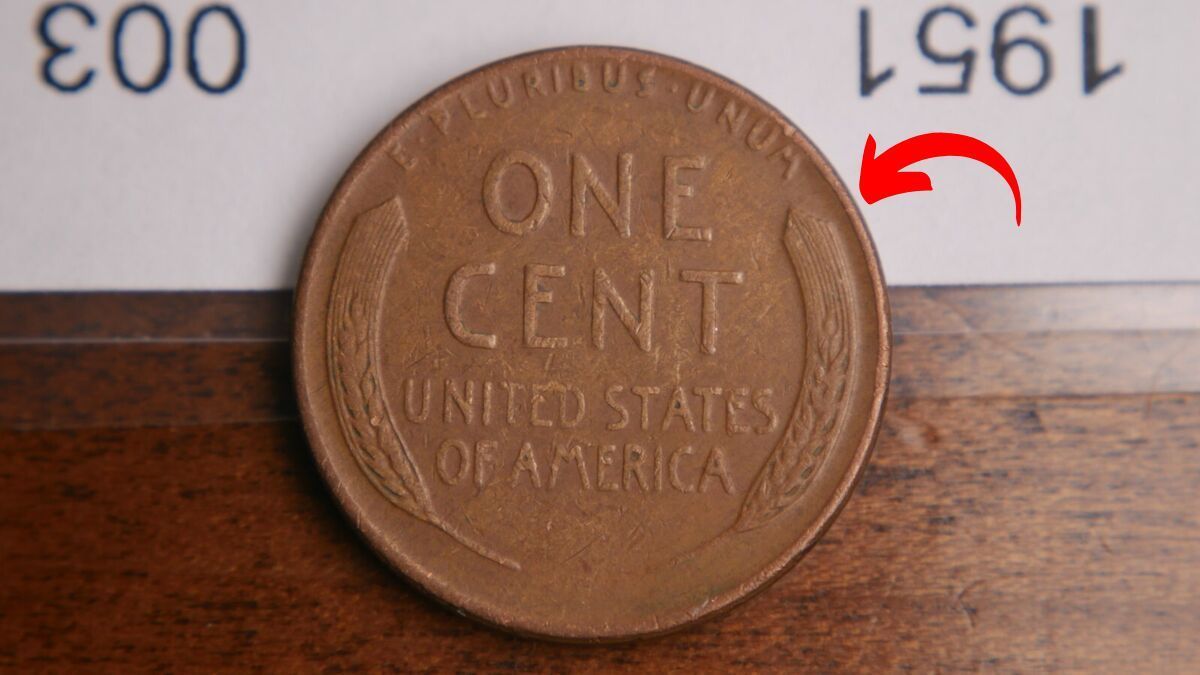
For generations, coin collectors in the United States have been fascinated by the Lincoln Wheat Penny. Minted from 1909 to 1958, this coin originally had little more than face value. But today, some rare versions of the wheat penny are worth astonishing amounts. One particular variety has gained major attention in recent years because experts estimate its value at up to $2 million. Even more surprising is the fact that this penny could still be found in everyday circulation.

A Brief Introduction to the Lincoln Wheat Penny
The Lincoln Wheat Penny was introduced in 1909 to celebrate the 100th birthday of President Abraham Lincoln. Designed by Victor David Brenner, the coin featured Lincoln’s portrait on the front and two wheat stalks on the back. The simple design made the coin iconic, and it remained in production for nearly 50 years.
Collectors value wheat pennies for their historical significance as well as their scarcity. While millions were minted, a few special varieties are extremely rare due to minting errors or limited production. These rare coins are the ones that can reach high prices at auctions and private sales.

Why Some Wheat Pennies Are Worth Millions
Not all wheat pennies are valuable. Most versions still only bring a small premium over face value. However, specific rare varieties, especially error coins produced unintentionally, are extremely valuable. The $2 million wheat penny belongs to this category.
There are several reasons why a wheat penny can reach such a huge price:
Scarcity: Only a very small number exist.
Minting errors: These mistakes make the coin unique and highly desirable.
Historical significance: Older coins often gain value simply due to age and limited remaining supply.
Collector demand: The U.S. coin market is strong, and rare coins attract competitive bidding.

The combination of rarity and strong demand is what pushes some coins into the million-dollar range.
The Legendary 1943 Copper Wheat Penny
The most famous million-dollar wheat penny is the 1943 Copper Wheat Penny. In 1943, during World War II, the U.S. Mint switched from copper to steel because copper was needed for military production. As a result, almost all 1943 pennies were made of zinc-coated steel.
However, a small number of pennies were mistakenly struck on leftover copper planchets from 1942. These rare copper versions became one of the most sought-after error coins in U.S. history. Only about 20 of them are known to exist.

Because of this extreme rarity, collectors have paid enormous amounts for authentic 1943 copper pennies. At auctions, the price has reached as high as $1.7 million, and private estimates place the value near $2 million, depending on condition.
Why a $2 Million Penny Might Still Be in Circulation
Many people find it difficult to believe that a coin worth millions could still be sitting in someone’s pocket change. But experts say this is entirely possible. Old coins often slip back into circulation when families clean out old jars, inherit collections, or exchange coins at the bank without knowing their value.
Unlike modern rare collectibles stored in sealed cases, the wheat penny was a common everyday coin for decades. It was used routinely in stores, schools, and households across the country. For this reason, rare varieties can still appear where people least expect them.

Cases have been reported where individuals found rare coins:
in old piggy banks
in inherited coin jars
in rolls of pennies from local banks
in vending machine returns
in pocket change during cash transactions
The fact that wheat pennies circulated widely until the late 1950s means rare versions may still be hiding among millions of ordinary coins.

How to Identify a Potentially Valuable Wheat Penny
While the 1943 copper penny is the most famous, several other wheat penny varieties are also valuable. Anyone interested in checking their change should know the basic signs of a rare coin.
Key things to look for include:
Year and mint mark: 1909-S, 1914-D, 1931-S, and 1943 copper are the most valuable.
Metal composition: A genuine 1943 copper penny will not stick to a magnet.
Condition: Coins in excellent condition have much higher value.
Minting errors: Doubled dates, off-center strikes, and missing letters increase rarity.
Low mintage: Fewer coins minted means higher potential value.

Even common wheat pennies usually sell for more than a cent, especially older dates or coins with good detail.
Other Rare Wheat Pennies Worth Big Money
Although the $2 million penny is the most talked about, other wheat pennies also bring high prices at coin shows and auctions. Some notable examples include:
1909-S VDB Penny: Worth $1,000 to $10,000 depending on condition.
1914-D Penny: One of the rarest early dates, often worth over $5,000.
1922 “No D” Penny: A famous minting error worth several thousand dollars.
1955 Doubled-Die Penny: A striking error often valued above $10,000.
यह भी पढ़े:
 SASSA Confirms Double Grant Payment on 15 December 2025 for SRD R350 and Pension Beneficiaries
These coins may not reach million-dollar levels, but they are still extremely valuable and are sometimes found in collections or circulation.
Expert Advice for Anyone Who Finds an Old Wheat Penny
Before assuming a coin is extremely valuable, experts recommend taking a careful approach:
Do not clean the coin. Cleaning reduces value.
Check the date and mint mark with good lighting.
Use a magnet to test 1943 pennies for authenticity.
Compare the coin to verified images from trusted numismatic sources.
Consult a certified coin dealer or grading service.

Professional grading can determine the exact condition and authenticity of the coin. A rare wheat penny in top condition can increase in value dramatically when certified.
Why Collectors Are Still Obsessed with the Wheat Penny
There are several reasons why the wheat penny remains one of the most popular collectible coins in America. First, it represents an important period in U.S. history. Second, many people remember finding wheat pennies in childhood change, creating nostalgic value. Finally, the possibility of discovering a rare and highly valuable version keeps collectors searching.
For new collectors, the wheat penny is an accessible starting point. The coins are easy to find, inexpensive to collect, and full of hidden surprises. For advanced collectors, the rare varieties offer a thrilling challenge.
यह भी पढ़े:
 R2,315 SASSA Pension December 2025 Confirmed: Full Payment Schedule and What Seniors Need to Know
Final Thoughts
The Lincoln Wheat Penny is one of the most iconic coins in American history. While most versions are common, a few rare varieties—especially the legendary 1943 copper penny—can fetch prices approaching $2 million. What makes the story even more exciting is that these valuable coins may still be in circulation today.
For anyone who handles cash, checks rolls of coins, or has jars of old change at home, the chance of discovering a rare wheat penny still exists. It is this possibility that keeps collectors searching and keeps the mystery of the million-dollar penny alive.
If you have old pennies stored away, now may be the perfect time to take a closer look. One of them could be worth far more than you ever imagined.