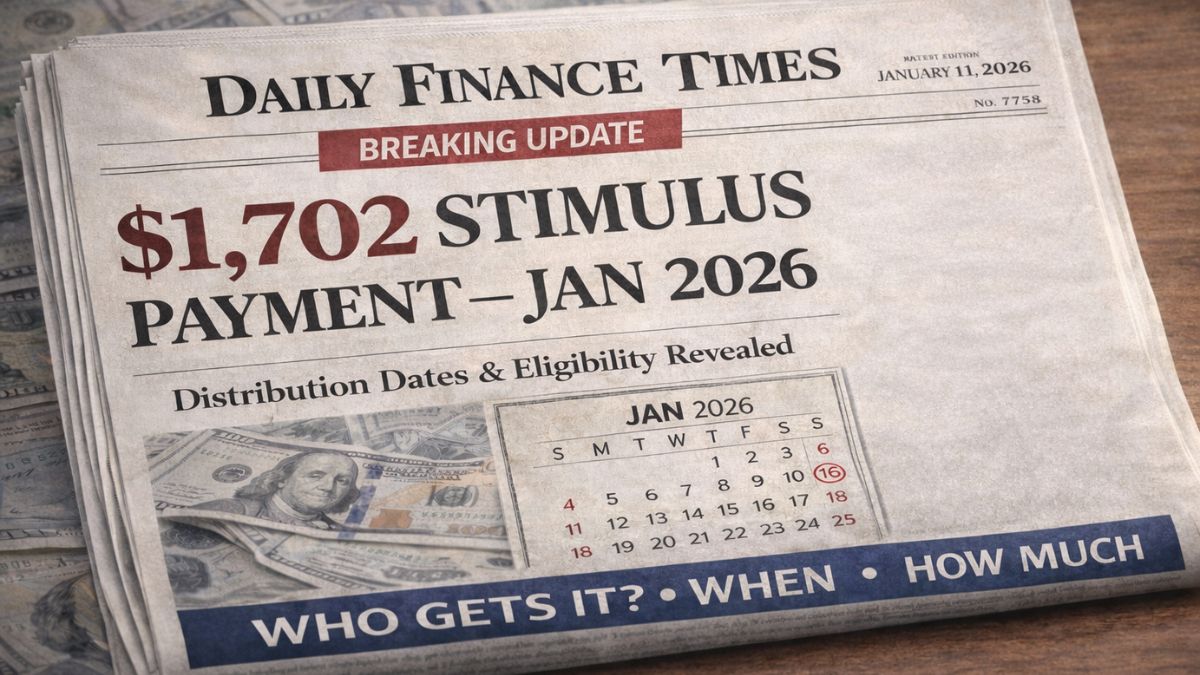
$1702 Stimulus Payment Approved – Over the past few weeks, headlines and social media posts have been buzzing about a so-called $1,702 federal stimulus payment supposedly arriving in January 2026. Some posts go as far as listing “eligibility rules,” “payment dates,” and even claiming the IRS has already confirmed it. That kind of detailed-sounding information can make the claim feel real. The problem is, none of it is official. There is currently no approved $1,702 federal stimulus payment, and no federal agency has announced such a program.
This confusion shows how fast financial rumors can spread online, especially when people are already dealing with higher costs for food, rent, utilities, and healthcare. When money is tight, any talk of a government payment grabs attention. But before anyone starts planning their budget around this number, it’s important to understand what is actually verified and how federal payments really work.
Is a $1,702 Stimulus Payment Approved for January 2026?
No, it is not approved. For a federal stimulus payment to exist, Congress must first pass a law that authorizes it. That law must include funding, eligibility rules, and instructions for which agency will run the program. After that, the IRS or another agency releases official guidance explaining who qualifies and how payments will be delivered. None of these steps have happened for a $1,702 payment.

There is no legislation, no signed bill, and no formal announcement from the White House, Congress, the Treasury Department, or the IRS. Without those actions, a nationwide payment simply cannot be issued. Online articles or videos do not replace the legal process required for federal spending.
Why Are People Seeing Such Specific Claims?
One reason the rumor is spreading is the very specific amount. Numbers like $1,702 can make a story sound researched and legitimate. In reality, amounts like this often come from other contexts. They may resemble average tax refund figures, state-level rebate programs, or estimates people calculate by combining different benefits. Once that number appears in a few places, it gets repeated, reposted, and labeled as a “stimulus,” even when no federal law supports it.
Another factor is how social media algorithms work. Content that promises money or relief gets clicks, shares, and comments. That pushes it to more people, even if the information is not verified. Over time, repetition makes the claim seem familiar, and familiarity can be mistaken for truth.

What Would Happen If a Real Stimulus Were Approved?
Looking at past stimulus programs can help people understand what to expect if a new one were ever passed. Typically, eligibility depends on income limits, tax filing status, citizenship or residency status, and information already in federal records. The IRS usually uses recent tax returns to determine who qualifies and how much they receive.
Payment methods also follow a pattern. Direct deposit is the fastest option for people who have bank information on file with the IRS. Others may receive paper checks or prepaid debit cards through the mail. But again, these are general examples from previous programs. Right now, there is no eligibility framework or payment plan tied to a $1,702 amount.
Payment Dates and Distribution Reality
You may see posts claiming that “January 2026 payment dates are already set.” That is not true. Payment schedules can only be released after a program is officially authorized and agencies have time to prepare systems. Since no $1,702 program exists, there are no payment waves, no mailing timelines, and no deposit calendar.

Whenever a real federal payment is approved, the IRS publishes details on its official website and often sends notices to taxpayers. Major news outlets also report on it using statements from government sources. The absence of those official updates is a clear sign that the $1,702 claim is not legitimate.
IRS Guidance and Application Warnings
The IRS has not released any guidance, forms, or online portals for a $1,702 January 2026 payment. That’s an important point, because rumors like this sometimes lead to scams. Fraudsters may create fake websites, emails, or text messages asking people to “apply” or “confirm eligibility” by sharing Social Security numbers, bank details, or paying small fees.
In legitimate federal stimulus programs, there is usually no separate application for most people. Payments are based on existing tax records. The government does not charge fees to release stimulus money. If someone asks for payment or sensitive personal information tied to this $1,702 claim, that is a major red flag.
The Role of Congress and Official Sources
Only Congress has the authority to create large-scale federal stimulus payments. That process involves public debate, voting in both the House and Senate, and the President’s signature. Because of the scale of spending, these bills receive heavy media coverage and formal documentation. It is not something that happens quietly or secretly.
That’s why it’s always safer to rely on official government websites and established news organizations that cite government statements. Random posts, screenshots, or anonymous articles may sound convincing, but they do not carry legal authority.
Why Staying Informed Matters
Misinformation about government payments does more than just cause confusion. It can lead people to make financial decisions based on money that will never arrive. It also opens the door to identity theft and scams. Taking a few minutes to verify information through official channels can prevent a lot of stress and potential loss.
For now, the bottom line is simple. There is no approved $1,702 federal stimulus payment for January 2026. No eligibility rules exist, no payment dates are scheduled, and the IRS has not confirmed any such program. Until there is formal action from Congress and clear guidance from federal agencies, this claim should be treated as unverified.
Conclusion
The idea of a $1,702 payment may sound helpful, especially during times when many households are feeling financial pressure. But hope should be based on facts, not viral headlines. Federal stimulus programs require legal approval, funding, and official announcements. None of that has happened here. Staying cautious, checking reliable sources, and ignoring unverified claims is the best way to avoid confusion and protect your personal information.
Disclaimer
This content is for general informational purposes only and should not be considered financial, legal, or tax advice. Government payment programs depend on official legislation and agency guidance, which can change over time. Readers should verify details through authorized government sources before making financial decisions. The author is not responsible for actions taken based on unverified third-party claims or unofficial reports about potential federal payments.