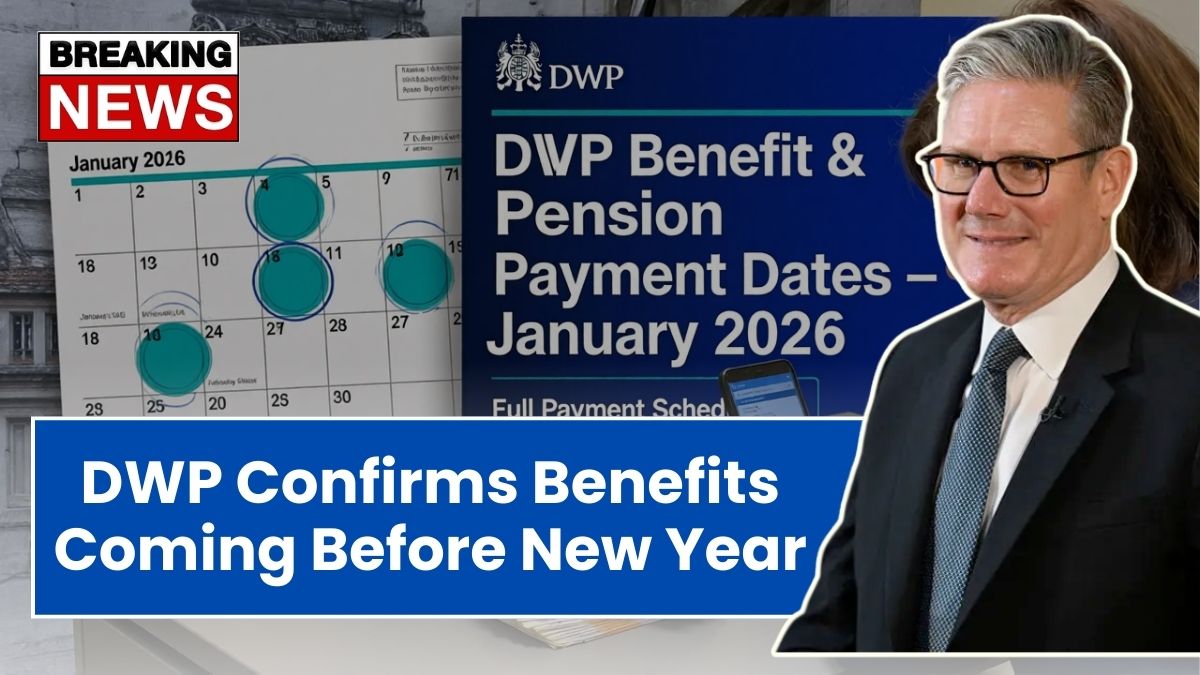
DWP Announces Early Payments Before January 1 – Good news for anyone receiving benefits in the UK. The Department for Work and Pensions (DWP) and HM Revenue and Customs (HMRC) have confirmed that payments scheduled for the start of 2026 will arrive a little earlier than usual. Since 1st January 2026 falls on a national bank holiday, the government has moved the payments forward to ensure claimants have access to their funds before the long weekend. This step is designed to make sure no one misses out on essential income during the festive period.
How Early Payments Work
For those receiving benefits or tax credits, the early payment process is simple. Normally, if a payment date falls on a weekend or bank holiday, the money is automatically transferred to the next working day. In this case, the government is proactively bringing payments forward to avoid any delays over the New Year break. This ensures that households can count on having access to funds without the interruptions that bank closures often cause.
Confirmed Payment Schedule
The confirmed schedule shows that payments originally due on Thursday, 1 January 2026, across the UK will now arrive on Wednesday, 31 December 2025. Similarly, payments due on Friday, 2 January 2026, in Scotland will also be moved to Wednesday, 31 December 2025. Payments that were due on Monday, 5 January 2026, will remain unchanged for the whole UK. This adjustment allows claimants to access their money ahead of time, ensuring a smoother start to the New Year without financial stress.

Which Benefits Are Included
The early payment adjustment applies to most major benefits administered by the DWP, along with tax credits handled by HMRC. If your normal payday falls on 1st, 2nd, or 3rd January, or around that time, the money will land in your account by the end of December. This includes Universal Credit, Pension Credit, State Pension, Personal Independence Payment, Disability Living Allowance, Attendance Allowance, Carer’s Allowance, Child Benefit, Tax Credits, Employment and Support Allowance, and Jobseeker’s Allowance. By receiving payments early, households can cover festive expenses, bills, and any other financial commitments without worrying about the holiday causing delays.
Important Advice for Early Recipients
While getting paid early is undoubtedly helpful, it is worth being cautious. Receiving your money on 31st December may create a longer gap until the next scheduled payment in late January. Claimants are advised to plan their spending carefully during this period to avoid running out of funds before the next deposit. In Scotland, where 2nd January is a local bank holiday, benefits administered through Social Security Scotland will follow the same early payment schedule, ensuring no delay for local recipients.
How to Check Your Payment
You don’t need to take any action to receive your funds early as the process is fully automated. However, it is always a good idea to double-check your payment dates. You can do this through your Universal Credit Online Journal or the HMRC Personal Tax Account. In the rare event that your payment does not arrive by the afternoon of Wednesday, 31st December, it is important to contact the relevant benefit helpline immediately. Offices will be closed on New Year’s Day, and staffing may be limited during the first week of January.

Planning Ahead for a Smooth Start to 2026
This early payment schedule is a practical way to ensure that the New Year does not cause unnecessary financial stress for benefit recipients. It allows claimants to manage household expenses, prepare for the festive season, and enjoy the holiday without worrying about delayed payments. Being aware of this schedule also helps households budget carefully for the following month, ensuring a smoother financial start to 2026.
Disclaimer
This article is intended for general information purposes only. While every effort has been made to provide accurate and timely details, official payment dates and benefit information should always be confirmed via government sources such as GOV.UK and HMRC. Policies and schedules may change, and readers are encouraged to consult official channels for guidance regarding their individual benefit payments.
