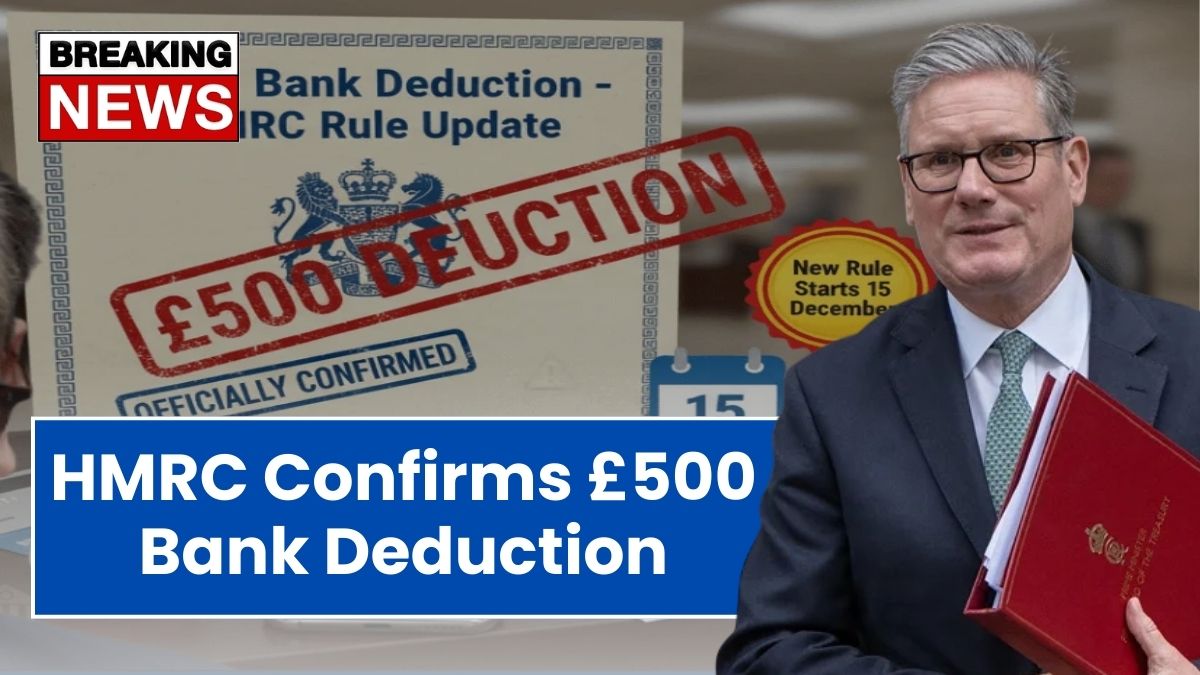
HMRC Confirms £500 Bank Deduction – HM Revenue & Customs has officially confirmed a rule that has left many pensioners feeling uneasy. From 15 December, HMRC will have the power to instruct banks to automatically deduct up to £500 from certain pensioners’ accounts. While the Government says this move is about improving tax collection and reducing long-standing errors, many older people worry about the impact, especially with Christmas and winter bills already putting pressure on household finances.
Although the rule itself is not brand new, its wider rollout and automatic enforcement mean far more pensioners could now be affected. The biggest concern is that money could be taken directly from a bank account without the pensioner actively agreeing to it, something that understandably feels unsettling for those living on fixed incomes.
Why HMRC Has Brought in This Rule
According to HMRC, this change is part of a broader plan to modernise the way unpaid tax is collected. Over recent years, they have seen a rise in pension-related tax errors. This often happens when people receive income from more than one source, such as a State Pension alongside a private or workplace pension, or when they earn a small amount from savings, renting property, or part-time work.

One major issue is that State Pension is paid without tax being deducted at source. Many pensioners are unaware of this, assuming their tax is already taken care of. HMRC usually collects any tax owed by adjusting tax codes later, but if that does not work, small debts can build up quietly. The new system allows HMRC to recover these smaller unpaid amounts more quickly, instead of waiting years.
Who Could Be Affected by the £500 Deduction
HMRC has stressed that not every pensioner will be affected, but the criteria are broad enough to include thousands of people. Pensioners may fall within the scope of the rule if HMRC has identified an underpayment from the previous tax year and that amount is £500 or less. This usually applies to those receiving State Pension along with other taxable income, such as a private pension, workplace pension, savings interest, dividends, rental income, or part-time earnings.
The key factor is that HMRC has been unable to collect the unpaid tax through the normal tax code system. If this happens, and previous attempts to recover the money have failed, HMRC can now move to automatic recovery through a bank account.

How the £500 Bank Deduction Will Work
From 15 December, HMRC can use its Direct Recovery of Debts system to recover unpaid tax directly from a bank account. If this happens, HMRC will send an automated request to the bank, which must legally comply. The deduction can be taken in a single transaction, up to a maximum of £500.
There are safeguards in place. HMRC must ensure that at least £1,000 remains in the account after the deduction, and pensioners should receive written confirmation once the money has been taken. However, many critics argue that £1,000 is still not enough for people who live month to month and face high winter costs.
Why Pensioners Are So Concerned
For many older people, December is already the most expensive time of year. Heating bills rise, food costs increase, and many pensioners like to help family members or grandchildren over Christmas. Losing up to £500 unexpectedly could force difficult choices, such as cutting back on heating or delaying essential payments.

There is also the issue of communication. Many pensioners struggle with HMRC’s letters, tax codes, and online systems. Some never receive correspondence in time, while others do not fully understand what is being asked of them. This has led to fears that people could be caught out even when they have not intentionally done anything wrong.
HMRC’s Position on Safeguards
HMRC insists that strong protections remain in place. They say no deduction will happen unless the pensioner has been contacted at least twice and offered the chance to pay through a payment plan. Automatic recovery is meant to be a last resort, used only when there has been no response or agreement.
They also highlight the £1,000 minimum balance rule as a safeguard against hardship. However, pensioner groups and charities argue that this level does not reflect the real cost of living, especially during winter.

What Pensioners Should Do Before 15 December
With the start date approaching, pensioners are being urged to act now rather than wait. Checking your tax code is one of the most important steps. An incorrect tax code can quietly create an underpayment, even if your income is relatively modest. If your private pension income suddenly drops or you receive multiple coding notices, it may be a sign something is wrong.
It is also important to review all sources of income, including small amounts from savings or part-time work. Making sure HMRC has accurate information can prevent problems later. If you already know you owe tax but cannot pay it all at once, setting up a payment plan is often the best solution. Once a plan is in place, automatic deductions should not occur.
Some financial advisers also suggest keeping a small buffer in a separate account if possible. This can help protect day-to-day spending money and reduce stress if a deduction does happen.

What If You Think HMRC Has Made a Mistake
If you receive a letter warning of a deduction, or if money has already been taken, you still have options. Pensioners have the right to ask for a breakdown of the tax calculation, dispute the amount, or appeal if they believe an error has been made. HMRC says deductions will be paused if there is an active dispute or evidence of immediate financial hardship.
The most important thing is not to ignore HMRC letters or messages. Doing nothing increases the risk of automatic action.
Public Reaction and Wider Concerns
The timing of this rule has caused widespread debate. Many campaigners feel introducing it just days before Christmas is unfair, especially when older people are already struggling with energy bills and rising prices. There are also concerns about digital exclusion, as many pensioners cannot easily check their tax details online.

Opposition parties and charities have called for a delay or winter exemption, but the Government has confirmed the rule will go ahead as planned.
Final Thoughts for Pensioners
The new HMRC rule allowing banks to deduct up to £500 from pensioners’ accounts marks a significant shift in how unpaid tax is collected. While the Government sees it as an efficiency measure, many pensioners worry about the financial shock it could cause at a difficult time of year.
Checking your tax status now, understanding your income, and contacting HMRC early if something looks wrong can make a big difference. Being proactive is the best way to stay in control and avoid unexpected deductions.

Disclaimer
This article is for general information purposes only and does not constitute financial, legal, or tax advice. Tax rules and HMRC procedures can change, and individual circumstances may vary. Readers should not rely solely on this content when making financial decisions. Pensioners are encouraged to contact HMRC directly or seek advice from a qualified tax adviser or financial professional to confirm how the rules apply to their specific situation.