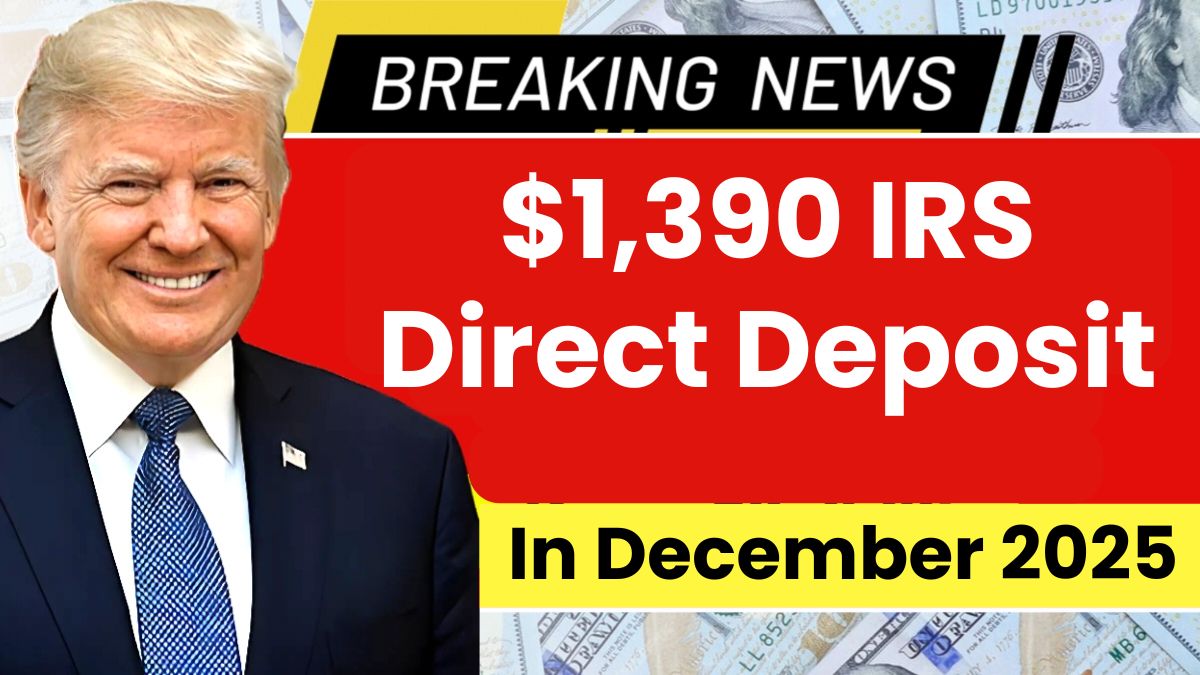
As December 2025 comes closer, many Americans are once again seeing posts on social media, messaging apps, and small websites claiming that the Internal Revenue Service is preparing to send a $1,390 direct deposit payment. According to these claims, millions of people will supposedly receive the money automatically before the end of the year. With higher living costs, medical bills, and holiday expenses putting pressure on family budgets, it is easy to understand why such news spreads quickly. However, a careful review of official information shows that these claims are not accurate.
Where the $1,390 Payment Claim Comes From
The rumor about a $1,390 payment appears to be designed to look official. Many posts use formal language, structured explanations, and timelines that resemble past government notices. They often suggest that the payment will be sent through direct deposit using bank details already on file, with paper checks going to those without banking information. This presentation makes the claim seem credible at first glance. Despite this, there is no real evidence supporting the idea that such a payment has been approved or scheduled.
No Official Confirmation From the IRS
As of December 2025, the Internal Revenue Service has not announced any new nationwide payment, rebate, or stimulus-style program. Its official communications remain focused on routine responsibilities, such as finishing outstanding refund processing and preparing systems for the 2026 tax filing season. When the IRS plans to issue large-scale payments, it clearly announces them through official press releases and updates on its website. No such announcement exists for a $1,390 payment.
Why the Rumor Feels Familiar
Many Americans remember the stimulus payments issued during the pandemic years of 2020 and 2021. At that time, emergency legislation allowed the federal government to send money quickly to households through automatic deposits. Because those payments were delivered with little action required from recipients, similar language today can create the impression that a new program is underway. However, the economic and legal conditions that justified those payments no longer exist, and no emergency relief law has been passed in 2025.
Congressional Approval Is Required
It is important to understand that the IRS cannot issue nationwide payments on its own. Any large federal payment program must first be approved by United States Congress, funded through the federal budget, and signed into law. Only after these steps can the IRS begin distributing money. Since no legislation authorizing a $1,390 payment has been passed, the IRS does not have the legal authority to issue such a deposit.
Legitimate IRS Deposits Still Occur
Although the $1,390 rumor is false, some taxpayers may still see IRS deposits in December. These deposits are tied to normal tax administration, not to any new relief effort. They may include refunds from late-filed tax returns, amended returns, or corrections made during processing. When these legitimate payments arrive unexpectedly, people may mistakenly believe they are part of a new program, which further fuels confusion online.

State-Level Payments Add to the Confusion
Some states continue to send out their own financial assistance, such as energy rebates, renter support, or property tax relief. These payments are issued by state revenue departments, not the IRS. Because they are often delivered by direct deposit, recipients may assume the money came from the federal government. When state payments arrive around the same time as IRS refunds, misinformation can spread more easily, reinforcing false federal payment claims.
Social Security Benefits Are Not Involved
Another common source of confusion is the belief that Social Security or disability benefits are connected to the rumored payment. In reality, Social Security programs are managed by the Social Security Administration and operate separately from the IRS. Retirement benefits, Supplemental Security Income, and disability payments continue on their regular schedules. There has been no announcement of a special December bonus or one-time supplement linked to these programs in 2025.
Increased Risk of Scams
Whenever false payment claims circulate, scam activity usually increases. Fraudsters may pretend to be government officials and contact people through text messages, emails, or phone calls, claiming they need personal information to release the payment. The IRS has repeatedly warned that it does not initiate contact this way. Any unsolicited request for bank details, Social Security numbers, or verification codes should be treated as suspicious and ignored.

How to Stay Informed and Protected
The safest way to avoid confusion is to rely only on official government sources. Real federal payments are always publicly announced, supported by legislation, and widely covered by major news outlets before money is sent. Claims that appear suddenly on social media without links to official statements should be viewed with caution. Checking the IRS website or trusted government pages is the best way to confirm whether a payment is real.
The Bottom Line on the $1,390 Claim
There is no verified evidence that a $1,390 IRS direct deposit payment is scheduled for December 2025. The claim is not supported by official announcements, legislation, or IRS guidance. While some people may receive legitimate tax-related deposits or state-level payments, these are unrelated to the rumor. Staying informed, avoiding unverified online claims, and protecting personal information are the best ways to navigate financial news during the year-end period.
Disclaimer
This article is for informational purposes only and is based on publicly available information and official government communications as of December 2025. It does not provide financial, legal, or tax advice. Federal and state policies may change. Readers are advised to verify any payment-related information through official sources such as the Internal Revenue Service, Congress, or relevant state agencies before taking action or making financial decisions.