$2.1 Million Sacagawea Dollar Coin Guide: The $2.1 Million Sacagawea Dollar Coin Guide continues to attract strong interest among collectors and history lovers. This modern U.S. coin may look ordinary at first glance, but its story makes it one of the most important dollar coins ever issued. While millions of Sacagawea Dollars were produced for circulation, a small and specific group became highly valuable due to an unexpected promotional release. Over time, collectors realized that these coins were different, rare, and historically unique.
First released in the year 2000, the Sacagawea Dollar was meant to replace the Susan B. Anthony Dollar, which many Americans disliked. The U.S. Mint wanted a coin that looked different from quarters and other coins. To achieve this, they chose a golden-colored metal and a bold new design. What followed was one of the most unusual modern coin releases in American history.
The History Behind the Sacagawea Dollar
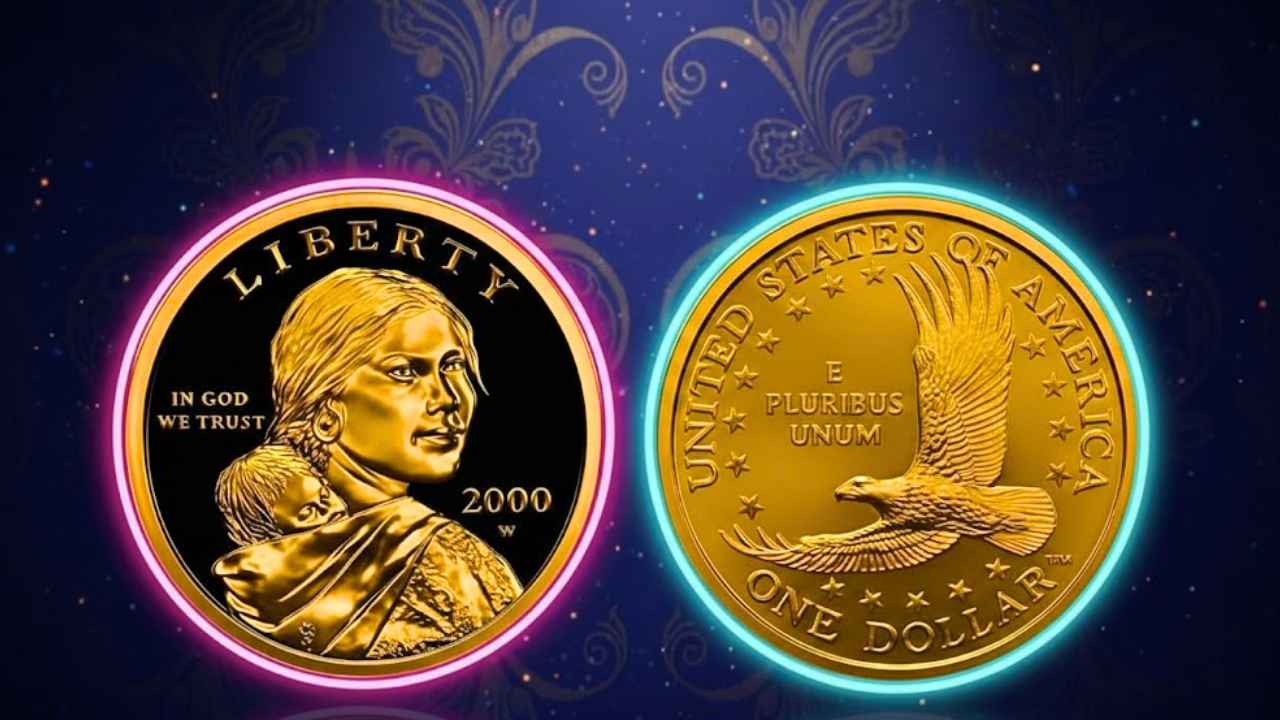
The Sacagawea Dollar honors Sacagawea, a Native American woman who played a key role in guiding the Lewis and Clark expedition. Her contribution to American exploration was finally recognized through this coin. The obverse shows Sacagawea carrying her infant son, Jean Baptiste, symbolizing strength, guidance, and new beginnings. This design helped give the coin a strong emotional and historical connection.

The reverse side of the coin features a flying eagle, representing freedom, exploration, and national growth. Combined with the golden color, the coin was designed to stand out easily in daily transactions. Although the coin was visually successful, it never gained widespread circulation. However, its lack of popularity with the public later helped preserve some rare varieties.
The Cheerios Promotion That Changed Everything
To introduce the new dollar coin to the public, the U.S. Mint partnered with General Mills in early 2000. As part of a marketing campaign, Sacagawea Dollars were placed inside boxes of Cheerios cereal. Around 2.1 million coins were distributed this way across the United States. At the time, this was simply seen as a fun promotional giveaway.
What collectors did not know then was that many of these promotional coins were struck using a slightly different reverse design. These coins were produced before the final circulation version was fully approved. As a result, the Cheerios coins carried a unique design detail that later disappeared from standard Sacagawea Dollars.

The Design Difference That Created a Rare Coin
The key feature that separates the rare Cheerios Sacagawea Dollar from regular coins is found on the reverse. On the rare variety, the eagle’s tail feathers are more detailed, sharper, and longer. The feathers show deep lines and a stronger texture compared to standard circulation coins, which have smoother and less defined feathers.
This difference is subtle and not easy to spot without close inspection. Many people have spent these coins without realizing their importance. Over time, collectors identified this enhanced feather design and confirmed it as a separate variety. Once this discovery became widely known, the value of these coins increased significantly.
Why the 2.1 Million Coins Are Still Rare
Although 2.1 million coins sounds like a large number, very few remain today in collectible condition. Many coins were spent, scratched, or lost shortly after the promotion. Only a small percentage survived in uncirculated or near-perfect condition. This low survival rate is one of the main reasons for the coin’s high value today.

Collectors place great importance on condition. Coins that were never used and still show original mint surfaces are much more desirable. As demand increased and supply remained limited, prices rose steadily. Today, confirmed examples are considered key modern U.S. rarities.
Importance of Grading and Authentication
Professional grading plays a major role in determining the value of a Cheerios Sacagawea Dollar. Grading services carefully examine the eagle tail feathers to confirm the enhanced design. They also assign a condition grade, which helps buyers and sellers agree on value. Certified coins usually sell for much higher prices than uncertified ones.
Authentication also prevents confusion with regular Sacagawea Dollars. Many people mistakenly believe all 2000 Sacagawea Dollars are valuable, which is not true. Only the coins with the enhanced feather design qualify. Certification gives collectors confidence and protects them from costly mistakes.
Collecting and Investment Perspective
Collectors interested in the 2.1 Million Sacagawea Dollar often take a long-term approach. Some prefer graded examples for stability, while others value coins still in original Cheerios packaging for their historical appeal. Market prices can vary depending on condition and demand, but interest in this coin has remained strong.
From an investment point of view, this coin has shown steady performance. Its story, limited release, and recognition within the numismatic community support long-term demand. While no coin investment is guaranteed, well-preserved examples continue to attract serious collectors worldwide.
Cultural and Numismatic Significance
The Cheerios Sacagawea Dollar holds a unique place in American coin history. It represents a rare moment when everyday consumer marketing intersected with numismatics. Millions of people unknowingly held a future collectible in their hands while eating breakfast. This unusual distribution method makes the coin’s story even more compelling.

Beyond its value, the coin also helped raise awareness about Sacagawea and her role in American history. It remains one of the most discussed modern U.S. coin varieties and continues to inspire new collectors to learn about rare coins.
The $2.1 Million Sacagawea Dollar Coin Guide explains why this coin stands apart from ordinary modern dollars. Its enhanced eagle tail feathers, unexpected Cheerios promotion, and limited surviving examples make it one of the most important modern U.S. coin varieties. Collectors who understand proper identification and authentication can appreciate both its historical value and long-term appeal.
Disclaimer
This article is intended for educational and informational purposes only. Coin values depend on condition, rarity, certification, and market demand, which can change over time. Readers should consult professional grading services or qualified numismatists before buying, selling, or investing in collectible coins.