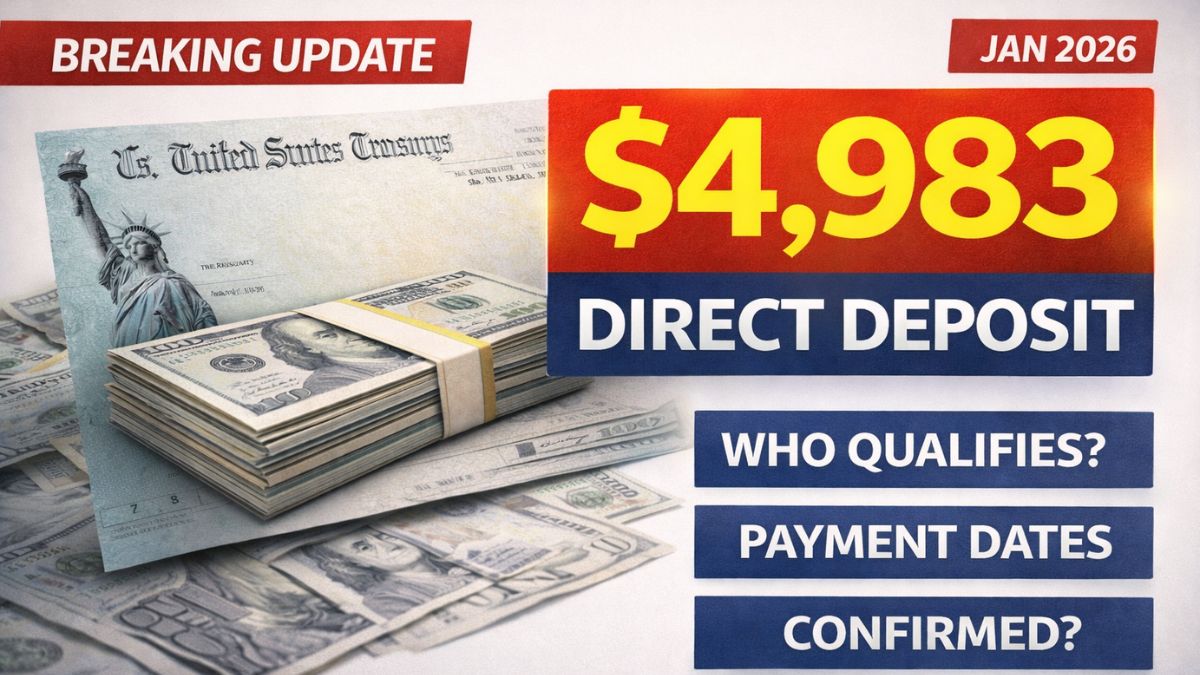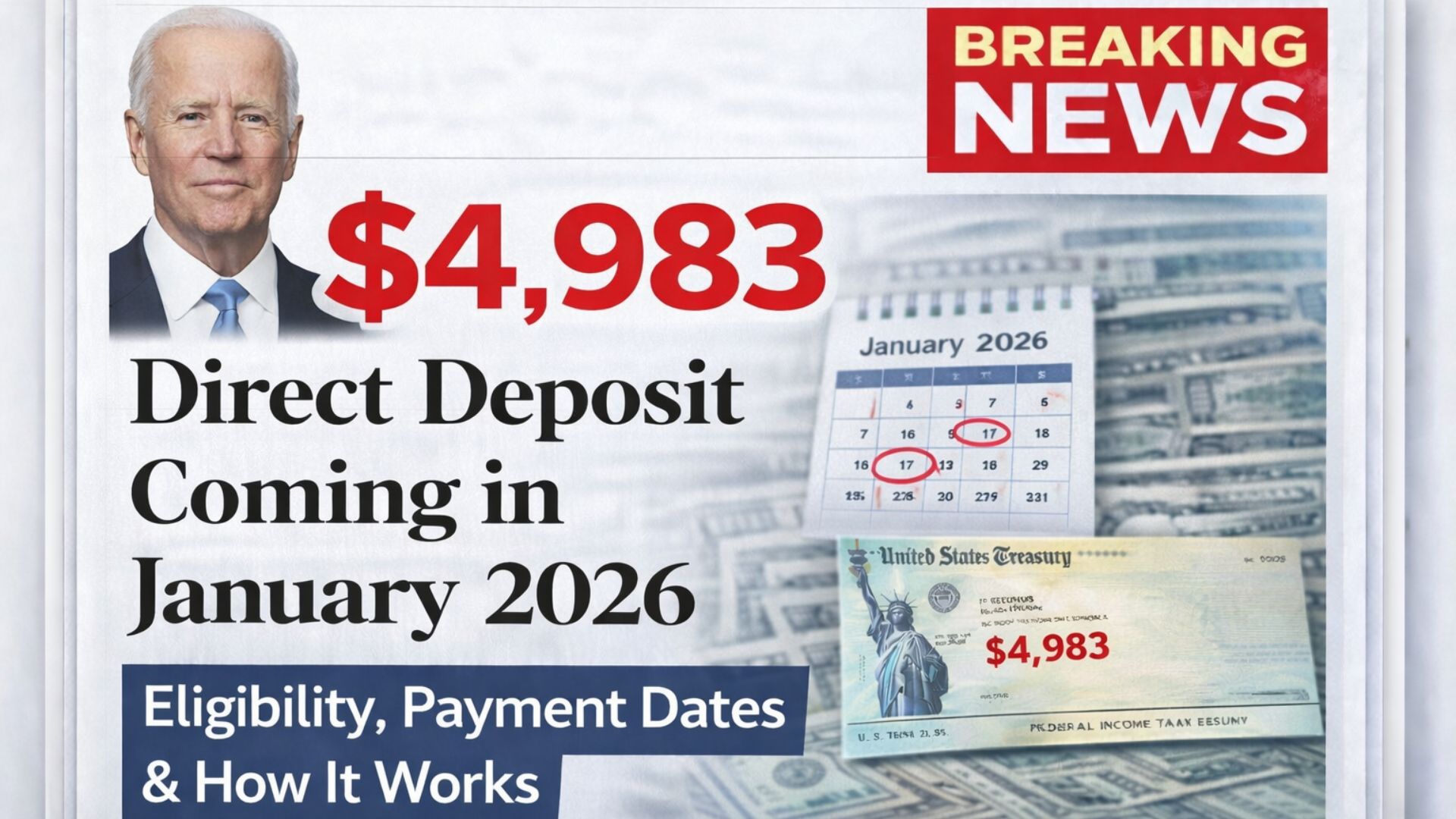
January 2026 has brought fresh attention to unusually large direct deposits appearing in some bank accounts, with amounts reported as high as $4,983. For many people, this has raised questions about whether a new nationwide stimulus program has been launched. In reality, these deposits are not part of a new universal payment plan but are the result of existing benefit systems aligning at the start of the year.
Why January Often Brings Higher Payments
January is a common month for larger or adjusted payments because many government benefit systems reset at the beginning of the year. Annual updates, cost-of-living adjustments, and verified records are applied during this period. As a result, some recipients see higher-than-usual deposits without any new federal program being introduced. This timing makes early 2026 a realistic window for combined or adjusted payments.
Understanding the $4,983 Deposit Amount
The $4,983 figure is not a fixed payment for everyone. Instead, it represents a total amount that may include multiple benefits, credits, or adjustments added together. Some individuals may receive the full amount, while others may receive slightly more or less. The final figure depends on personal factors such as benefit type, income level, eligibility history, and prior payments already received.

Who May Be Eligible for These Payments
Eligibility is generally linked to participation in existing federal or state benefit programs. People already enrolled in these systems and meeting program-specific requirements are more likely to receive such deposits. This includes individuals who receive retirement or disability benefits, income-based assistance, or tax-related credits. Timely filing of tax returns, benefit applications, and keeping personal details updated play a crucial role in determining eligibility.
Why Not Everyone Receives the Same Amount
These deposits are not guaranteed for every American. Eligibility is not based on citizenship alone but on specific program rules. Some payments reflect combined benefits rather than a single source, which explains why two people in similar situations may receive different amounts. Incomplete records or missed deadlines can also reduce or delay payments.
How Payments Are Issued and When to Expect Them
Direct deposit is the primary method used to issue these funds because it is fast and secure. Payments are sent to registered bank accounts or prepaid benefit cards. Those without direct deposit details may receive paper checks, which can take longer. There is no single payment date for everyone, as timing depends on verification status, weekends, holidays, and bank processing schedules.

Using the Funds and Staying Alert
A deposit of this size can help cover essentials like housing costs, utilities, medical bills, or overdue expenses. To ensure smooth receipt, recipients should keep banking and contact information updated and regularly check official payment calendars. It is also important to be cautious of misleading claims online, as government agencies do not request personal details through unsolicited messages.
Final Clarity on the January 2026 Deposit
The $4,983 direct deposit expected by some recipients in January 2026 reflects accumulated or adjusted benefits from existing programs, not a new stimulus. Understanding how these payments work helps set realistic expectations and prevents confusion.
Disclaimer:
This article is for informational purposes only. The $4,983 direct deposit is not guaranteed for all Americans. Payment amounts, eligibility, and timing depend on individual circumstances and official government policies, which may change. Readers should consult official government resources or qualified professionals for guidance regarding their personal financial situation.