Hyundai Santro: The iconic Hyundai Santro is making a highly anticipated return to the Indian automotive market in 2026, marking a significant comeback for one of the country’s most beloved family hatchbacks. This time around, the Santro is not just a relaunch but a complete transformation that promises to blend nostalgic appeal with contemporary design, advanced technology, and impressive fuel efficiency. After years of absence from dealerships, Hyundai is positioning the new Santro as a premium yet affordable option for Indian families seeking reliable transportation without compromising on modern features.
The automotive landscape has changed dramatically since the Santro first captured hearts across India, and Hyundai understands that today’s consumers demand more than just basic transportation. The 2026 Santro aims to address these evolved expectations by offering an upscale design language, feature-rich cabin, and remarkable fuel economy that could potentially deliver up to 30 kilometers per liter. With an expected starting price below Rs 6 lakh, the new Santro targets budget-conscious buyers who refuse to settle for outdated technology or compromised quality. This strategic relaunch comes at a time when the compact hatchback segment faces intense competition, making the Santro’s return both timely and significant for Indian automotive enthusiasts and practical family buyers alike.
Redesigned Exterior with Contemporary Styling Elements
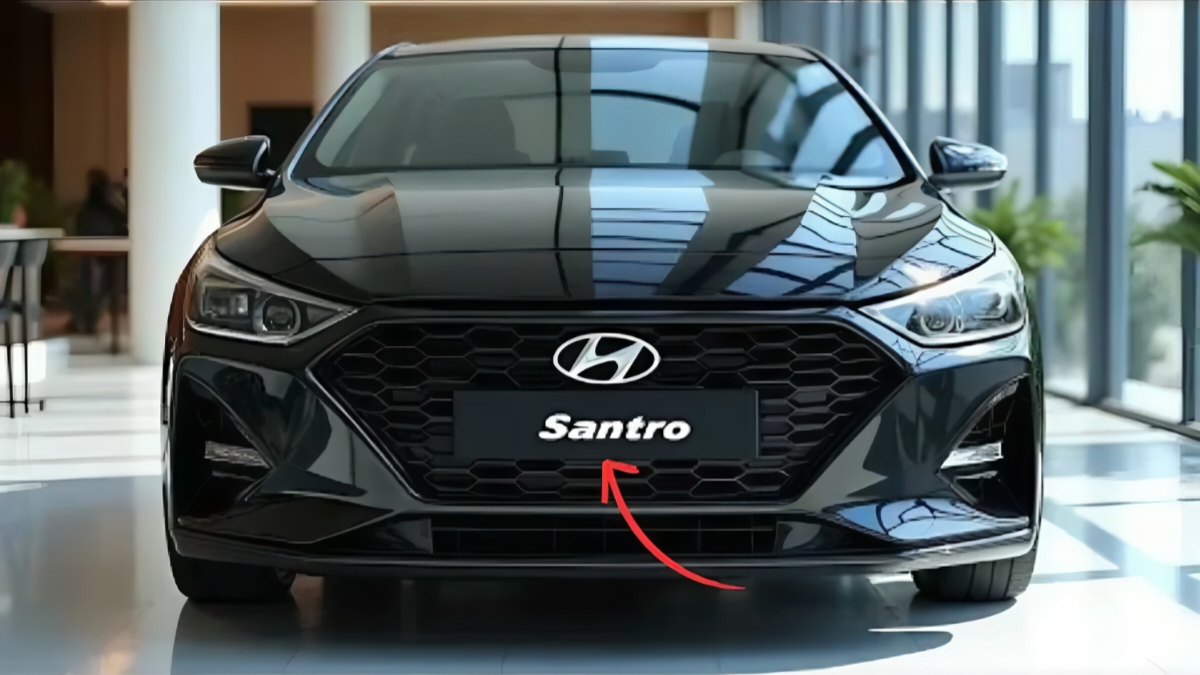
The 2026 Hyundai Santro showcases a dramatic departure from its predecessor’s conservative design philosophy, embracing a more contemporary and premium aesthetic that aligns with current automotive trends. The front fascia features a bold grille treatment with chrome accents that create a distinctive identity, complemented by sleek LED headlamps that provide excellent visibility while adding a modern touch. The swept-back design lines give the compact hatchback an unexpectedly dynamic profile, creating visual interest without compromising its practical proportions. Diamond-cut 14-inch alloy wheels wrapped in 165/70 section tires enhance both the visual appeal and handling characteristics of the vehicle.
यह भी पढ़े:
 Harley-Davidson Forty-Eight 2026 Launched – Powerful Engine, Bobber Styling & Updated Features
At the rear, connected LED taillamps create a cohesive lighting signature that has become increasingly popular in the premium segment, while a subtle roof spoiler adds a sporty element to the overall design. The 165mm ground clearance ensures that the Santro can confidently navigate India’s challenging road conditions, including speed breakers and uneven surfaces that are common in urban and semi-urban areas. Hyundai will offer the new Santro in attractive color options including Fiery Red and Polar White, among others, allowing buyers to personalize their vehicles according to individual preferences. The overall design strategy positions the Santro as a more upmarket offering compared to traditional budget hatchbacks.
Interior Comfort and Advanced Technology Features
The cabin of the 2026 Santro represents a substantial upgrade over previous generations, featuring a dual-tone beige and black interior theme with soft-touch materials on the dashboard that elevate the premium feel. A floating 8-inch touchscreen infotainment system serves as the centerpiece of the dashboard, offering wireless Android Auto and Apple CarPlay connectivity for seamless smartphone integration. Ventilated front seats address the specific needs of Indian climates, providing cooling comfort during hot summer months, while the rear bench offers the flexibility of folding flat to expand the 300-liter boot capacity when additional cargo space is needed.
Additional comfort and convenience features include ambient lighting that can be adjusted to suit different moods, steering-mounted controls for easy access to essential functions, push-button start for keyless operation, and automatic climate control for maintaining optimal cabin temperature. USB charging ports are strategically placed both in the front and rear, ensuring that passengers can keep their devices charged during long journeys. The overall cabin design prioritizes ergonomics and user-friendliness, making the Santro suitable for both daily urban commutes and longer highway trips. These thoughtful additions demonstrate Hyundai’s commitment to providing genuine value rather than just basic transportation.
यह भी पढ़े:
 Royal Enfield Classic 350 launched with 90kmpl mileage – design is unique, price is just ₹1.50
Efficient Powertrain with Mild-Hybrid Technology
Under the hood, the 2026 Santro is powered by a refined 1.2-liter Kappa petrol engine that produces 83 horsepower and 114 Newton-meters of torque, meeting the latest BS6 Phase 2 emission standards. The engine incorporates mild-hybrid technology that assists during acceleration and improves overall fuel efficiency, making it well-suited for both city driving and highway cruising. Hyundai offers buyers a choice between a 5-speed manual transmission and a 5-speed AMT (Automated Manual Transmission) option, with the latter catering to customers who prefer the convenience of automatic shifting in stop-and-go traffic conditions.
The claimed fuel efficiency figures are impressive, with ARAI-certified ratings ranging between 28 to 30 kilometers per liter depending on the transmission choice. Real-world driving conditions are expected to deliver around 25 kilometers per liter in mixed driving scenarios, which remains competitive in the segment. The mild-hybrid system includes features like idle start-stop technology that automatically shuts off the engine at traffic signals and regenerative braking that captures energy during deceleration to charge the battery. For customers seeking even lower running costs, the factory-fitted CNG variant offers an economical alternative with a 35-liter tank that can potentially provide a range of up to 900 kilometers between refills.
Comprehensive Safety and Driver Assistance Systems
Safety has been given paramount importance in the 2026 Santro, with Hyundai making six airbags standard across all variants, ensuring comprehensive protection for occupants in the event of a collision. Electronic Stability Control (ESC) helps maintain vehicle stability during challenging driving conditions such as wet roads or sudden maneuvers, while all-disc brakes with Electronic Brakeforce Distribution (EBD) provide confident stopping power. A 360-degree camera system assists drivers during parking maneuvers in tight spaces, particularly useful in crowded urban environments, while tire pressure monitoring keeps drivers informed about optimal inflation levels.

Hill-hold assist prevents the vehicle from rolling backward on inclines, making it easier to navigate flyovers and hilly terrain confidently. Top-end variants are expected to feature Advanced Driver Assistance Systems (ADAS) including lane-keep assist and adaptive cruise control, bringing premium safety technologies to the affordable hatchback segment. ISOFIX anchor points for child seats demonstrate Hyundai’s attention to family safety requirements. The robust build quality and compliance with current crash test norms provide additional peace of mind for safety-conscious buyers. These comprehensive safety features position the Santro as one of the most secure options in its price range.
Connected Car Technology and Digital Features
The 2026 Santro embraces digital connectivity through Hyundai’s Blue Link connected car technology, allowing owners to remotely lock or unlock doors, track vehicle location, and receive service reminders through a smartphone application. A heads-up display projects navigation information onto the windshield, helping drivers keep their eyes on the road while accessing important data. Cruise control reduces driver fatigue during long highway journeys, while a wireless charging pad eliminates cable clutter for compatible smartphones. The digital instrument cluster provides real-time information about fuel consumption, range, and other vital statistics at a glance.
Rear air conditioning vents ensure that back-seat passengers remain comfortable during journeys, particularly important in India’s diverse climate conditions. One-touch power windows for all doors add convenience, while automatic rain-sensing wipers activate when moisture is detected on the windshield. The overall technology package has been carefully curated to provide genuine utility rather than gimmicky features, ensuring that buyers receive meaningful value from the digital enhancements. The connected car features particularly appeal to younger buyers who expect seamless integration between their vehicles and digital lifestyles. These technological additions help the Santro compete effectively with rivals in an increasingly feature-conscious market.
यह भी पढ़े:
 Honda CMX500 Rebel 2026 Launched – Powerful Engine, Bobber Styling & Updated Modern Features
Ride Quality and Driving Dynamics Refined
The suspension setup of the 2026 Santro employs independent MacPherson struts at the front and a twist-beam arrangement at the rear, a proven configuration that balances ride comfort with handling precision. This setup effectively absorbs road imperfections commonly encountered on Indian roads, from potholes to poorly maintained surfaces, ensuring a comfortable journey for occupants. Electric power steering has been calibrated to provide light effort at low speeds for easy maneuvering in traffic and parking situations, while offering increased feedback and firmness at higher speeds for confident highway driving.
The cabin benefits from enhanced noise, vibration, and harshness (NVH) insulation that reduces road and wind noise to create a more refined driving experience. The upright seating position, characteristic of tall-boy hatchbacks, provides excellent visibility and comfortable ergonomics for drivers of various heights. A tight turning radius allows the Santro to navigate congested urban streets and tight parking spaces with ease, making it particularly suitable for city driving conditions. The overall driving dynamics have been tuned to prioritize comfort and ease of use rather than sporty performance, aligning with the expectations of family-oriented buyers who value practicality over aggressive driving characteristics.
Competitive Positioning Against Segment Rivals
In the fiercely competitive Indian hatchback market, the 2026 Santro will face established rivals including the Maruti Suzuki Swift, Tata Tiago, Maruti Wagon R, and Maruti Celerio. While the Swift offers peppy performance and sporty appeal, the Santro counters with superior fuel economy and a more spacious cabin. The Tata Tiago provides good value but may not match the Santro’s refinement levels and extensive service network. The Wagon R competes directly in the tall-boy hatchback space, but some buyers find its AMT transmission less refined compared to Hyundai’s offerings.
यह भी पढ़े:
 Hindustan Ambassador 2026 Launched – Legendary Sedan Returns, Modern Design & Premium Features
Hyundai’s key advantages include its widespread service network spanning urban and rural areas, strong brand reputation for quality and reliability, and traditionally strong resale values that protect buyers’ investments. The combination of premium features, efficient powertrains, and competitive pricing creates a compelling value proposition that could disrupt the segment. At the projected price point of Rs 6 to 9 lakh on-road, the Santro positions itself as an accessible premium option for families upgrading from entry-level transportation or first-time car buyers seeking a feature-rich vehicle without stretching their budgets excessively. This strategic positioning could help Hyundai recapture market share in the crucial compact hatchback segment.
Disclaimer: The information presented in this article is based on available reports, industry sources, and preliminary announcements regarding the 2026 Hyundai Santro. Official specifications, features, pricing, and availability may vary when Hyundai Motor India makes formal announcements. All prices mentioned are estimates and subject to change based on location, applicable taxes, and final company decisions. Prospective buyers are strongly advised to visit authorized Hyundai dealerships for accurate and up-to-date information before making purchase decisions.