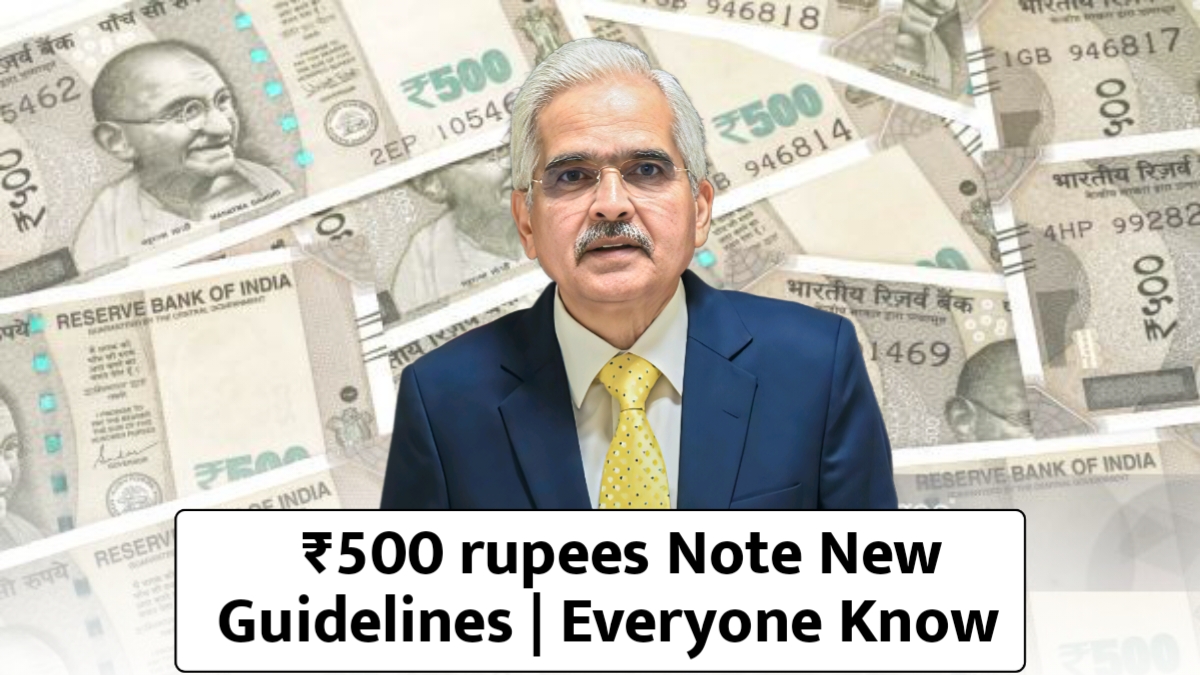
500 Rupees Note Guidelines Announced: The Indian government has officially clarified recent rumours about the future of the ₹500 note. Over the past few weeks, social media and public discussions were filled with speculation that the ₹500 denomination might soon be withdrawn, similar to what happened during the 2016 demonetization. To calm the uncertainty, the Ministry of Finance has now issued a clear statement confirming that there are no plans to withdraw the ₹500 note from circulation. This update is significant as the ₹500 note is currently the highest denomination commonly used in everyday transactions across India.
According to the government’s latest explanation, the ₹500 note will continue to remain valid and in active circulation. The clarification comes at a time when people have been anxious after the withdrawal of the ₹2000 note in 2023. The government emphasized that the current currency system is stable and that any future decisions about currency changes will be communicated transparently and well in advance. This reassurance aims to prevent panic, protect economic stability, and maintain public confidence in India’s financial system.
Understanding the ₹2000 Note Withdrawal
To fully understand the present scenario, it’s helpful to recall what happened with the ₹2000 note. On May 19, 2023, the Reserve Bank of India announced that ₹2000 notes would be gradually withdrawn from circulation. This was not an overnight move. People were given several months—until September 30, 2023—to deposit or exchange their ₹2000 notes at banks. This smooth transition was aimed at ensuring that the public faced no disruption while the high-value note was phased out from active circulation.

According to RBI data, most of the ₹2000 notes were returned well within the exchange window. The total value of ₹2000 notes in circulation fell sharply from ₹3.56 lakh crore to around ₹84,000 crore in a little over a month. Nearly 87% of these notes were deposited in bank accounts, while the rest were exchanged across counters. This process proved that the withdrawal was a planned currency management measure and not a repeat of the sudden demonetization event seen in 2016.
Why the ₹500 Note Remains Important
The ₹500 note has now become the highest-value currency available for everyday transactions in India. It plays a vital role in the cash economy—covering everything from retail purchases and travel to utility payments and business dealings. Removing it from circulation would cause widespread inconvenience, especially in regions where digital payments are not yet fully adopted. Small traders, daily wage workers, and people in rural areas rely heavily on cash for their day-to-day needs, making the ₹500 note indispensable.
Economists also note that the ₹500 denomination supports efficient cash handling and helps maintain balance in currency circulation. Without it, there would be excessive dependency on smaller notes like ₹100 and ₹200, which would create logistical challenges and increase printing costs. Therefore, retaining the ₹500 note ensures smooth transactions and supports India’s ongoing shift toward a mixed economy of cash and digital payments.

Clarification on Demonetization Comparisons
Many people initially compared the withdrawal of the ₹2000 note with the 2016 demonetization drive. However, experts and officials have repeatedly clarified that the two situations are entirely different. The 2023 withdrawal was part of the RBI’s currency management process and not a demonetization exercise. Importantly, the ₹2000 note remained legal tender during the exchange period, and the public had enough time to deposit or swap their notes.
In contrast, the 2016 demonetization invalidated old ₹500 and ₹1000 notes overnight, leading to significant disruptions in cash flow and daily life. The government’s latest clarification about the ₹500 note ensures that there will be no repeat of that experience. Instead, any future currency-related decisions will be made in a transparent and gradual manner, keeping public convenience and economic stability as top priorities.
Future of Indian Currency Policy
According to the Ministry of Finance, the government continues to monitor the circulation and usage of various denominations to maintain balance in the currency system. The current focus is on making the cash economy more efficient while promoting digital payment adoption nationwide. The ₹500 note remains central to this balance, ensuring that cash transactions continue smoothly even as India moves toward a more digital economy.

The government has assured that if any changes are planned in the future—whether related to new note designs, security features, or denomination management—the public will be informed well in advance. This approach reflects a shift toward transparency and preparedness in policy execution. By maintaining clear communication, authorities aim to build trust and eliminate unnecessary panic around India’s currency decisions.
Public Reaction and Economic Impact
Following the government’s clarification, public sentiment has largely settled. Many citizens welcomed the reassurance that the ₹500 note will remain in use. Business owners, traders, and everyday consumers now have clarity that they can continue their transactions without concern. Experts believe that maintaining stability in currency denominations also helps support confidence in the broader economy, which is especially crucial during global financial uncertainties.
Financial analysts have also pointed out that currency management is an ongoing process handled by the RBI to ensure smooth cash flow and to prevent hoarding of high-value notes. The government’s transparent communication about the ₹500 note is seen as a positive move that aligns with best practices in modern financial governance. It reinforces the message that India’s economy is moving forward in a planned and stable way—without sudden disruptions.

Disclaimer: This article is for general informational purposes only. Readers are advised to verify details from official government and Reserve Bank of India sources for the latest and most accurate updates regarding currency and banking policies.