Federal $2,000 Deposit Arriving January 2026: As January 2026 draws closer, many Americans are looking ahead with cautious hope. The start of a new year often brings financial pressure, especially after holiday spending, rising utility bills, and everyday living costs. In this situation, news about a possible federal $2,000 deposit has attracted widespread attention. While the idea sounds promising, it is important to understand what this payment actually represents.
The federal $2,000 deposit is not a brand-new stimulus check being issued to everyone. Instead, it refers to payments that come from existing federal programs. For eligible individuals, the total amount they receive from one or more government sources in January may add up to around $2,000. Understanding this difference helps avoid confusion and unrealistic expectations.
Understanding What the Federal $2,000 Deposit Is
The term “federal $2,000 deposit” is often misunderstood. It does not mean that the government is sending a single, universal payment to all Americans. In reality, the amount reflects combined payments from federal systems that are already in place. These payments are routine, lawful, and based on eligibility.
यह भी पढ़े:
 $2,000 Direct Deposit January 2026 Explained: Eligibility, Payment Dates, and IRS Instructions
Many people receive money from federal agencies every month. In some cases, January payments may be slightly higher due to adjustments, refunds, or credits. When these amounts are added together, they may reach or come close to $2,000 for certain individuals. This is where the idea of a $2,000 deposit originates.
Where the Money Usually Comes From
The funds linked to the January 2026 deposit mainly come from agencies such as the IRS, Social Security Administration, and the Department of Veterans Affairs. For taxpayers, this may include tax refunds or refundable tax credits processed early in the filing season. These refunds depend on income, tax filings, and eligibility.
For others, the deposit may come from Social Security retirement benefits, SSI, or SSDI payments. Veterans may receive VA compensation or pension payments during the same period. In some cases, additional federal assistance programs may also contribute to the total amount received.
यह भी पढ़े:
 Federal $2,000 Deposit January 2026 – Beneficiaries Are Checking Accounts (Full Guide Inside)
Who May Be Eligible to Receive These Payments
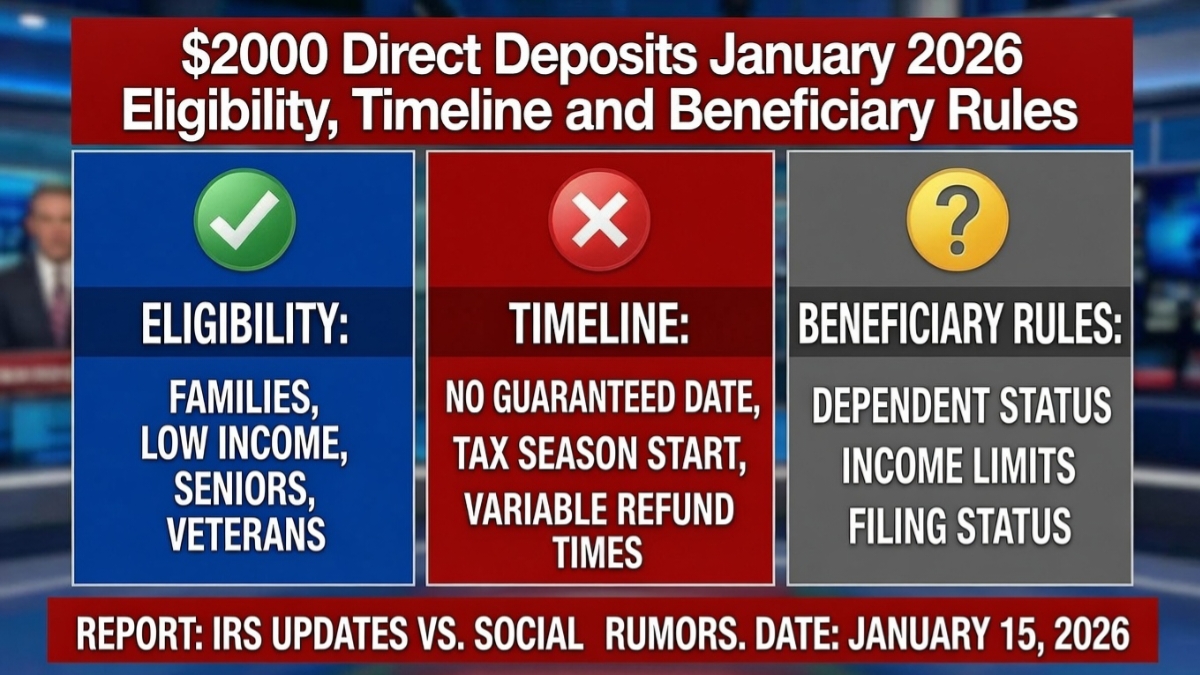
Eligibility for the federal $2,000 deposit depends entirely on individual circumstances. Not every American will qualify, and the amount received can differ widely from person to person. Those who already receive federal benefits are more likely to see payments during January.
Taxpayers expecting a refund, Social Security beneficiaries, veterans receiving VA payments, and low-to-moderate income households enrolled in assistance programs may be eligible. The key factor is participation in an approved federal program and meeting its specific requirements.
Expected Payment Timing in January 2026
The timing of these deposits varies depending on the issuing agency. IRS refunds are generally sent after a tax return is processed, which means early filers may see payments in January. Social Security benefits follow a fixed monthly schedule based on birth dates.

SSI payments are typically issued at the beginning of the month, while VA benefits are usually deposited within the first few days. For individuals receiving multiple benefits, payments may arrive separately but still fall within the same general time frame.
How the Payment Will Be Delivered
Most federal payments are delivered through direct deposit. This method is faster, safer, and reduces the risk of delays. Individuals who already receive government benefits usually get their money deposited into the same bank account on file.
Those without direct deposit may receive a paper check or prepaid debit card. However, these methods can take longer to arrive. Keeping banking and mailing information updated with the relevant federal agency is essential to avoid problems.
यह भी पढ़े:
 $2,000 Direct Deposit in January 2026: Who Qualifies, Payment Timing, and What’s Official
What Beneficiaries Should Do Now
Preparation is important for anyone expecting federal payments in January 2026. Reviewing eligibility under current programs can help set realistic expectations. Updating personal details with agencies like the IRS, SSA, or VA ensures smooth processing.
For tax-related payments, filing an accurate and timely tax return is crucial. Beneficiaries should also use official government tools to track payment status. Staying alert to scams is equally important, as false claims about federal deposits often circulate online.
Why This Deposit Matters to Families
For many households, $2,000 is not extra spending money. It can be essential support used for rent, groceries, utilities, or medical expenses. At the beginning of the year, when budgets are tight, this assistance can help families stay financially stable.
Beyond the financial value, the deposit provides reassurance. Knowing that help is coming allows families to plan better and reduce stress. This sense of stability is often just as important as the money itself.
Final Thoughts on the January 2026 Federal Deposit
The federal $2,000 deposit expected in January 2026 is not a surprise giveaway or universal payment. It is a reflection of existing support systems working as designed. Those who qualify may benefit significantly, but eligibility and amounts vary.
Staying informed, proactive, and cautious is the best approach. Understanding how federal payments work helps replace confusion with clarity. As the new year begins, accurate information can make a meaningful difference in financial planning.

Disclaimer
This article is for informational purposes only and is based on publicly available federal payment processes. It does not guarantee eligibility, payment amounts, or deposit dates. Readers should verify details through official government sources such as the IRS, Social Security Administration, or Department of Veterans Affairs. The author is not affiliated with any government agency and does not provide financial or legal advice.