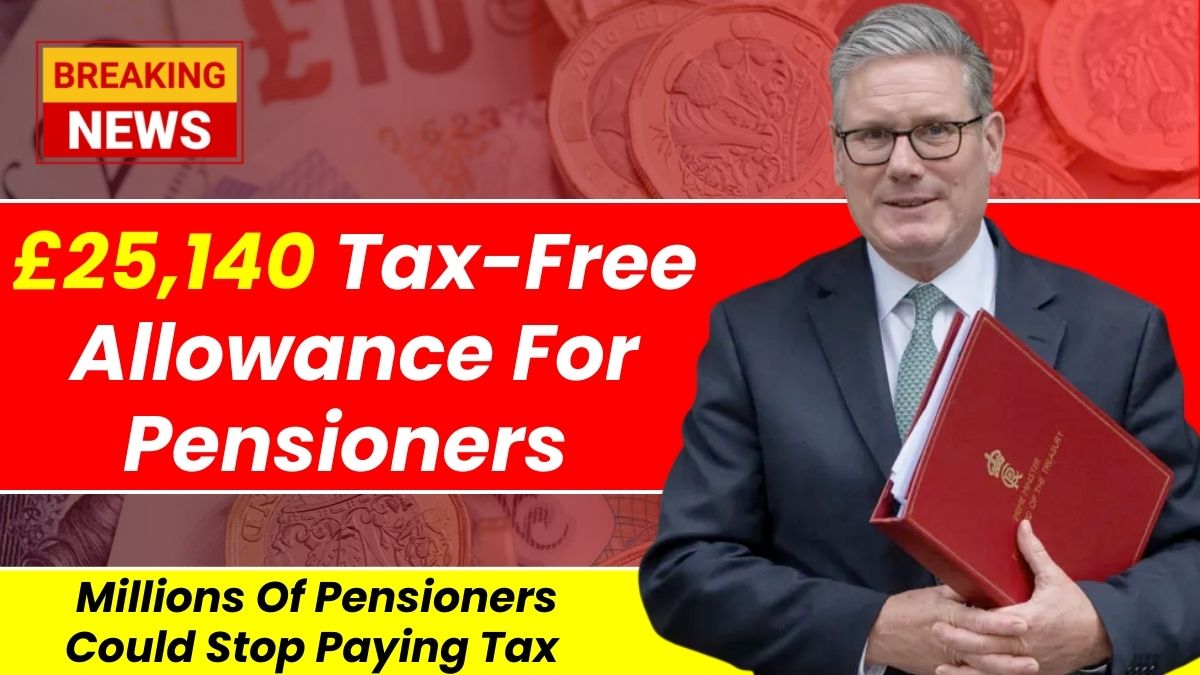
Tax-Free Allowance For Pensioners – There’s been a lot of chatter lately about whether pensioners should get a much higher personal tax allowance – specifically, one that matches the full State Pension amount of £25,140. It’s a proposal that’s got campaigners, charities, and even some MPs quite fired up, arguing that it’s simply not fair to tax people on pension income that’s barely enough to cover the basics. The government has finally responded to these calls, but if you’re a pensioner hoping for good news, you might want to sit down first. The answer wasn’t exactly what people were hoping for, and the debate is far from over. So let’s break down what this £25,140 proposal actually means, how the government has reacted, and what pensioners can realistically expect going forward.
Why £25,140 Is The Magic Number Everyone’s Talking About
The figure of £25,140 isn’t just plucked out of thin air – it’s the annual amount you’d get if you receive the full new State Pension over the course of a year. Campaigners reckon that if the State Pension is supposed to provide a basic standard of living for older people, then taxing it completely defeats the purpose. Think about it this way – the government gives you money with one hand to help you survive in retirement, then takes some of it back with the other hand through income tax. For many pensioners, especially those with little or no other income, paying tax doesn’t feel like contributing from their spare cash.
It feels like losing money they genuinely need for heating, food, and other essentials. The argument goes that if you’re only just getting by on your State Pension, you shouldn’t be paying tax on it at all. At the moment, many pensioners find themselves pushed into paying tax simply because the State Pension has been rising faster than the tax thresholds have. It’s creating a situation where people who never expected to pay tax in retirement are suddenly getting bills from HMRC, and understandably, they’re not happy about it.
Why Campaign Groups Are Getting Louder About This
Several pensioner advocacy organisations have been banging the drum about tax unfairness for older people, and their arguments are pretty compelling. First off, they point out that pensioners have already contributed tax during their working years – sometimes for forty or fifty years straight. Now they’re being taxed again on income that’s meant to keep them above the poverty line in old age. Secondly, when the government announces big increases to the State Pension, a chunk of that increase gets clawed back through tax for many people. So the headline figure sounds generous, but the reality is often less impressive.

Campaigners also highlight that older people are disproportionately affected by frozen tax thresholds because they have limited ability to boost their income. A working-age person facing higher taxes might take on overtime or switch jobs. A pensioner on a fixed income has none of those options. The campaign groups argue that aligning the personal allowance with the full State Pension amount would lift millions of pensioners out of income tax altogether, giving them the financial breathing room they desperately need.
What The Government Actually Said In Response
When the government finally responded to these calls, the answer was diplomatically non-committal. Officials acknowledged that they’d heard the concerns from pensioners and MPs, which is nice, but they stopped well short of promising any actual changes. The official line emphasised that the current personal allowance already provides “significant protection” from tax. The government also pointed to other forms of support that pensioners receive, like Pensioner Cost of Living Payments, the Winter Fuel Payment for those who qualify, and things like free bus passes and TV licences for eligible households.
All of this is fair enough, but campaigners would argue these benefits don’t address the fundamental unfairness of taxing basic pension income in the first place. The elephant in the room, of course, is money. The government was quite upfront about the fact that raising the personal allowance to £25,140 would cost tens of billions of pounds every single year. That kind of money has to come from somewhere, and ministers aren’t exactly keen to spell out where.

Why The Treasury Is Putting The Brakes On
From the Treasury’s perspective, this proposal is a financial nightmare. Raising the personal allowance for pensioners to £25,140 would blow a massive hole in tax revenues at a time when public finances are already stretched. Treasury officials have warned that making this change would require some very difficult decisions elsewhere.
You’d either need to increase borrowing, make cuts to other areas of spending like health or education, or raise taxes on working-age people, which would be politically toxic. Given all these headaches, it’s no surprise that ministers are proceeding extremely cautiously. The Treasury essentially sees this as unaffordable right now, regardless of how fair or unfair the current system might be.
Why So Many Pensioners Feel The System Has Failed Them
Despite all the government’s explanations, many pensioners simply aren’t buying it. There’s a deep sense of unfairness that’s hard to shake. Imagine you’ve worked your entire life, paid tax on every penny you earned, and finally reached retirement expecting to live modestly on your State Pension. Then you discover that the government is taking some of that pension back through income tax. It feels like being penalised twice.

What makes it worse is the way pension increases are announced. The government makes a big fuss about how much the State Pension is going up, creating the impression that pensioners are being well looked after. Then when the increased pension arrives, many people discover that their tax bill has also gone up, meaning they’re not actually as much better off as the headlines suggested. For someone living on a genuinely fixed income with no prospect of earning more, even modest tax bills can cause real anxiety.
How Frozen Tax Thresholds Keep Making Things Worse
The freeze on the personal allowance isn’t a one-time problem – it gets progressively worse with each passing year. Every time the State Pension goes up under the triple lock system, more pensioners get pushed over the £12,570 threshold. This has created a growing wave of first-time taxpayers in retirement, many of whom are completely unprepared for it. You end up with situations where someone receives their pension for years without any tax complications, then suddenly gets a letter from HMRC saying they owe money.
Sometimes they’ve been underpaying for months and face a bill for hundreds of pounds all at once. The confusion around tax codes doesn’t help either. Many pensioners find the system baffling, and some only discover they’re paying tax when they notice unexpected deductions or receive a demand.

Is There Any Realistic Chance Of Getting To £25,140
Let’s be honest – the chances of seeing a full £25,140 personal allowance for pensioners in the immediate future are pretty slim. The government has given absolutely no indication that they’re seriously considering it, and the cost alone makes it a non-starter in the current economic climate. Ministers seem far more comfortable with providing targeted benefits and one-off payments rather than fundamental tax reform.
However, that doesn’t mean the issue is dead forever. Tax thresholds do get reviewed periodically, and if public pressure continues to build – especially from the large and politically active older demographic – future governments might feel compelled to act. We could see incremental changes rather than the full proposal, like modest increases to the allowance or special provisions for State Pension income.
What Pensioners Can Actually Do Right Now
While we wait to see whether government policy changes, there are practical steps pensioners can take. Check your tax code regularly to make sure HMRC has the right information and you’re not overpaying. Make sure you’re claiming all the age-related allowances and reliefs you’re entitled to. If you have any control over when and how you access private pensions, think carefully about the tax implications. Don’t struggle alone if you’re confused – free guidance is available from organisations like Age UK, Citizens Advice, and the government’s Pension Wise service. Sometimes a quick phone call can save you hundreds of pounds or clear up a problem that’s been causing stress.

Final Thoughts On Where This Goes Next
The government’s response to calls for a £25,140 personal tax allowance has been cautious to the point of dismissive, focusing on cost concerns rather than engaging seriously with the fairness arguments. For pensioners hoping for change, the disappointment is completely understandable. The proposal probably won’t be adopted anytime soon, at least not in its current form.
But the growing noise around this issue shows that concerns about fairness and the treatment of older people in the tax system are gaining real traction. As State Pension levels continue rising year after year, more pensioners will find themselves paying tax, and the political pressure will keep mounting. This isn’t the end of the conversation – it might just be the beginning of a longer battle over how we tax retirement income in modern Britain.
Disclaimer

This article is provided for general information purposes only and does not constitute financial, legal, or tax advice. Tax rules, personal allowance rates, State Pension amounts, and eligibility for benefits vary based on individual circumstances and are subject to change. Information presented reflects the situation at the time of writing and may not reflect subsequent policy changes. Readers should not make financial decisions based solely on this article. For personalised guidance on tax matters, consult HMRC directly or seek advice from a qualified tax professional or independent financial adviser.
