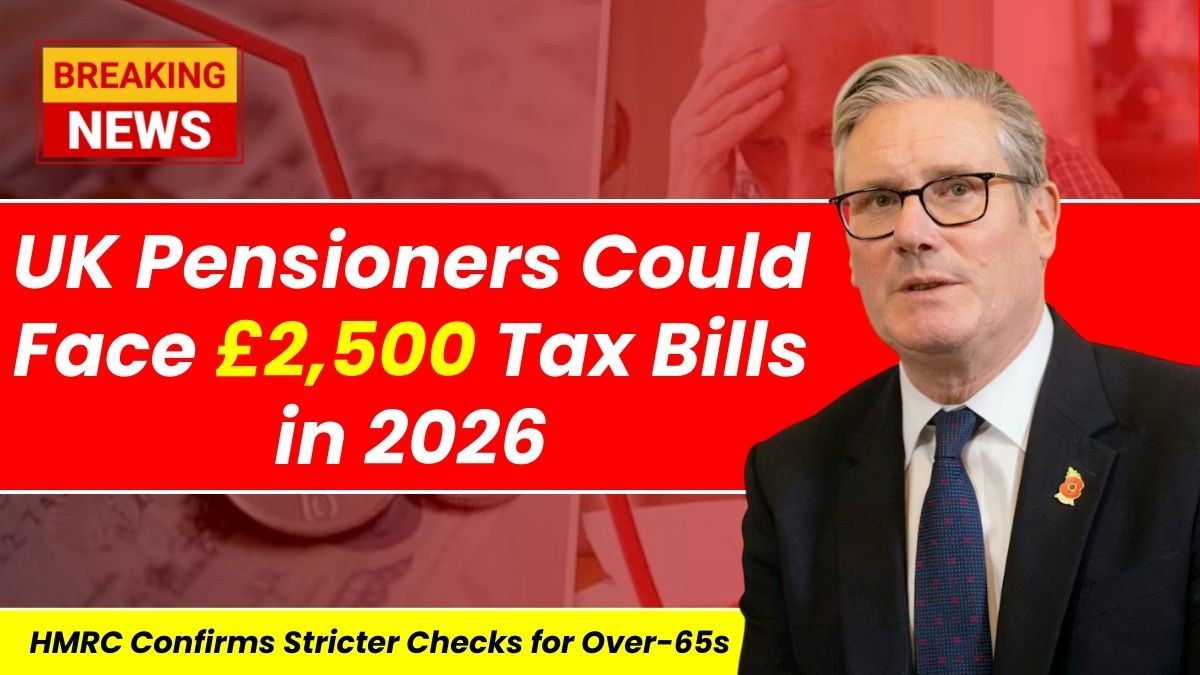
Tax Bills – Many people over the age of 65 across the UK are being warned to pay close attention to their tax situation ahead of 2026. HMRC has confirmed that thousands of older residents could face unexpected charges of up to £2,500 due to pension-related tax errors, savings interest, frozen allowances, and undeclared income. What makes this particularly worrying is that many pensioners may not realise there is an issue until a tax demand letter lands on their doormat. With the cost of living already high and most pensioners relying on fixed incomes, an unexpected HMRC bill could cause serious financial stress. Understanding why these charges are happening and how to reduce the risk is now more important than ever.
Why HMRC Is Targeting Over-65s in 2026
The main reason behind these new £2,500 charges is a combination of frozen tax thresholds and more detailed financial monitoring by HMRC. While incomes have slowly increased over time, personal allowances and tax-free thresholds have largely stayed the same. This means more pensioners are drifting into taxable territory without making any changes to their lifestyle. HMRC has also improved its data-sharing systems, allowing it to cross-check pension payments, savings interest, and other income sources much more easily. Errors that previously went unnoticed are now being flagged automatically, often years later.
What the £2,500 Charge Actually Represents
The £2,500 figure is not a flat fine that everyone will receive. Instead, it represents the total amount HMRC may reclaim after identifying unpaid tax, underpaid income tax, or incorrect pension tax deductions. This could include tax owed on private pensions, interest earned on savings, or lump-sum pension withdrawals that were not taxed correctly at the time. In some cases, the amount may build up over several years before HMRC takes action, which is why the final demand can feel so sudden and large.
How Frozen Tax Allowances Are Making Things Worse
Tax thresholds being frozen has had a major impact on older people. The personal allowance has not risen in line with inflation, while pension payments and savings interest have slowly increased. This has pushed more pensioners into paying tax for the first time, or paying more tax than they expected. Even small increases in income can now tip someone over the allowance, especially if they have more than one income source. This is one of the main reasons HMRC expects more tax recovery cases in 2026.

What HMRC Will Do Before Issuing a Charge
HMRC has stated that it will usually contact pensioners before taking any money. This normally starts with a letter explaining that tax may be owed, followed by a breakdown of how the amount was calculated. Pensioners are given the opportunity to check the figures and challenge any mistakes. However, if no response is received, HMRC may adjust tax codes, reduce future allowances, or request direct repayment. In some cases, charges are collected gradually, but others may be asked to pay a lump sum.
What Pensioners Should Do Now to Reduce Risk
The most important step is to review your income sources carefully. This includes checking your State Pension amount, private pension payments, savings interest, and any other income you receive. Comparing this with your current tax code can help spot issues early. Using your HMRC personal tax account online can make it easier to see what HMRC thinks you earn. If something looks wrong, contacting HMRC sooner rather than later can prevent small problems from becoming expensive ones.
What to Do If You Receive a £2,500 Tax Demand
If you receive a tax demand from HMRC, do not panic and do not ignore it. Carefully read the letter and check whether the figures match your records. If you believe there is a mistake, you have the right to challenge it and ask for a review. If the amount is correct but unaffordable, HMRC can often agree to a payment plan. Pensioners on low incomes or means-tested benefits should explain their circumstances, as HMRC may adjust repayment terms in cases of financial hardship.

Why Awareness Matters Going Into 2026
As HMRC continues to tighten checks and modernise its systems, more pensioners are likely to be affected by tax corrections. The £2,500 figure is not meant to scare people, but it reflects how quickly unpaid tax can accumulate when errors go unnoticed. Staying informed, checking tax details regularly, and responding promptly to HMRC letters can make a huge difference. For many over-65s, a little awareness now could prevent a major financial shock later.
Final Thoughts
The warning about £2,500 HMRC charges in 2026 is a reminder that tax responsibilities do not stop at retirement. With frozen allowances, higher interest rates, and more detailed monitoring, pensioners are under greater scrutiny than ever before. The good news is that most issues can be resolved or reduced if spotted early. Taking time to understand your income and tax position now can help protect your finances and give you peace of mind in the years ahead.
Disclaimer

This article is for general information purposes only and does not constitute tax or financial advice. Tax rules and thresholds can change, and individual circumstances vary. Readers should not rely solely on this information when making financial decisions. Always check official HMRC guidance or seek advice from a qualified tax professional or adviser before taking action. The information provided here does not guarantee avoidance of tax charges or liabilities.
