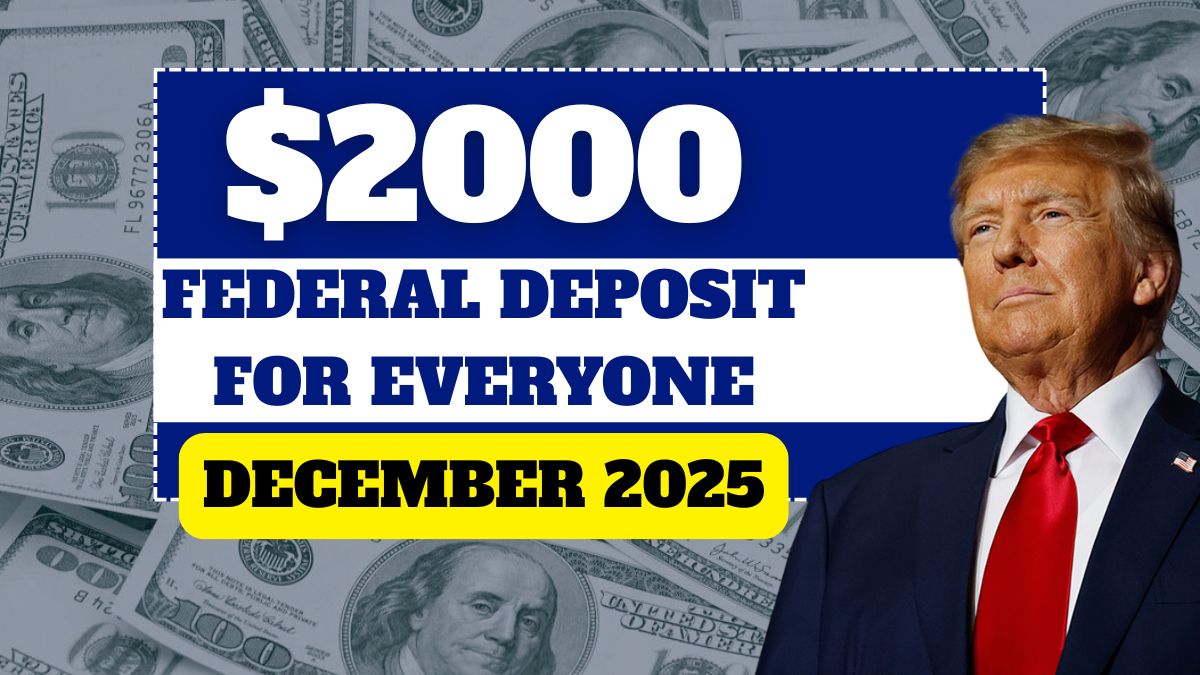
Federal $2000 Deposit Arriving in December 2025: As December 2025 approaches, many Americans are paying close attention to reports about a $2,000 federal deposit. Rising prices for food, rent, utilities, and healthcare have placed continued pressure on household budgets. For families already living on limited income, year-end expenses often become difficult to manage. This federal payment is being viewed as an important form of relief during a financially demanding time.
The goal of the program is to provide direct financial support to people who already receive government assistance. By offering help at the end of the year, the government aims to reduce debt, prevent hardship, and help households begin the new year with greater stability.
Purpose of the $2,000 Federal Deposit
The $2,000 federal deposit is designed as a one-time relief payment. It is not a loan and does not need to be repaid. It is also not a tax refund, stimulus check, or advance for future benefits. The payment exists solely to help people manage additional expenses that commonly arise at the end of the year.

December is known for higher costs, including heating bills, holiday expenses, school-related needs, and medical payments. The federal deposit is intended to ease this pressure and provide short-term financial breathing room.
How Recipients Can Use the Payment
There are no restrictions on how the $2,000 payment can be used. Beneficiaries may spend the funds according to their most urgent needs. Many households may use it for groceries, rent, or utility bills such as electricity, gas, or water.
Others may choose to use the money for medications, doctor visits, insurance premiums, or education-related expenses for children. In emergency situations, such as vehicle repairs or heating system issues, the payment can offer crucial support.

How the Payment Will Be Delivered
One of the strongest features of this program is its secure payment method. Individuals whose bank accounts are already connected to government records will receive the money through direct deposit. This method allows funds to arrive quickly and reduces the risk of fraud or delays.
For those without bank accounts or without updated direct deposit details, alternative options such as paper checks may be used. The government has stated that no eligible individual should miss out on the payment due to technical reasons.
Eligibility Requirements for the $2,000 Deposit
Eligibility for the federal deposit depends mainly on income and government registration. Individuals must fall within specific income limits to qualify. Single filers earning up to $75,000 annually may be eligible, while heads of household earning up to $112,500 and married couples filing jointly earning up to $150,000 are also included.

Applicants must be permanent residents of the United States and have a valid Social Security Number or ITIN. Individuals already enrolled in programs such as Social Security, SSI, SSDI, SNAP, Medicaid, or unemployment assistance are considered strong candidates.
Additional Groups Covered Under the Program
The program also includes special consideration for certain groups. Senior citizens, individuals with disabilities, farmers, members of tribal communities, and self-employed or gig workers may qualify if their income is properly reported.
Families with children or dependents may also receive additional consideration depending on government guidelines. The final amount and eligibility may vary based on household structure and income details.
यह भी पढ़े:
 $4,983 Direct Deposit Expected in December 2025 — Eligibility and Payment Dates Explained
Who Is Not Eligible for the Payment
Not everyone qualifies for the $2,000 federal deposit. High-income individuals whose earnings exceed the set limits are excluded from the program. Immigrants without a valid SSN or ITIN are also not eligible.
Individuals with incorrect or outdated tax information may face delays or disqualification until records are corrected. Keeping personal and tax details accurate is essential for receiving the payment smoothly.
Automated Payment Process With No Application
One of the most important aspects of this program is its automated structure. The IRS and the Treasury Department will use existing data to issue payments. This means most eligible individuals do not need to submit a new application.

This automated process helps reduce processing time, minimize errors, and prevent fraud. Past relief programs using similar systems delivered payments quickly to the majority of recipients, proving the efficiency of this method.
Payment Schedule for December 2025
To manage distribution efficiently, the government has planned a phased payment schedule. Early payments are expected to go to SSDI and SSI beneficiaries between December 10 and December 15. Families and low-income households are expected to receive payments between December 16 and December 20.
Remaining eligible groups are expected to receive payments between December 21 and December 31. While minor delays may occur due to banking or holiday processing, the goal is to complete all payments before the end of December.
यह भी पढ़े:
 $2,000 Direct Deposit for U.S. Citizens in December 2025 – Know Eligibility and Payment Dates
Economic Impact of the $2,000 Payment
The benefits of this payment extend beyond individual households. By reducing reliance on high-interest credit or loans, the payment helps stabilize personal finances. When recipients spend money locally, it supports small businesses and strengthens the broader economy.
The flexibility of the payment allows people to prioritize their own needs, which increases its effectiveness. Direct deposit also lowers the risk of fraud compared to traditional paper checks.
How to Check Payment Status and Avoid Scams
Recipients can monitor their payment status using official government tools. The IRS “Where’s My Refund?” portal and the Social Security online portal are reliable sources for updates. Bank statements should show deposits labeled “TREASURY 2025.”
यह भी पढ़े:
 Social Security Benefits 2025: Understanding the Proposed $200 Monthly Increase for Seniors
The government has warned that it will never ask for personal or banking information through emails or text messages. Any suspicious calls or links should be avoided, and only official .gov websites should be used.
Final Thoughts on the December 2025 Federal Deposit
The $2,000 federal deposit scheduled for December 2025 represents meaningful support for millions of Americans. As living costs remain high, this payment can help households manage essential expenses and reduce financial stress at year-end.
Keeping personal and banking information updated is the best way to ensure timely payment. With proper preparation, eligible individuals can receive the funds securely and begin the new year with greater confidence.

Disclaimer
This article is for informational purposes only and does not provide financial, legal, or tax advice. Eligibility rules, payment schedules, and program details may change based on official government decisions. Readers should verify information through official government sources or consult qualified professionals for personalized guidance.