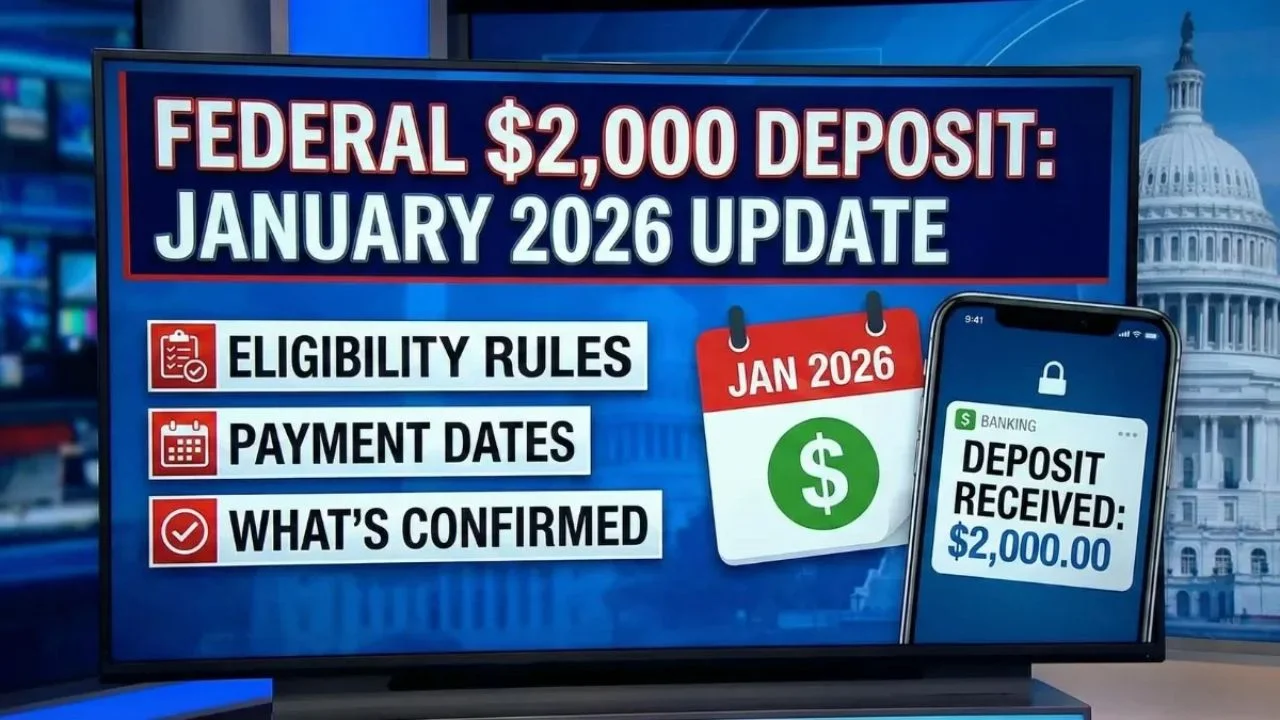
Federal $2,000 Deposit January 2026: As January 2026 approaches, many Americans are carefully reviewing their finances. The beginning of a new year often brings added pressure, including higher rent, medical expenses, insurance renewals, and lingering holiday credit card bills. In this environment, news about a possible federal $2,000 deposit has attracted significant attention and sparked hope for short-term financial relief.
While the idea of a $2,000 payment sounds encouraging, it is important to understand what this deposit actually represents. Misinformation can lead to unrealistic expectations, so having a clear picture helps people plan their finances with confidence instead of uncertainty.
Understanding What the Federal $2,000 Deposit Is
The federal $2,000 deposit is not a new nationwide stimulus or emergency payment. Instead, it refers to money that may be received through existing federal programs that are already in place. These programs operate under current laws and are managed by federal agencies such as the IRS and the Social Security Administration.

In many cases, the deposit reflects combined benefits, refunds, or adjustments that a person is already eligible for. Because these systems are ongoing, most recipients do not need to apply again. The money arrives automatically based on records already on file with the government.
Why the $2,000 Amount Gets So Much Attention
Every January, discussions about federal payments increase as tax season begins and benefit updates take effect. When people share online that they received an amount close to $2,000, it can quickly be misunderstood as a universal payment for everyone. Social media often amplifies individual experiences without explaining eligibility details.
This creates confusion, as not everyone will receive the same amount or any payment at all. The $2,000 figure is not a guaranteed benefit but rather a common estimate based on certain combinations of refunds or benefits.

Who May Receive a Federal Deposit
Eligibility for a federal deposit depends on participation in existing programs rather than citizenship alone. Payments are generally issued to individuals who are already part of federal systems and meet specific criteria based on income, benefit status, or tax filings.
Some recipients may include taxpayers owed refunds or credits, Social Security beneficiaries such as retirees or people receiving disability benefits, veterans receiving approved compensation, and low-income households enrolled in federal assistance programs. Each program has its own rules, which determine who qualifies and how much is paid.
Why the Payment Amount Can Be Different for Everyone
The $2,000 figure is only an estimate and not a fixed payment. The actual amount a person receives depends on factors such as income level, filing status, benefit type, number of dependents, and recent changes to records. Because of this, two people with similar circumstances may still receive different amounts.

Adjustments, delayed payments, or corrections from previous months can also affect the final deposit. This variation is one of the main reasons why confusion spreads around the payment amount.
When Payments May Arrive in January 2026
There is no single payment date for all federal deposits. Timing depends on the agency responsible for issuing the funds. Tax-related deposits may arrive throughout January for early filers who use direct deposit, while Social Security payments follow a monthly schedule based on birth dates and benefit categories.
SSI and veterans’ benefits are usually deposited early in the month. Banking processes, weekends, and federal holidays can also cause slight delays, so recipients may need to wait a few extra days in some cases.

How the Money Is Usually Delivered
Most federal payments are sent through direct deposit because it is fast and secure. The government typically uses bank account information already on file with federal agencies. This method reduces delays and lowers the risk of lost payments.
Individuals without direct deposit may receive a paper check or prepaid debit card, which usually takes longer. Keeping banking and mailing information updated through official portals is essential to avoid delays or returned payments.
Steps to Take Before January Begins
Preparing in advance can help ensure that any eligible payment arrives smoothly. Reviewing eligibility under the relevant program, updating personal and banking information, and filing tax returns accurately are all important steps. Monitoring official government tools can also help track payment status.

It is equally important to stay alert for scams. Federal agencies do not ask for personal information through unsolicited phone calls, emails, or text messages. Any such contact should be treated with caution.
Why This Deposit Matters to Many Households
For many Americans, a deposit near $2,000 is not extra spending money. It can help cover essential needs such as heating costs, groceries, medications, or overdue bills. For people living on fixed incomes, even modest financial assistance can provide meaningful relief during winter months.
Beyond financial help, understanding how federal support works reduces anxiety. Clarity allows individuals to plan their budgets more effectively and avoid disappointment caused by false expectations.

The federal $2,000 deposit expected around January 2026 reflects ongoing support built into existing federal programs, not a new universal payment. While not everyone will receive it, those who qualify may find it helpful during a financially demanding time.
Staying informed, keeping records current, and relying on official sources are the best ways to navigate these payments. With accurate information, the new year can begin with greater confidence and fewer financial surprises.
Disclaimer
This article is for informational and educational purposes only. It does not provide financial, tax, or legal advice. Federal programs, eligibility requirements, and payment schedules may change at any time. Readers should verify details through official government websites or consult qualified professionals for guidance specific to their individual situation.