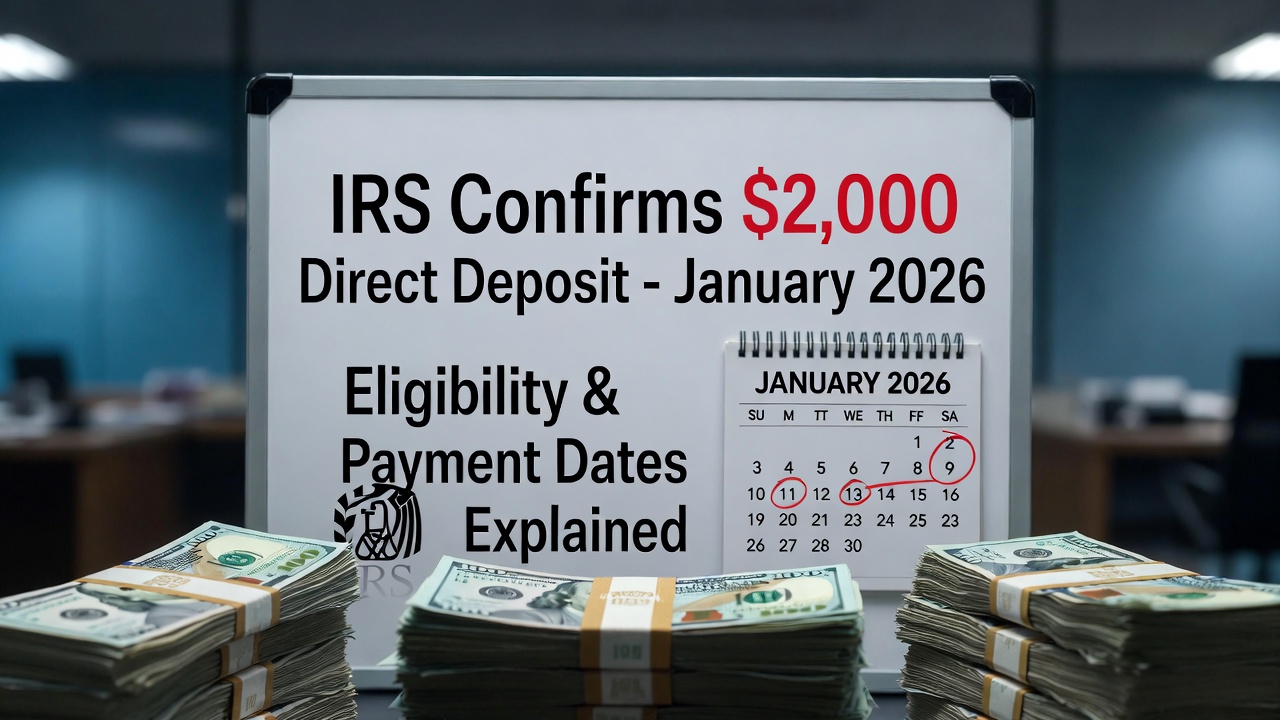
IRS today announced $2,000 Direct Deposit for All: As 2026 begins, many American households are getting attention-worthy financial news. The government is rolling out a one-time $2,000 direct deposit aimed at helping families manage rising living costs. With food, rent, electricity, and winter heating expenses climbing, this payment arrives at a time when budgets are already stretched thin.
Unlike regular tax refunds, this payment is designed as direct relief. It does not need to be repaid and does not reduce future tax benefits. The goal is to provide quick financial breathing room using information already available from recent tax filings.
What the $2,000 IRS Payment Is
The $2,000 direct deposit is a focused relief payment distributed through the Internal Revenue Service. It is not based on tax overpayments or refund calculations. Instead, it uses income and household data from 2024 or 2025 tax returns to identify eligible recipients.

Because the IRS already holds verified records, most people do not need to apply. This allows funds to move quickly without additional paperwork, helping families access money when they need it most.
Why the Payment Is Arriving in January 2026
January is one of the toughest financial months for many households. Holiday spending often leaves credit cards stretched, while winter utility bills and rent payments rise. Inflation has also made everyday essentials more expensive, increasing pressure on monthly income.
By releasing this payment early in the year, the government aims to soften that impact. The timing allows families to stabilize finances before falling behind on bills or taking on additional debt.

Who Is Eligible for the $2,000 Deposit
Eligibility is based mainly on income, filing status, and residency. Low- to middle-income individuals and couples who filed recent tax returns are the primary focus. Single filers and joint filers have different income thresholds, adjusted to reflect household size.
A valid Social Security number is required, along with U.S. residency during the qualifying period. Families with dependents may have a stronger chance of qualifying because of higher household expenses reflected on tax returns.
Why Some People May Miss the Payment
The most common reason people miss out is outdated or missing tax information. Individuals who did not file a 2024 or 2025 return, or who moved without updating their address, may face delays or exclusion.

Non-filers are encouraged to submit basic information through official IRS tools. Keeping personal and banking details accurate ensures the IRS can verify eligibility without manual review, which can slow payments.
How the IRS Confirms Eligibility
The IRS reviews existing tax records to confirm income levels, filing status, and dependents. This automated process allows most payments to be approved without additional documents. For most households, the process happens entirely in the background.
If information is incomplete or inconsistent, the IRS may need extra verification. This can delay payment, which is why reviewing your IRS account before January distributions begin is important.

January 2026 Payment Timeline
Payments are scheduled to roll out in waves throughout January 2026. Direct deposits are sent first because they are faster and more secure. These typically arrive within days once released by the IRS.
Paper checks and prepaid debit cards are mailed later in the month. Delivery times vary depending on postal service schedules and address accuracy, so mailed payments may take longer to arrive.
Best Way to Receive the Payment
Direct deposit is the fastest and safest option. If you received past refunds by direct deposit, the IRS will use the same bank information for this payment. This method reduces the risk of loss or theft.

Those without bank accounts will receive funds by mail. Making sure your mailing address is current is critical, as returned mail can significantly delay delivery.
Steps to Protect Your Payment
Before January distributions begin, taxpayers should review their IRS records. Checking bank account numbers, addresses, and filing status can prevent avoidable delays. Any corrections should be submitted through official IRS portals only.
Being proactive now helps ensure smooth processing. Waiting until payments are already rolling out can lead to missed opportunities or extended review periods.

How This Payment Differs From Past Stimulus Checks
Earlier stimulus programs were broad and reached most Americans. This payment is more targeted, focusing on households identified through tax data as needing support. The approach reduces cost while improving efficiency.
This is also a one-time measure rather than an ongoing program. It is designed to address specific economic pressures at the start of 2026 without creating long-term commitments.
How Families Can Use the $2,000 Wisely
For many households, $2,000 can cover essential expenses such as rent, groceries, utilities, or medical costs. Others may use it to reduce high-interest debt or build a small emergency fund.

While the payment may not solve every financial challenge, it can provide stability and reduce stress during a difficult time of year.
The IRS $2,000 direct deposit for January 2026 represents targeted financial relief delivered through existing tax systems. With minimal action required for most recipients, preparation is mainly about keeping information accurate and up to date.
Families who understand the eligibility rules and payment timing are better positioned to receive the funds without delays. Staying informed through official IRS updates is the safest way to ensure nothing is missed.

Disclaimer
This article is for informational purposes only and does not constitute financial, tax, or legal advice. Eligibility rules, payment timing, and program details may change based on official government guidance. Readers should consult the Internal Revenue Service or a qualified professional for advice specific to their situation.