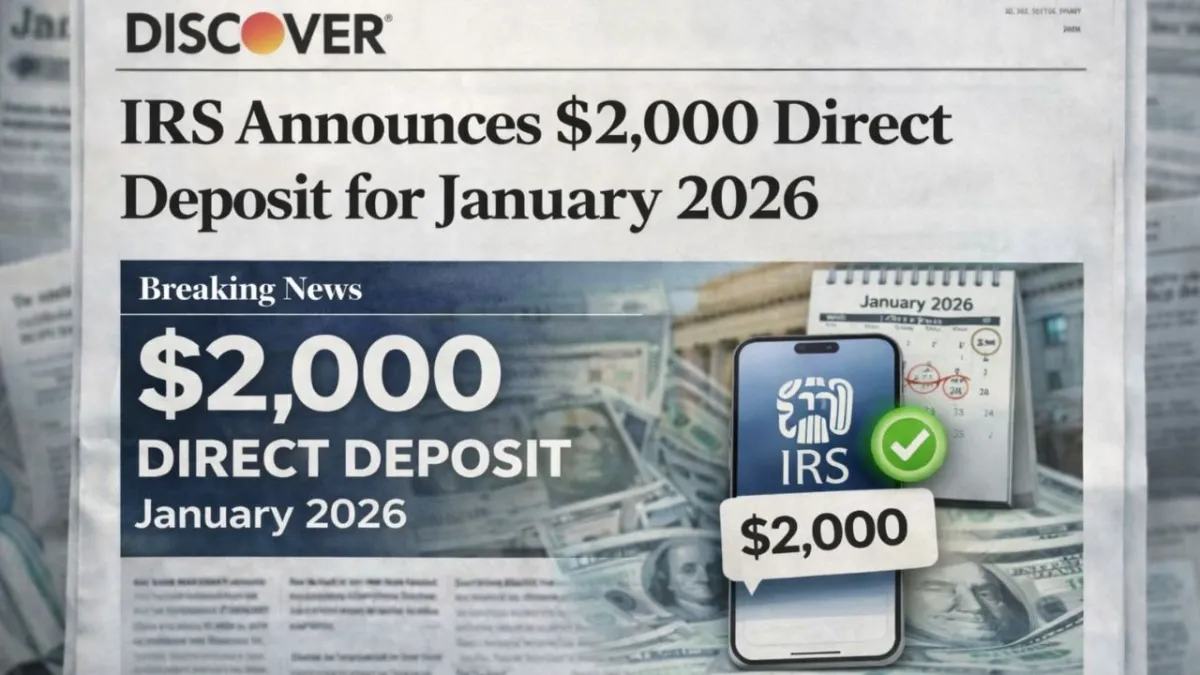
IRS Confirms $2,000 Direct Deposit for January, 2026: In recent months, the Internal Revenue Service has been mentioned frequently in reports about a possible $2,000 direct deposit planned for January 2026. Online discussions and news articles have sparked curiosity about whether this payment is real, who might qualify, and how it would be funded. Many Americans, already dealing with rising living costs, are eager for clear answers.
This proposed payment is different from past stimulus checks. It is not related to pandemic relief programs. Instead, it is linked to a new idea known as a tariff dividend, which would use money collected from import tariffs and return part of it directly to eligible individuals.
Where the $2,000 Payment Idea Came From
The idea behind the $2,000 payment comes from discussions around sharing tariff revenue with the public. Tariffs are taxes placed on goods imported into the United States. When these goods enter the country, importers pay duties to the government, which creates a steady source of income.

Supporters of the tariff dividend believe that instead of using all tariff revenue for general government spending, a portion could be returned to citizens as direct cash payments. This idea has been discussed by commentators and leaders, gaining attention online. However, it remains a proposal and has not been turned into law.
Is the $2,000 IRS Payment Officially Approved?
As of now, there is no official confirmation that a $2,000 direct deposit will be issued in January 2026. The IRS has not announced any such payment, and no federal law has been passed to authorize it. Without approval from Congress, the IRS does not have the legal authority to send out this money.
Government officials have been clear that any large federal payment must go through Congress first. Until legislation is passed and funding is approved, claims about a confirmed January 2026 payment are not accurate.

How a Tariff Dividend Would Be Funded
The key feature of the tariff dividend proposal is its funding source. Instead of using income taxes or government borrowing, the payment would come from tariff revenue. This is money the government already collects when imported goods are taxed at the border.
Under this idea, part of that revenue would be set aside and redistributed to eligible individuals. However, tariff revenue can change depending on trade activity and global economic conditions. This makes the funding less predictable compared to traditional federal programs.
Possible Eligibility Under the Proposal
Because the program has not been approved, there are no official eligibility rules. However, based on public discussions, supporters suggest the payment could be limited to U.S. citizens or legal residents. Income levels may also be considered, with a focus on middle- and lower-income households.

Tax filing status would likely play a role, since the IRS already uses tax records to determine eligibility for other payments. Having direct deposit information on file would also be important for faster delivery. These ideas are only part of the proposal and are not official guidelines.
How Payments Might Be Delivered
If the tariff dividend were approved, payments would most likely be sent through the IRS using its existing systems. Direct deposit would be the primary method, similar to how tax refunds and past federal payments are issued.
Those without bank information on file might receive paper checks. This approach would allow for secure and efficient delivery. However, no technical system has been set up because the proposal has not become law.

Is January 2026 a Confirmed Timeline?
There is currently no confirmed payment date. While some online sources mention January 2026, this date has not been officially approved. Any timeline would depend entirely on when Congress passes legislation and when agencies are instructed to act.
Even if approved, large federal programs take time to implement. Rules must be finalized, systems prepared, and funding allocated. Until that happens, the IRS cannot publish a payment schedule.
Public Interest and Economic Debate
The proposal has gained attention because many households are struggling with higher prices for food, housing, and energy. Supporters believe returning tariff revenue could help ease financial pressure without increasing taxes.

Economists, however, have raised concerns. Tariff revenue is not stable and can fluctuate. There are also worries about inflation if large payments are distributed widely. These concerns are part of ongoing discussions and have delayed formal action.
What This Means for Taxpayers Right Now
At this point, taxpayers should view the $2,000 tariff dividend as an idea under discussion, not a guaranteed payment. The IRS has not announced any direct deposit for January 2026, and no law supports it yet.
Staying informed through official government sources is the best way to avoid confusion. Any real payment program would be clearly announced by Congress and federal agencies well in advance.

Final Thoughts
The $2,000 direct deposit proposal linked to tariff revenue has attracted strong interest, but it remains a concept rather than an approved program. There is no confirmed IRS payment scheduled for January 2026.
Understanding the difference between proposals and enacted laws helps prevent false expectations. Until legislation is passed and official announcements are made, this payment should be considered a possibility, not a certainty.
Disclaimer
This article is for informational purposes only and does not provide financial, tax, or legal advice. The information is based on publicly discussed proposals and available reports at the time of writing. Government programs, eligibility rules, and payment timelines may change. Readers should rely on official IRS and U.S. government sources or consult qualified professionals for guidance related to their individual circumstances.