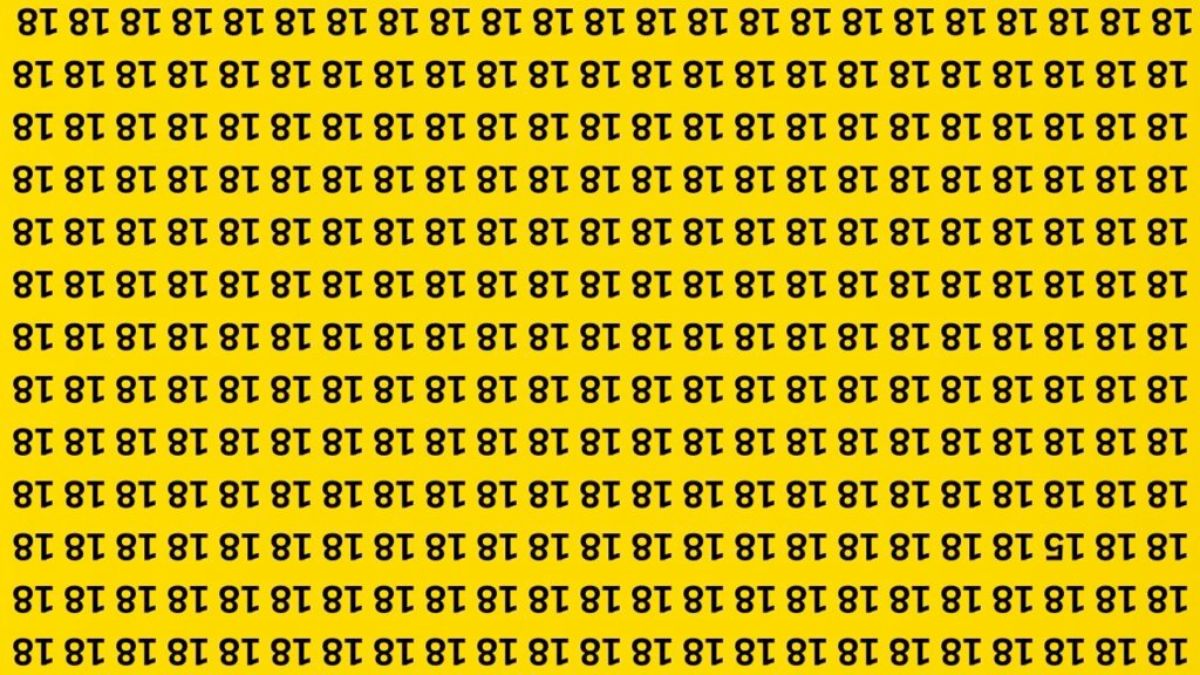
Can Spot the Inverted 15 in 7 Seconds – Optical illusion challenges are everywhere online, and there’s a good reason people keep clicking on them. They look simple, feel fun, and then somehow make you question your own eyesight. This particular challenge adds an extra twist by flipping the numbers upside down. Your task is to find a single inverted 15 hidden among a grid full of inverted 18s, all within just seven seconds. At first glance, everything appears identical, which is exactly what makes this puzzle so tricky.
Why Inverted Number Illusions Confuse the Brain So Easily
The human brain loves patterns. As soon as it sees repeated shapes, it quickly labels them as the same to save time and mental energy. That shortcut is useful in everyday life, but it works against you in puzzles like this one. Because every number is already upside down, your brain needs extra effort just to recognise them. Once it adjusts to the inverted 18 pattern, it stops checking individual details, allowing the inverted 15 to blend in unnoticed.
How the 7-Second Time Limit Affects Your Vision
Seven seconds sounds reasonable until the clock starts ticking. Under time pressure, your brain shifts into fast-scan mode. Instead of carefully checking each number, your eyes sweep across the image hoping the odd one will jump out on its own. Unfortunately, the difference between an inverted 15 and an inverted 18 is subtle, so nothing immediately grabs attention. The time limit pushes your brain to rely on assumptions rather than careful observation.
यह भी पढ़े:
 Extra Cash for Young Australians: Youth Allowance Increase of $1,011.50 + $16.20 from Jan 2026
Why the Inverted 15 Is So Hard to Spot
This illusion works because the numbers share very similar shapes when flipped. The inverted 18 has two loops, while the inverted 15 is missing one. When scanning quickly, the brain often processes the overall shape instead of confirming whether both loops are actually there. It also tends to read numbers as complete units rather than checking each digit, which allows the inverted 15 to hide in plain sight.
How the Brain Handles Repeated Visual Patterns
Visual processing happens in stages. First, your eyes detect basic shapes and curves. Then your brain assigns meaning to what you see. When the same pattern repeats over and over, the brain groups those elements together to save effort. In a grid full of almost identical inverted numbers, spotting the odd one out requires slow, deliberate attention, which becomes much harder when you’re racing against the clock.
Smart Ways to Solve This Optical Illusion Faster
Scanning randomly usually doesn’t work well. A better approach is to divide the image into rows or columns and scan methodically, just like reading text. Another effective trick is to stop reading numbers altogether and instead focus on one specific detail. In this case, look only for the missing loop. Training your eyes to spot that absence helps bypass your brain’s pattern shortcut. Staying calm also matters, as stress makes it easier to miss small differences.

Where the Inverted 15 Is Hidden
In the solution, the inverted 15 is positioned toward the right side of the image. This is no accident. Most people naturally scan from left to right and lose focus as they move across the grid. By placing the odd number slightly off-centre, the puzzle takes advantage of common scanning habits and increases the chance it will be missed within the seven-second limit.
What Finding the Inverted 15 Says About You
If you spotted the inverted 15 quickly, it suggests strong attention to detail and the ability to stay focused under pressure. These skills are useful in areas that require accuracy, such as design, technical work, and analysis. It also reflects mental flexibility, meaning you can override automatic assumptions when needed. If you didn’t find it in time, that doesn’t mean anything negative. It simply shows your brain prioritised speed over precision, which is completely normal.
Can Optical Illusion Challenges Improve Focus?
While these puzzles aren’t official IQ tests, regularly practising visual challenges can improve attention and observation skills. Over time, your brain becomes better at slowing down and questioning familiar patterns instead of accepting them instantly. Studies on cognitive engagement suggest that tasks involving focused visual discrimination can support mental sharpness when done consistently.
यह भी पढ़े:
 Centrelink Confirms a $1178 Annual Pension Boost for Age Pensioners Starting 25 January 2026
Why Optical Illusions Are So Popular Online
Their appeal comes from instant engagement. The rules are simple, the challenge is clear, and the time commitment is short. Anyone can try, but not everyone succeeds, which fuels curiosity and friendly competition. People enjoy testing themselves, sharing results, and challenging others, which is why optical illusion puzzles keep trending across social media and news platforms.
How to Get Better at Visual Brain Teasers
Practice makes a noticeable difference. Solving different types of number and pattern puzzles helps train both speed and accuracy. Gradually reducing time limits improves focus under pressure. Good rest also matters, as tired eyes and a fatigued brain are far more likely to miss subtle visual differences.
Spotting an inverted 15 among inverted 18s in seven seconds may seem like a small task, but it highlights how much our perception is shaped by habits, pressure, and expectations. Whether you found it instantly or needed help, the challenge is a reminder that truly seeing requires more than just looking.
Disclaimer
This article is intended for general entertainment and informational purposes only. Optical illusion challenges are not scientifically validated measures of intelligence or cognitive ability. Individual performance may vary based on focus, screen quality, lighting, fatigue, and time pressure. These puzzles should not be used to assess mental health, intelligence, or professional capability. Always rely on qualified professionals for any cognitive or medical evaluations.