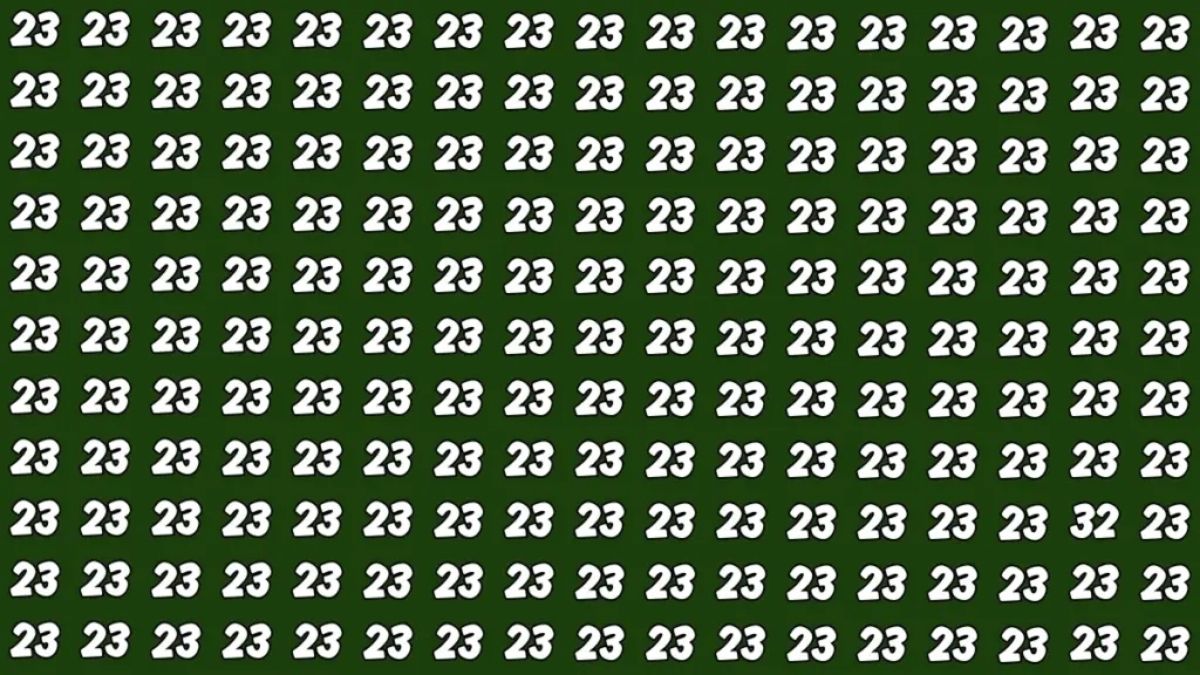
Spot the Hidden 32 Among 23s – Visual brain teasers have a unique way of stopping you mid-scroll. At first glance, everything looks neat, orderly, and predictable, but there’s often a twist hiding in plain sight. In this particular challenge, the goal is deceptively simple: find the number 32 hidden among rows of 23s. Sounds easy? Not quite. This kind of puzzle tests your eyes, your brain, and how quickly the two work together.
These challenges aren’t just for fun—they push your concentration, speed, and mental sharpness all at once. Even people with excellent observation skills can struggle when the difference is subtle. In this case, the numbers 23 and 32 share the same digits, which tricks your brain into seeing them as identical. Your mind naturally assumes everything is the same, making the hidden number sneak past unnoticed at first.
When you start looking, avoid scanning randomly. A structured approach—like moving your eyes left to right or top to bottom—can make a big difference. Set yourself a small time limit, perhaps five to seven seconds, to make it feel more like a game. Many people are surprised at how long it actually takes when the pressure is on.
यह भी पढ़े:
 Extra Cash for Young Australians: Youth Allowance Increase of $1,011.50 + $16.20 from Jan 2026
Visual puzzles like this aren’t just entertaining—they activate areas of your brain linked to attention and pattern recognition. Practising them regularly can improve focus and quick decision-making, skills that are useful in everyday life. That’s why students, professionals, and older adults alike often enjoy these challenges—they’re a fun workout for the brain.
Finding the hidden 32 quickly is a good indicator of sharp observational skills. It means you can notice tiny inconsistencies without overthinking. If it takes longer, don’t stress. The real trick is training your brain to slow down just enough to see what’s actually there, instead of what you expect to see.
Why the Number 32 Is So Tricky to Spot
The main reason this number is hard to find is visual similarity. Both 23 and 32 contain the same digits, just arranged differently. Your brain tends to read familiar patterns as a whole instead of focusing on each individual digit. Once your mind assumes that everything is 23, it filters out anything that doesn’t immediately stand out.
Repetition also plays a role. When the same number keeps appearing, your attention drops slightly, which makes the odd number easier to overlook. Puzzle designers know this and often rely on repetition to make a simple change feel invisible. That’s what makes optical illusions and number-based brain teasers so tricky but also so satisfying when you finally spot the difference.
Tips for Spotting the Hidden Number Faster
If you want to improve your speed at finding these hidden numbers, there are a few tricks you can try. One effective method is to focus on the second digit first. Instead of reading each number fully, look for the difference between a 2 followed by a 3 and a 3 followed by a 2.
Slightly blurring your vision and then refocusing can also help. This reduces distractions and can make the odd number “pop” out. Adjusting your viewing distance is another useful tip. Stepping back from the screen or zooming out can make the pattern clearer and reduce visual noise. Most importantly, stay relaxed. Tension or rushing tends to slow down perception more than most people realise.
यह भी पढ़े:
 Centrelink Confirms a $1178 Annual Pension Boost for Age Pensioners Starting 25 January 2026
What This Puzzle Says About Your Brain
Being able to quickly spot the hidden 32 shows strong visual scanning skills and good cognitive flexibility. Your brain is able to override assumptions and process details efficiently. That said, taking a little longer isn’t a bad thing. A slower approach often reflects a preference for accuracy over speed, which can be a strength in many situations, from reading fine print to solving complex problems.
Visual brain teasers like this one are sometimes used in cognitive training exercises. They engage both logic and perception, challenging your brain to recognise patterns while staying alert to subtle differences. People who practise these puzzles regularly often notice improvements in memory, focus, and overall processing speed.
Why Practising These Puzzles Is Beneficial
Besides being fun, challenges like these offer real mental benefits. They strengthen your attention to detail, improve concentration, and even support problem-solving skills. For older adults, they’re a gentle way to keep the mind active, while for students and professionals, they’re a quick workout that sharpens cognitive performance.
Another reason these puzzles are effective is that they train your brain to question assumptions. When your eyes tell you everything is the same, your mind can override that initial impression and spot differences you might otherwise miss. This kind of mental flexibility is useful in everyday life, from noticing mistakes at work to picking out important details in conversations or documents.
Making It a Fun Habit
The more you practice, the easier these visual challenges become. Start with simpler puzzles and gradually move to more complex ones. Setting a time challenge adds excitement and pushes you to improve your speed. Share puzzles with friends or family—it can become a fun competition and a brain workout at the same time.
Even small improvements are meaningful. Over time, you’ll notice that you can spot patterns and inconsistencies faster in everyday life, whether it’s identifying errors in numbers, reading charts, or noticing subtle changes in your surroundings. These puzzles don’t just train your eyes—they train your brain to process information efficiently and accurately.

Final Thoughts
Finding the hidden 32 among 23s is more than a test of vision—it’s a test of focus, perception, and mental agility. Some people find it instantly, while others take longer, and that’s perfectly fine. The value lies in engaging your brain and practising attentiveness. Even brief sessions with visual brain teasers can strengthen mental skills over time, making these puzzles more than just a moment of amusement—they’re a tool for keeping your mind sharp and alert.
Disclaimer
This post is intended for entertainment and general brain exercise purposes only. It should not be taken as professional medical or cognitive advice. Individual results may vary, and while visual puzzles can help with attention and focus, they are not a substitute for professional assessment or treatment of any cognitive, visual, or neurological condition. Readers should use their own judgment when engaging in these activities and consult a qualified professional for any concerns about brain health or vision.